Low-Effort Home Cleaning Routine: Sustainable, No-Hype Methods for Busy Households
Many people avoid household cleaning because they associate it with time-consuming deep scrubbing, endless product purchases, and exhausting full-house tidying. Popular cleaning content often promotes intensive cleaning marathons and specialized tools, which are unsustainable for working professionals, small families, and anyone with a busy schedule. The result is inconsistent cleaning, accumulated grime, and guilt-driven over-cleaning that wastes time and energy.
The Core Logic of Low-Effort Household Cleaning
Low-effort cleaning does not mean lazy cleaning or incomplete cleaning. It means eliminating redundant labor and avoiding repetitive cleaning caused by wrong habits. Most household dirt builds gradually, not overnight. Small, frequent maintenance tasks can prevent dirt from solidifying, which removes the need for hours of deep cleaning later.
The biggest waste of cleaning energy is re-cleaning the same areas repeatedly due to residual dirt, sticky film, and surface damage. Standardizing simple daily operations can stabilize household hygiene at a clean baseline, reducing overall cleaning frequency and workload.
5-Minute Daily Micro Cleaning Routine (No Large-Scale Tidying)
Daily micro cleaning focuses only on high-risk dirt areas that cause rapid household contamination. It requires no tools preparation and can be completed during daily household routines such as after meals or before bedtime.
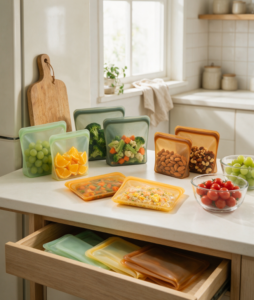
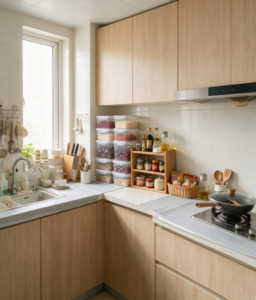
In the kitchen, simply wipe countertop splatters and sink residues after cooking and dishwashing. Fresh food stains and thin oil film can be removed with one wipe. Leaving them overnight leads to oxidation and hardening, requiring repeated scrubbing and special cleaners the next day.
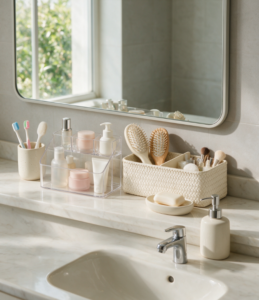
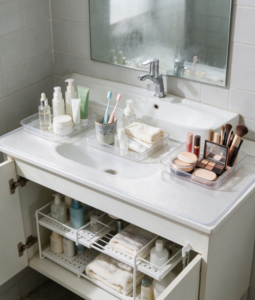
In the bathroom, wipe standing water on the shower floor and faucet surface after use. Removing residual tap water mineral deposits in advance prevents limescale accumulation. A quick ventilation session reduces indoor humidity and suppresses mold growth without extra cleaning steps.
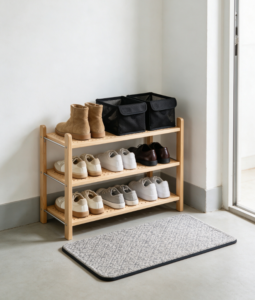
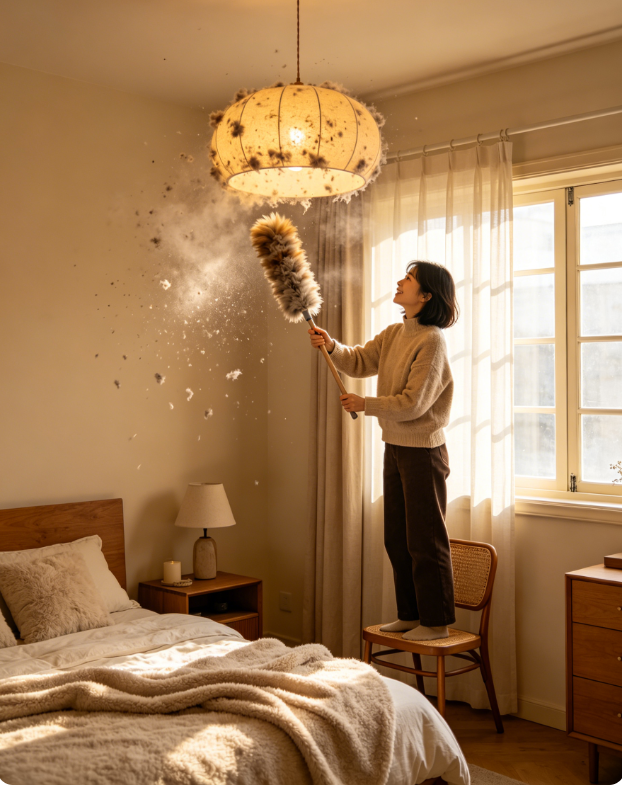
For living areas, pick up scattered sundries and wipe obvious floor crumbs. Clutter covers dust and creates hidden dirt corners. Keeping flat surfaces clear greatly reduces dust accumulation speed and makes subsequent routine cleaning faster.
Weekly Targeted Cleaning (30 Minutes Maximum)
Busy households do not need full-day weekly cleaning. A fixed half-hour targeted cleaning schedule covers all key hygiene blind spots without occupying rest time.
Focus on high-touch bacterial hotspots including door handles, light switches, cabinet surfaces, and remote controls. These areas contact human hands most frequently but are easily ignored in daily cleaning. Regular mild wiping effectively reduces indoor bacterial transmission risks.
Vacuum sofa crevices, window sills, and carpet edges. These areas accumulate hidden dust, hair, and skin debris that mopping cannot remove. Weekly vacuuming prevents deep dirt accumulation and avoids mite breeding.
Clean kitchen sink filters and bathroom floor drain covers. Blocked debris is the main cause of slow drainage and faint indoor odors. Regular cleaning maintains pipeline smoothness and eliminates odor sources at low cost.
Monthly Passive Deep Maintenance (No Scrubbing Required)
Monthly maintenance replaces labor-intensive deep cleaning with passive stain decomposition and tool maintenance, greatly reducing manual scrubbing pressure.
Soak kitchen oil nets and stove accessories in diluted degreasing solution for 10 to 15 minutes. Grease will fully emulsify and fall off naturally, requiring only simple flushing instead of hard brushing. This method avoids surface scratches caused by manual scrubbing.
Treat bathroom tile gaps and shower glass with mild descaling and mildew-proof agents. Short-time localized application removes invisible mold roots and mineral scale, preventing long-term blackening and stubborn stains.
Clean vacuum filters, air conditioner screens, and cleaning tools. Dirty tools and blocked electrical accessories reduce cleaning efficiency and cause secondary dust pollution. Maintaining tool cleanliness ensures every cleaning operation achieves real effects.
Low-Effort Product & Tool Matching Rules
Many households waste effort by purchasing excessive cleaning tools and complicated chemical products. Reasonable tool simplification is the key to sustainable low-effort cleaning.
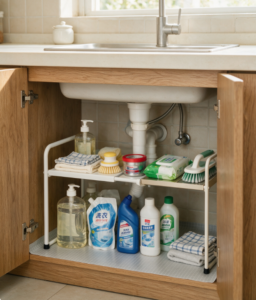
Three types of cleaners are sufficient for the whole house: neutral all-purpose cleaner for daily surface decontamination, mild degreaser for kitchen fixed oil stains, and neutral descaling agent for bathroom scale. There is no need to purchase segmented niche cleaners that increase storage burden and decision fatigue.
Classify microfiber cloths by scene to avoid repeated cleaning and cross-contamination. Separate cloths for kitchen, bathroom, and living room improve cleaning efficiency without extra disinfection steps after each use.
Avoid over-reliance on manual scrubbing tools. Vacuum cleaners and flat mops replace traditional brooms and rope mops, reducing repeated cleaning and improving dirt removal thoroughness with less physical effort.
Common Low-Effort Cleaning Misconceptions
Waiting for obvious dirt before cleaning
Visible dirt is the final stage of long-term accumulation. Waiting until stains are obvious means dirt has solidified and bonded with surfaces, requiring far more time and strength to remove. Timely minor cleaning is always more labor-saving than later remediation.
Stacking more cleaning tasks for free time
Concentrated intensive cleaning is difficult to sustain. Long cleaning sessions easily cause burnout, leading to cleaning procrastination. Fragmented fixed small tasks are more stable and suitable for long-term household maintenance.
Pursuing zero-dust extreme cleanliness
Extreme cleanliness requires frequent over-cleaning, which is unnecessary for ordinary living environments. Excessive wiping and disinfection cause surface wear and chemical residue. Maintaining a stable, clean baseline is the most scientific household hygiene standard.
Conclusion
Sustainable home cleaning is built on low-frequency deep cleaning and high-frequency micro maintenance, rather than intermittent exhaustive cleaning. By establishing a matched routine of daily micro cleaning, weekly targeted tidying, and monthly passive maintenance, busy households can maintain a clean, fresh, and hygienic living environment steadily. Simplified tool matching and correct cleaning logic eliminate invalid labor, allowing household cleaning to become a light, sustainable daily habit instead of a heavy burden.