Combat Sedentary Aging: Practical Daily Health Habits for Full-Time Desk Workers

In modern professional life, prolonged sitting has become an unspoken occupational norm. Most desk-bound employees spend eight to ten hours seated each day, focusing on digital tasks, meetings, and administrative work. While this lifestyle supports career productivity, continuous physical inactivity triggers slow, long-term bodily changes commonly known as sedentary aging. Unlike temporary tiredness, sedentary aging weakens metabolism, stiffens connective tissues, impairs posture, and gradually reduces physical vitality. The good news is that desk workers do not need intense workouts to fight these issues. With simple office-friendly adjustments, strategic micro-movements, and consistent daily wellness habits, anyone can slow sedentary aging, relieve chronic stiffness, and maintain a healthy, energetic body throughout their career.
The Hidden Effects of Sedentary Aging on Desk Workers
Sedentary aging progresses silently without obvious acute symptoms, making it easy to ignore. Long-term static sitting changes the body’s basic operating state, affecting muscles, joints, blood circulation, and metabolic efficiency.
First, it causes muscular and fascial rigidity. When the body stays in a fixed sitting posture for hours daily, muscle groups in the neck, shoulders, back, and hips remain continuously contracted. Over time, soft tissues lose elasticity, resulting in permanent stiffness, poor body flexibility, and recurring soreness. Many office workers feel stiff and tight as soon as they sit down, which is a typical sign of sedentary tissue aging.
Second, prolonged sitting lowers baseline metabolism. Physical inactivity reduces daily muscle consumption, slows blood circulation, and weakens gastrointestinal peristalsis. This leads to easy fatigability, slow physical recovery, daytime sleepiness, and unbalanced physical state. Unlike aging caused by time, sedentary aging is reversible through movement and posture correction.
Third, static posture gradually destroys bodily alignment. Unbalanced sitting habits pull the spine and joints out of neutral positions, causing rounded shoulders, forward head tilt, pelvic imbalance, and chronic lumbar pressure. These postural problems further amplify physical fatigue and accelerate sub-health conditions.
Everyday Office Habits That Speed Up Sedentary Physical Decline
Most sedentary health deterioration stems from accumulated small bad habits rather than occasional overwork. These routine behaviors gradually erode physical health without notice.
Long uninterrupted sitting sessions: Staying seated for multiple hours without standing breaks freezes muscle tension and stagnates circulation, accelerating tissue stiffness.
Low and forward screen posture: Constantly leaning forward to view screens creates persistent cervical strain, aging neck muscles and spinal fascia.
Relaxed slouching posture: Slumping on chairs flattens the natural spinal curve, increases lumbar disc pressure, and weakens core muscle stability over time.
Minimal lower-body movement: Fixed leg positions all day cause hip flexor shortening, calf tightness, and poor lower limb blood return, aggravating physical heaviness.
Ergonomic Posture Rules to Slow Down Sedentary Aging
Correct daily sitting posture is the most effective preventive measure against sedentary aging. It reduces unnecessary muscle compression, protects spinal health, and maintains normal metabolic circulation during long work hours.
Maintain a neutral head and neck position, keeping your head aligned vertically with your torso. Adjust screen height to match eye level to avoid long-term neck flexion and nerve tension. Keep shoulders relaxed and naturally drooping, avoiding habitual shrugging during typing and mouse control.
Preserve the lower back’s natural physiological curve with proper support to prevent lumbar collapse and muscle strain. Distribute body weight evenly on both hips and keep feet flat on the floor with knees at a 90-degree angle. This balanced neutral posture minimizes long-term physical pressure and effectively delays muscle and joint aging caused by static sitting.
Zero-Equipment Anti-Aging Desk Movements for Daily Relief
These gentle, low-intensity movements are designed for office environments. They require no equipment, take minimal time, and effectively soften stiff fascia, activate circulation, and reverse daily sedentary accumulation.
Neck Soft Release Stretch: Slowly perform small-range head tilts forward, backward, and sideways. Hold each position for 15 seconds. This relieves cervical fascia tightness, reduces head and neck pressure, and prevents chronic cervical aging.
Upper Body Open Stretch: Sit upright, stretch both arms backward, expand the chest fully, and hold for 20 seconds. This counteracts hunchback posture, stretches aging chest and shoulder muscles, and improves breathing efficiency.
Lumbar Spine Mobilization: Gently arch and relax your lower back while seated. Repeat 10 times to activate lumbar muscles, relieve spinal compression, and restore waist flexibility.
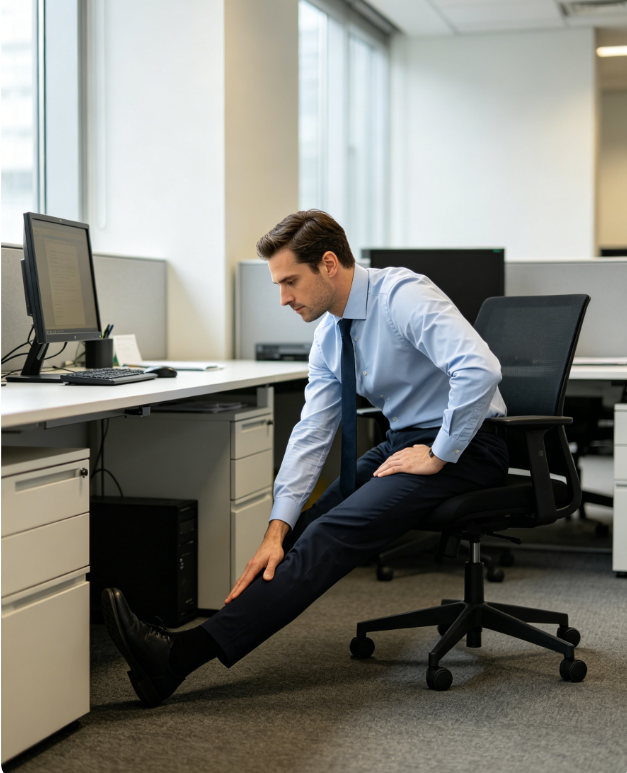
Seated Hip Release: Stretch one leg backward slightly while keeping the torso upright. Feel the stretch in the hip and thigh muscles. This improves hip flexor stiffness caused by all-day sitting and reduces indirect lumbar burden.
Circulation Boosting Foot Movement: Lift, extend, and rotate your feet and ankles regularly. This simple micro-movement accelerates lower limb blood flow, eliminates leg heaviness, and prevents circulatory stagnation.
Best Work-Rest Rhythm to Block Sedentary Damage
To effectively resist sedentary aging, intermittent movement rhythm is more important than occasional intense exercise. Reasonable work breaks prevent tension from solidifying into chronic stiffness.
Build a 40-minute work cycle: every 40 minutes, pause work, adjust posture, and perform simple limb movements for 30 seconds. This frequent micro-reset keeps muscles and circulation active and avoids long-term static solidification.
Stand up and walk for 2 minutes every hour. Use short breaks to stretch your body, activate inactive muscle groups, and restore physical vitality. Make full use of lunch breaks to stand and move, helping the body completely release morning fatigue.
Lifestyle Adjustments to Reverse Long-Term Sedentary Damage
Office micro-movements work best when paired with healthy daily habits. Drinking water consistently throughout the day promotes blood circulation and metabolic waste excretion, reducing muscle soreness and physical sluggishness.
Avoid continuous sedentary behavior after work. Take 10 to 15 minutes of slow walking or gentle stretching every evening to activate daytime static muscles, improve metabolic levels, and relieve accumulated physical aging pressure.
Maintain stable sleep routines. Night rest is the core period for fascia repair, muscle relaxation, and spinal recovery. High-quality sleep effectively offsets daily sedentary damage and improves the body’s anti-fatigue ability.
Conclusion
Desk work is an essential part of modern careers, but sedentary aging and sub-health problems are completely controllable and reversible. Most physical stiffness, metabolic decline, and postural deformation are caused by long-term static inertia and incorrect sitting habits.
By adhering to scientific ergonomic posture, practicing daily zero-equipment desk stretches, maintaining a healthy work-rest movement rhythm, and developing balanced living habits, every desk worker can effectively fight sedentary damage, delay physical sub-health aging, and maintain stable physical vitality and long-term workplace health.