Practical Home Organization Tips: Build a Low-Maintenance, Clutter-Free Living Space
Practical Home Organization Tips: Build a Low-Maintenance, Clutter-Free Living Space
Most homeowners struggle with recurring household clutter. After a thorough tidy-up, rooms often become messy again within a short period. This common issue is not caused by lazy cleaning habits. Instead, it results from impractical organizing methods that focus on temporary visual neatness rather than long-term daily practicality. Many popular organizing tricks work only for staged displays and fail to adapt to real family life, frequent item use, and busy daily schedules.
A truly organized home relies on stable, user-friendly storage systems and simple daily habits. With reasonable space planning and scientific item management, households can maintain a tidy, comfortable environment with minimal time and energy. This article shares down-to-earth organizing methods covering bedrooms, kitchens, bathrooms, and living areas, helping users eliminate clutter fundamentally and reduce repetitive housework.
Why Clutter Keeps Coming Back After Tidying
The core reason for persistent mess is unreasonable storage logic. Most people organize items by category, placing all clothes, toiletries, and kitchen supplies in fixed classified areas. This traditional method ignores usage frequency and daily living habits.
Daily necessities are often stored in deep cabinets, high shelves, or hidden corners that take time to access. In contrast, rarely used seasonal goods, spare supplies, and idle decorations occupy the most convenient spaces. When everyday items require extra effort to store and retrieve, random placement becomes inevitable. Over time, small scattered items gradually turn into obvious clutter. Sustainable organization reverses this situation by matching storage locations with daily usage habits.
Three Basic Rules for Long-Term Home Tidiness
These three simple rules apply to every corner of the home and effectively prevent clutter accumulation without increasing cleaning pressure.
Arrange storage by usage frequency. Classify household items according to how often they are used. Place daily necessities such as casual clothes, toothbrushes, skin care products, and tableware at eye level and within arm’s reach. Store items used weekly or monthly in ordinary drawers and middle-layer cabinets. Put seasonal items, backup supplies, and emergency tools in high positions or deep storage spaces. This reasonable zoning reduces unnecessary rummaging and random placement.
Control household item reserves. Excessive accumulation of goods is the main cause of insufficient home space. Many families habitually stock up on daily necessities, clothing, and groceries, while retaining unused old items. Continuous superposition of new and old goods squeezes living space. Regularly sorting out idle items and avoiding blind bulk purchases can fundamentally reduce storage pressure.
Reserve flexible buffer space. Fully filled drawers and cabinets have no tolerance for daily minor placement errors. Once one item is misplaced, the entire storage order will be broken. Reserving 10% to 15% blank space in all storage areas can accommodate temporary placed items, maintain overall neatness, and make daily sorting more flexible.
Bedroom and Closet Organization: Simplify Daily Wardrobe Management
Bedroom clutter is mostly caused by mixed seasonal clothes, redundant accessories, and complicated sorting methods. Simplified functional zoning is the most suitable solution for long-term family use.
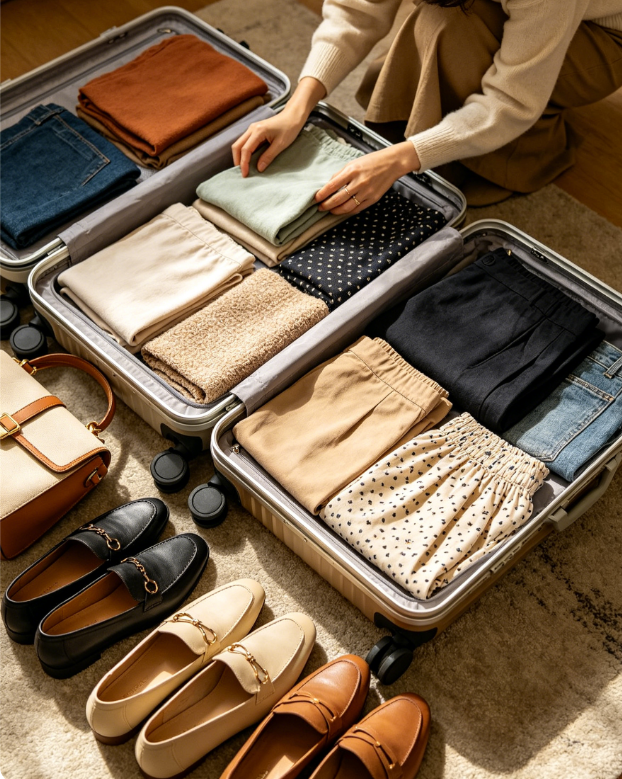
Classify wardrobes by season and usage scenario. Put current-season daily wear in the most accessible hanging areas and shallow drawers. Separately store occasional clothes such as formal dresses and sportswear. Place off-season clothes, thick quilts, and bulky bedding in high cabinets or breathable storage bags to free up core wardrobe space and reduce dust accumulation.
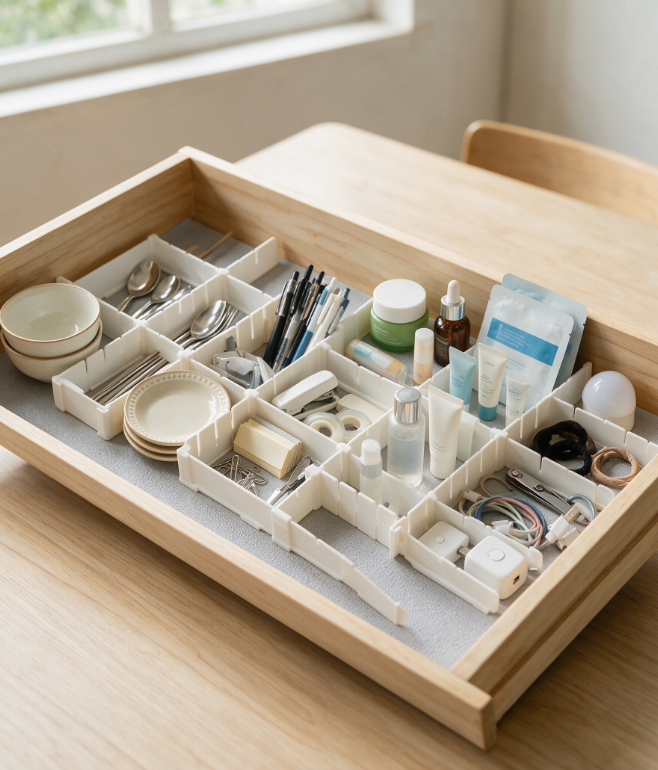
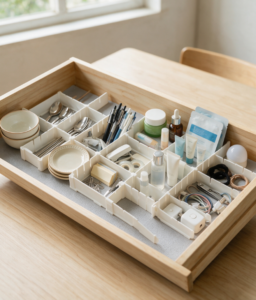
Simplify drawer internal layout. There is no need for excessive partitions for daily casual clothes such as T-shirts and trousers. Too many dividers waste space and slow down morning dressing speed. Only small items that are easy to lose, including socks, underwear, and hair accessories, need separate partition storage.
Conduct regular wardrobe sorting. Clothes that have not been worn for more than one year, ill-fitting styles, and severely worn garments are typical idle items. Timely disposal of useless clothes can effectively avoid wardrobe crowding and keep the bedroom tidy all year round.
Kitchen Organization: Optimize Workflow and Reduce Countertop Clutter
Disordered kitchens affect cooking efficiency and easily produce hygienic dead corners. Most countertop mess comes from scattered utensils, overstocked ingredients, and disorderly placed small electrical appliances.
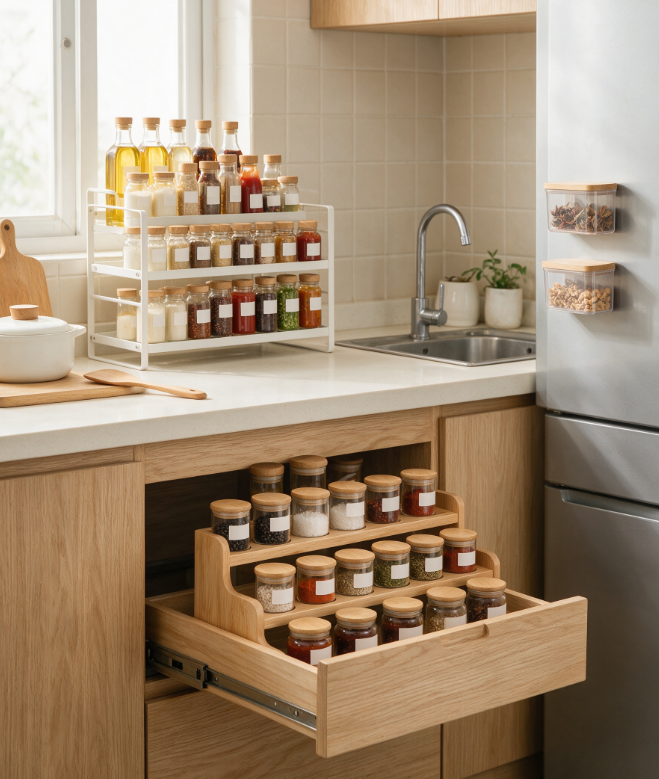
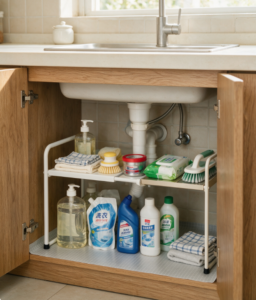
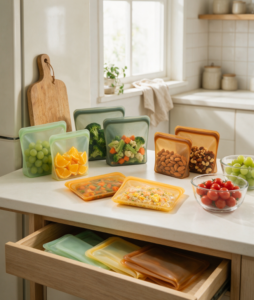
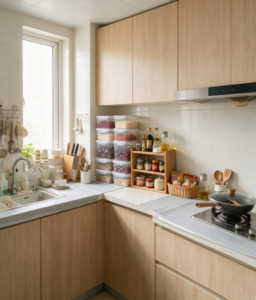
Layout storage according to cooking workflow. Concentrate cooking tools, seasonings, and spatulas near the stove for convenient cooking. Place cleaning sponges, dish soap, and draining tools near the sink. Store cutting boards, fresh-keeping boxes, and food preparation tools near the operating countertop. When items are stored where they are used most frequently, they can be quickly put back in place after use.
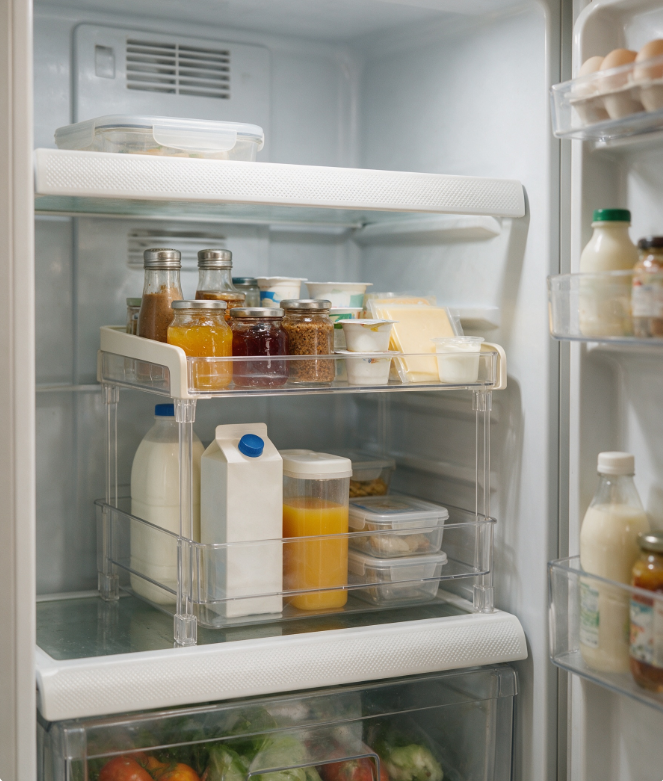
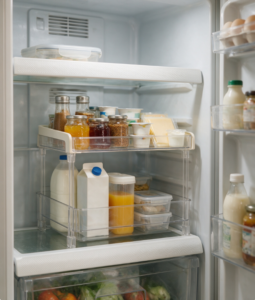
Avoid excessive food stockpiling. Bulk discounted ingredients are easy to exceed family consumption speed, leading to expired waste and crowded cabinets. Adopt the first-in, first-out principle for food storage, prioritize using newly expired ingredients, and purchase groceries according to actual demand.
Unify placement of small kitchen appliances. Scattered electrical appliances and tangled wires cause visual clutter and hide dust. Centralize commonly used kitchen machines and organize messy lines to keep countertops smooth and easy to clean.
Bathroom Organization: Hygienic and Moisture-Proof Storage Solutions
Bathrooms are humid and poorly ventilated. Improper storage easily causes mildew growth, peculiar smell, and product deterioration. Fully closed storage traps moisture, while completely open placement accumulates dust.
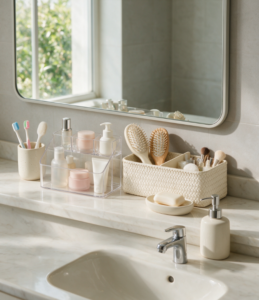
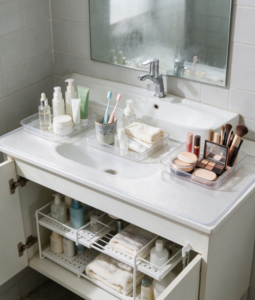
Zoned storage of toiletries based on usage frequency. Place daily facial cleanser, toothpaste, shower gel, and skin care products on open layered shelves for quick access. Store backup toiletries and special care products in ventilated closed cabinets to ensure dust prevention and air circulation.
Choose breathable storage for damp items. Towels, bath balls, and cleaning rags will retain moisture after use. Closed sealed storage is prone to breeding bacteria. Wall-mounted hooks and open hollow storage help damp items dry quickly and maintain bathroom hygiene.
Regularly clean up expired products. Cosmetics, skin care products, and oral care supplies have a limited service life. Expired products not only reduce the use effect but also occupy valuable bathroom storage space. A monthly quick inspection can keep the bathroom clean and hygienic.
Living Room and Entryway Organization: Solve Temporary Scattered Clutter
The messy appearance of the living room and entrance is mostly caused by small scattered items, including keys, letters, remote controls, and earphones. These trivial items affect the overall tidiness of the home, even without large-scale clutter.
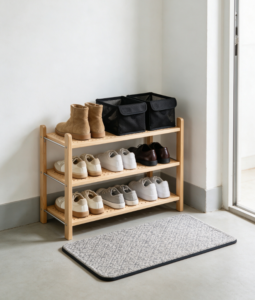
Set up a fixed temporary storage area at the entrance. A simple shallow tray or small basket can uniformly store daily carry-on items, avoiding random placement on sofas, tables, and floors.
Reduce redundant decorative items. Too many photo frames, ornaments, and handicrafts accumulate dust and increase cleaning burden. Simple and minimalist surface decoration maintains a fresh and tidy living atmosphere with low maintenance cost.
Daily Light Maintenance Habits to Sustain Long-Term Tidiness
Persistent home neatness does not depend on occasional large-scale deep cleaning, but on lightweight daily maintenance. Simple habits can effectively block clutter accumulation.
Finish a 2-minute reset before going to bed. Tidy up scattered items on the tabletop and ground, and put misplaced items back to their fixed positions to avoid overnight accumulation of small messes.
Implement weekly zoned tidying. Every week, focus on sorting and optimizing one room or one storage area to avoid centralized cleaning fatigue on weekends.
Complete seasonal sorting and updating. Every quarter, adjust storage layout according to seasonal changes, replace seasonal supplies, and clean up long-term idle items to keep the home space always functional and orderly.
Common Organizing Mistakes That Lead to Repeated Clutter
Many popular organizing methods are not suitable for ordinary families and will increase housework burden instead.
Blindly buying a large number of storage tools cannot solve fundamental clutter problems. Most messy homes have sufficient space. Excess storage boxes and partitions will fragment the space, form hidden dust corners, and slow down daily item access.
Overemphasizing aesthetic unity while ignoring practicality. Uniform storage looks neat in photos, but it cannot adapt to items of different sizes and usage habits. Functional and convenient storage is more durable than visual neatness.
Occupying convenient storage space with idle items. Seasonal decorations and spare supplies placed in easy-to-access positions will cause long-term visual clutter and squeeze daily living space.
Conclusion
High-quality home organization focuses on functionality and sustainability. It does not require expensive renovation costs or a lot of spare time. By matching storage with living habits, controlling item accumulation, avoiding impractical organizing methods, and adhering to simple daily maintenance, every family can maintain a clean, comfortable and orderly living environment for a long time.