Stop Wasting Energy: Why Sitting Drains Your Productivity and How to Fix It
Most modern professionals experience a strange daily paradox: they do not engage in heavy physical labor, yet they feel exhausted by the end of the workday. This unexplained fatigue, mental fog, stiff body, and low afternoon energy is rarely caused by work pressure alone. Instead, it is a direct side effect of prolonged sedentary sitting. Long hours of static desk work gradually slow bodily circulation, tense muscle chains, suppress metabolic activity, and drain mental stamina. Unlike obvious physical injuries, sedentary fatigue accumulates silently. Fortunately, with science-backed, low-effort office habits and quick recovery techniques, desk workers can break this exhausting cycle, restore physical vitality, and maintain steady energy all day long.
How Prolonged Sitting Drains Physical and Mental Energy
Sitting is often regarded as a resting state, but for the human body, long-term immobility is a continuous low-level burden. When the body remains seated and stationary for multiple hours, muscle activity drops to a minimum, blood and lymph circulation slow down significantly, and oxygen delivery to the brain decreases gradually. This physiological change directly leads to slow reaction speed, poor focus, and frequent drowsiness during work.
Chronic static posture also creates persistent muscle tension in the neck, chest, upper back, and lumbar region. Tight muscles consume extra invisible physical energy, causing body soreness and fatigue even at rest. Over time, the body adapts to this tense sedentary state, forming a fixed sub-health pattern: easy fatigue, slow recovery, stiff joints, and low work efficiency.
Furthermore, sedentary habits disrupt the body’s natural energy rhythm. Human physical vitality relies on continuous muscle contraction and circulation flow. Long-term inactivity stagnates energy metabolism, making people feel sluggish, lazy, and mentally burnt out easily, which severely affects long-term work status and physical quality.
The Most Damaging Silent Sitting Habits Killing Your Energy
Many people sit correctly in theory but develop tiny unconscious habits that amplify sedentary damage. These subtle behaviors are the main culprits behind chronic office fatigue.
Uninterrupted deep work sitting: Remaining seated for 2 to 4 hours without any movement stops bodily circulation and locks muscles in a strained state, accumulating fatigue rapidly.
Forward head and collapsed chest posture: Hunching over screens compresses the thoracic cavity, restricts breathing depth, reduces oxygen intake, and triggers persistent brain fatigue.
Fixed single posture repetition: Keeping the same sitting angle and limb position for hours causes local muscle compression and poor blood return, leading to unilateral body soreness and stiffness.
Passive relaxation through slouching: Many people slump deeply into chairs to rest, but this posture destroys spinal balance, aggravates lumbar pressure, and deepens physical fatigue.
Smart Ergonomic Posture to Prevent Daily Energy Drain
The core of office health protection is not rigid sitting, but balanced and relaxed sitting. A scientific ergonomic posture can minimize physical consumption and avoid unnecessary energy loss during long working hours.
Keep your head centered above your shoulders, with your ears and shoulders aligned vertically. Adjust your monitor height to avoid continuous neck bending or stretching. Relax your shoulder girdle naturally, let your shoulder blades sink down, and avoid involuntary shoulder shrugging when typing or operating a mouse.
Maintain a gentle lumbar curve to support spinal pressure and prevent lumbar muscle fatigue caused by long-term flattening. Place your feet stably on the ground with even force on both sides of the body. This balanced posture ensures smooth whole-body circulation, reduces muscle tension consumption, and keeps the body in a low-fatigue working state throughout the day.
6 Quick Zero-Equipment Office Moves to Regain Energy Instantly
These fast, discreet movements are tailored for busy office scenarios. Each set takes less than two minutes, effectively activating circulation, releasing muscle tension, and refreshing mental state without interrupting work progress.
1. Neck Floating Relaxation: Slowly tilt and stretch your neck in four directions within a comfortable range, avoiding sharp rotation. This relieves cervical muscle adhesion, reduces head heaviness, and clears mild dizziness caused by stiff necks.
2. Open Chest Shoulder Release: Stretch your arms backward, expand your chest, and hold for 20 seconds. This movement reverses hunchback posture, stretches compressed chest muscles, improves breathing efficiency, and instantly boosts mental clarity.
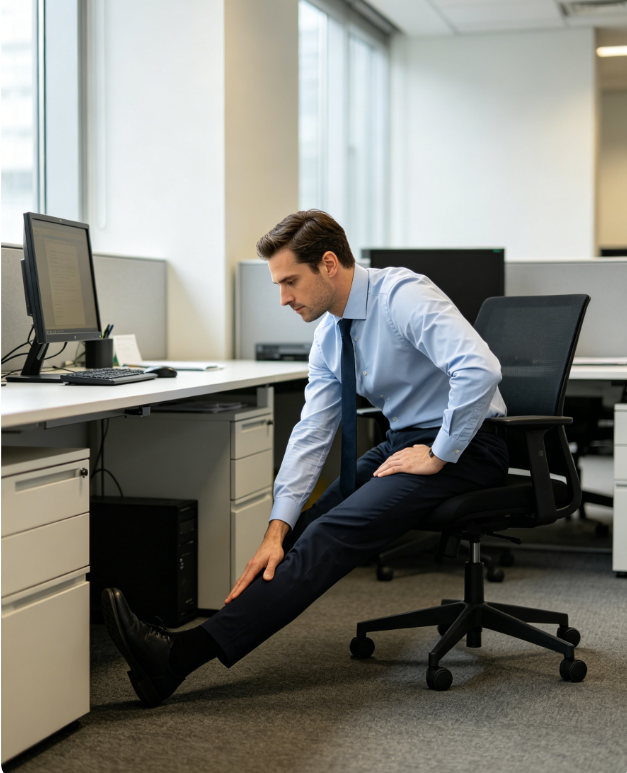
3. Seated Spinal Soft Twist: Fix your hips, twist your torso left and right slowly, and pause at the maximum comfortable angle. It relaxes stiff lumbar muscles, relieves waist tension, and restores spinal flexibility.
4. Calf and Ankle Pumping: Alternately lift your toes and heels while sitting, and rotate your ankles actively. This simple pumping movement accelerates lower limb blood return, eliminates leg heaviness and edema, and prevents sedentary limb stiffness.
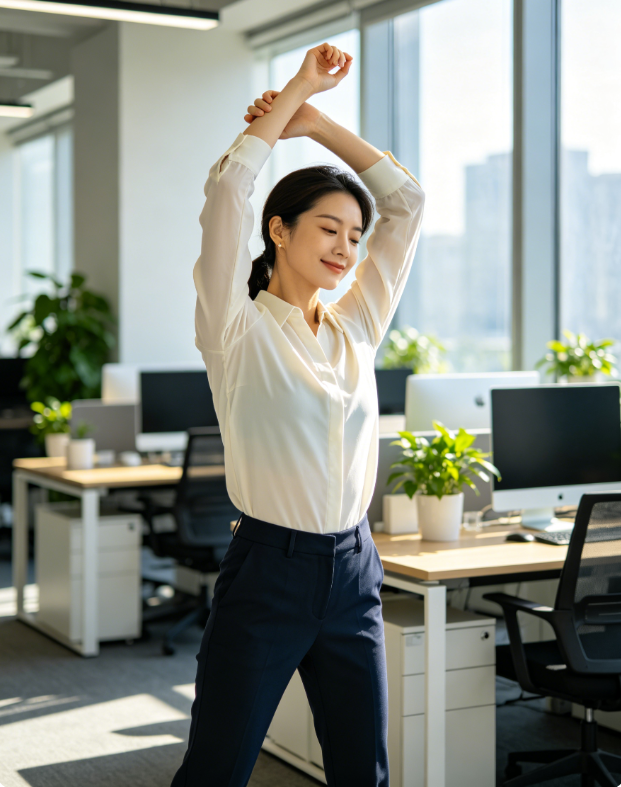
5. Side Torso Lengthening: Stretch one arm upward and lean slightly sideways to fully stretch the flank muscles. It relieves side waist compression, corrects asymmetric sitting tension, and relaxes the whole trunk.
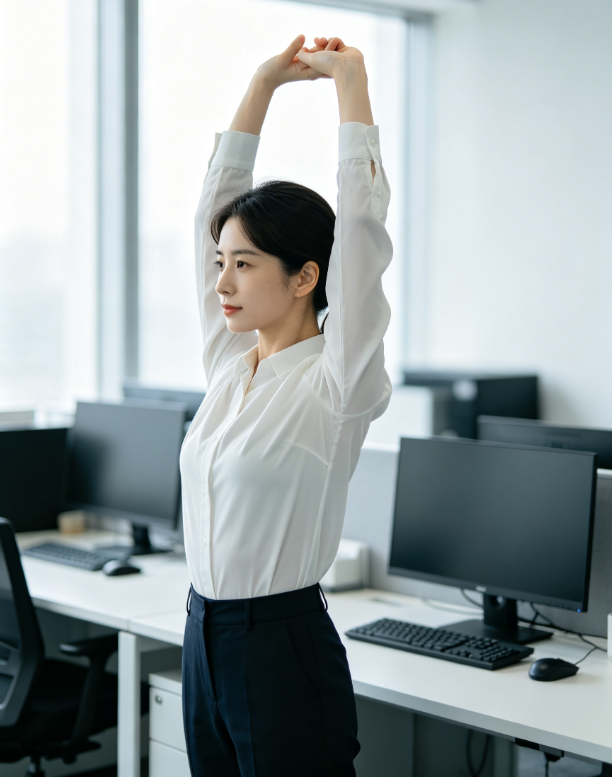
6. Standing Full-Body Extension: Stand up, stretch your limbs upward, open your chest, and take three deep breaths. This resets the whole-body muscle state, wakes up physical vitality, and quickly eliminates accumulated sitting fatigue.
The Perfect Work-Movement Rhythm for Long-Term Office Health
To completely solve sedentary fatigue, intermittent rhythm adjustment is more effective than occasional intense stretching. Forming a regular micro-movement cycle can continuously prevent fatigue accumulation.
Adopt a 30-minute light adjustment mechanism: every half hour, adjust your posture, move your eyes, and relax your shoulders and neck for 10 to 20 seconds. This tiny reset prevents muscle tension from solidifying and maintains smooth circulation.
Stand up and walk for 1 to 2 minutes every hour. Use brief breaks to activate limb muscles, break static inertia, and avoid continuous physical pressure. Arrange a 5-minute full-body relaxation during lunch break to fully release morning strain and recharge for afternoon work.
Daily Lifestyle Habits to Reverse Chronic Sedentary Fatigue
Office stretching only solves surface fatigue. Long-term physical recovery relies on daily lifestyle coordination. Maintaining sufficient and regular water intake improves blood viscosity and accelerates metabolic waste excretion, effectively reducing muscle soreness and body heaviness.
Avoid overeating heavy food during working hours. Light meals stabilize blood sugar levels, prevent post-meal drowsiness, and maintain stable physical and mental energy. After work, reserve 10 to 20 minutes for slow walking or casual stretching to activate daytime inactive muscles and eliminate sedentary accumulated tension.
Stick to regular sleep routines. Nighttime rest is the key period for muscle and nerve repair. High-quality sleep can greatly improve the body’s tolerance to sedentary pressure and reduce chronic sub-health problems.
Conclusion
Prolonged sitting is an unavoidable part of modern professional life, but sedentary energy loss and physical discomfort are completely controllable. Most office workers’ daily fatigue, poor focus, body stiffness, and low vitality stem from long-term static inertia, incorrect posture, and lack of active micro-regulation.
By maintaining ergonomic sitting posture, practicing instant energy-resetting office movements, building a scientific work-rest rhythm, and matching healthy daily habits, every desk worker can effectively reverse sedentary damage, maintain stable physical vitality and mental clarity, and achieve a healthy, efficient, and high-quality working state.