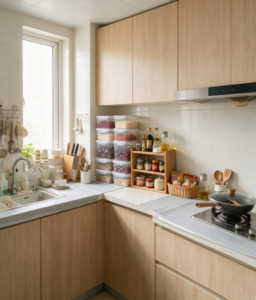
Low-Maintenance Home Organization: Practical Tips to Stop Clutter From Coming Back

Many people struggle with a recurring clutter cycle: they spend weekends tidying, folding, and clearing out their homes, only for messes to reappear within a few days. This common issue happens not because of poor cleaning discipline, but because most organizing techniques are designed for perfectly styled homes rather than real, everyday living. Busy schedules, frequent item use, and evolving household needs quickly break rigid, aesthetic-only organizing systems.
Successful home organization focuses on sustainable functionality rather than short-term visual results. Simple habit-based systems and thoughtful space planning keep homes tidy with minimal ongoing effort. This article shares actionable, room-by-room organizing strategies that fit regular households, reduce repetitive housework, and create stable clutter-free spaces for long-term use.
Why Traditional Organizing Fails for Everyday Homes
Most clutter returns due to flawed storage habits and poor spatial logic. The most common mistake homeowners make is organizing items by category instead of usage frequency. Grouping all clothing, toiletries, kitchenware, and miscellaneous goods into fixed zones ignores how people actually interact with their homes daily.
Daily essentials often end up stored in hard-to-reach cabinets, high shelves, or deep drawers. Meanwhile, rarely used seasonal decor, backup supplies, and unused items occupy convenient countertop and shelf space. When everyday items require extra effort to retrieve and put away, temporary misplacement becomes routine. Over time, these small inconveniences build into consistent household clutter.
Three Foundational Rules for Sustainable Organization
These simple, repeatable rules work for every room and eliminate the majority of recurring household mess.
Organize by how often you use items. Keep daily essentials within easy reach at eye level, including casual clothing, basic tableware, routine personal care items, and everyday carry accessories. Reserve middle drawers and standard cabinet shelves for items used weekly or monthly. Store seasonal items, emergency supplies, and long-term backups in high or out-of-sight storage areas. This tiered layout reduces unnecessary rummaging and random placement.
Limit unnecessary household accumulation. Most cluttered homes suffer from overstocking and unused belongings, not a lack of space. Duplicate tools, expired products, unworn clothing, and excess groceries gradually crowd living areas. Regular light purging of idle items prevents storage saturation and keeps spaces functional.
Leave buffer space in all storage areas. Drawers and cabinets packed completely full have no room for everyday mistakes. One misplaced item can disrupt an entire organized system. Keeping a small amount of empty space in every storage zone allows flexibility for temporary placement and maintains long-term order.
Bedroom & Closet Organization for Daily Efficiency
Bedroom clutter typically stems from mixed seasonal clothing, overstocked accessories, and overly complex folding routines that do not fit busy morning schedules. Simplified functional zoning creates reliable, low-maintenance wardrobes.
Separate clothing by season and occasion. Place current-season daily outfits on easily accessible hanging rails and in shallow drawers. Create a dedicated section for occasional wear, such as formal attire, workout clothes, and loungewear. Store off-season garments, thick comforters, and bulky bedding in elevated storage or breathable fabric bags to preserve prime closet space and reduce dust buildup.
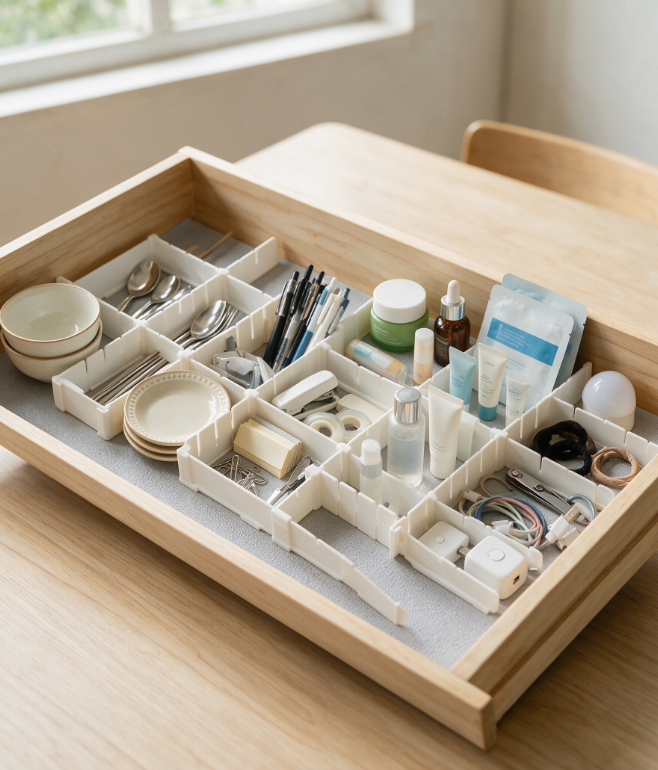
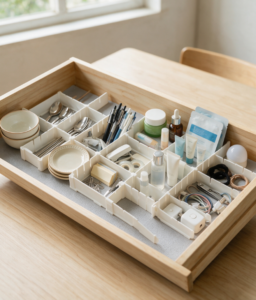
Simplify drawer organization. Daily casual clothing does not require heavy compartmentalization. Excessive dividers waste space and slow down morning routines. Reserve divided storage only for small, easy-to-lose items like socks, undergarments, hair clips, and jewelry.
Maintain a quarterly wardrobe refresh. Garments left unworn for an entire year, ill-fitting pieces, and heavily worn clothing add unnecessary bulk. Regularly removing unused items keeps closets streamlined and prevents gradual overcrowding.
Practical Kitchen Organization to Cut Countertop Clutter
Kitchen disorganization slows meal prep, creates dust-prone zones, and increases daily cleaning time. Most countertop mess results from misplaced utensils, overstocked groceries, and scattered small appliances.
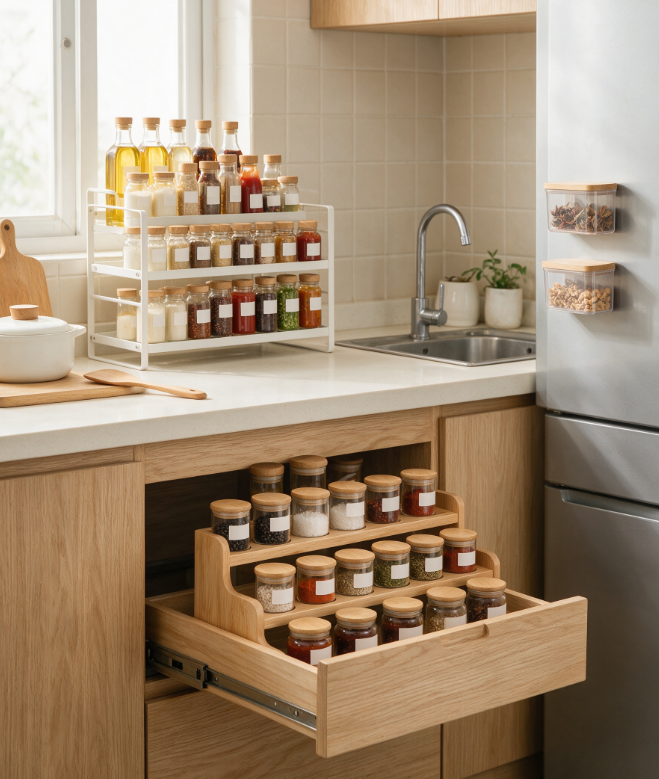
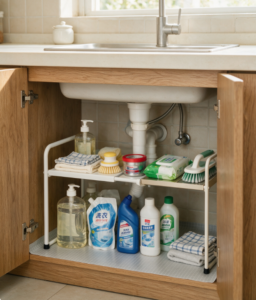
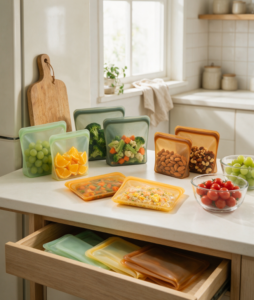
Align storage with cooking workflows. Keep cooking utensils, oils, spices, and heat-resistant tools near the stovetop. Store sponges, dish soap, and drying equipment near the sink. Place cutting boards, food containers, and prep tools near main counter workspace. When items live where they are used most often, they naturally return to their designated spots after daily use.
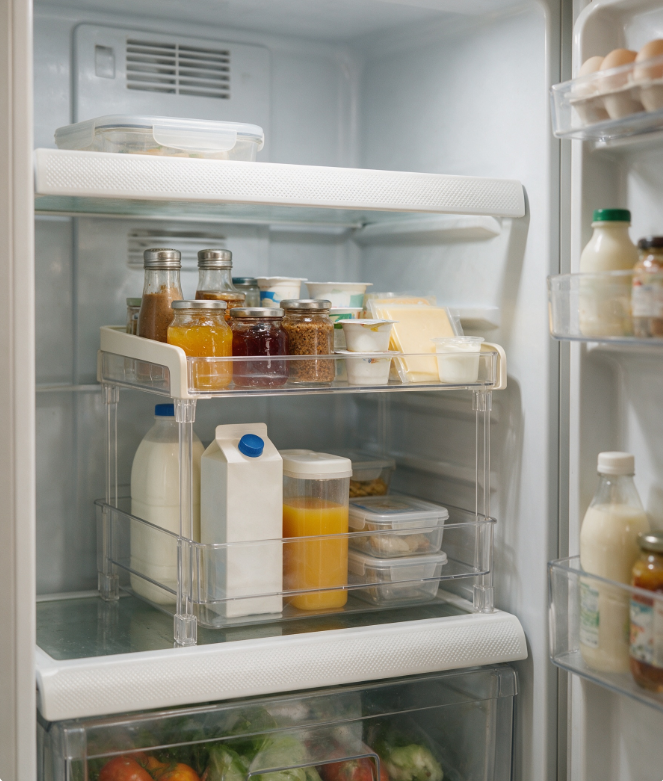
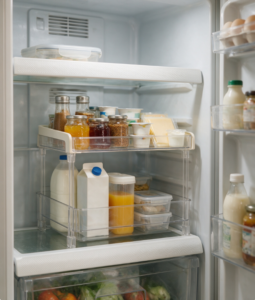
Avoid overstocking groceries. Bulk purchases often exceed household consumption rates, leading to forgotten expired food and crowded cabinets. Using a first-in, first-out system ensures older items get prioritized, reducing waste and hidden cabinet clutter.
Consolidate appliances and cords. Tangled wires and scattered devices create visual clutter and trap dust. Centralizing frequently used small appliances streamlines countertops and simplifies routine sanitizing.
Bathroom Organization for Clean, Sanitary Spaces
Bathrooms are high-humidity environments where poor storage leads to mildew, stale odors, and shortened product lifespan. Fully sealed cabinets trap moisture, while unorganized open shelves collect dust and bacteria.
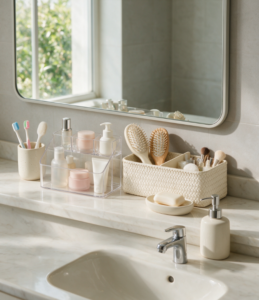
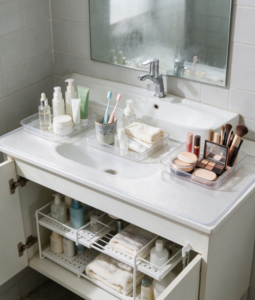
Zone toiletries by routine. Keep daily skincare, oral care, and body care products on open, easy-access shelves for fast morning and evening routines. Store backup bottles and specialized treatment items in ventilated closed cabinets to balance dust protection and airflow.
Use breathable storage for damp items. Towels, shower sponges, and cleaning cloths retain moisture after use. Closed containers accelerate bacterial growth. Wall hooks and open storage allow full air circulation, helping items dry quickly and stay hygienic.
Check expiration dates monthly. Cosmetics, skincare formulas, and oral care products degrade over time. Removing expired items preserves bathroom cleanliness and frees up valuable storage space.
Living Room & Entryway Organization to Eliminate Surface Clutter
Most living room mess comes from small, everyday items: keys, mail, remote controls, chargers, and headphones. These minor objects create a consistently untidy appearance despite minimal heavy clutter.
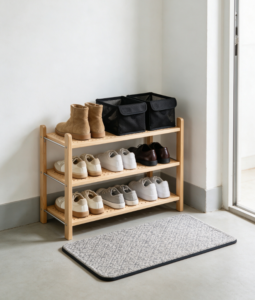
Create a single entry drop zone. A shallow tray or compact basket near the doorway centralizes all daily carry items in one fixed location. This simple setup eliminates random scattering across tables, sofas, and floors.
Minimize high-maintenance decor. Excessive frames, trinkets, and decorative objects accumulate dust and increase cleaning workload. Light, minimal styling keeps living spaces welcoming and easy to maintain.
Easy Daily Habits to Keep Homes Organized Year-Round
Long-term tidiness does not require exhausting deep cleans. It relies on small, consistent habits that stop clutter before it builds.
Complete a two-minute nightly reset. Clear surface clutter and return misplaced items to their correct zones before bed to prevent overnight mess accumulation.
Tidy one zone per week. Focusing on a single cabinet, drawer, or room each week spreads work evenly and avoids weekend cleaning burnout.
Refresh storage seasonally. Every three months, rotate seasonal items, adjust shelf layouts, and clear unused belongings to keep every area functional and efficient.
Common Organizing Mistakes to Avoid
Many popular organizing habits create extra work instead of solving clutter.
Buying excess storage containers does not fix clutter. Most homes already have enough space. Too many bins and dividers fragment storage, create hidden dust corners, and slow down daily item retrieval.
Prioritizing aesthetics over function is unsustainable. Uniform-looking storage works for staged photos but rarely fits the varied sizes and daily usage patterns of real household items.
Storing rarely used items in prime accessible spaces crowds daily essentials and creates persistent visual clutter.
Conclusion
Reliable home organization is simple, functional, and adaptable to real life. It does not require expensive upgrades or constant cleaning. By arranging storage around daily habits, limiting excess belongings, avoiding common organizing errors, and maintaining lightweight routines, homeowners can sustain clean, orderly, and low-maintenance living spaces all year long.