Office Wellness Routine: Fix Chronic Sedentary Strain and Restore Daily Physical Vitality

For modern professionals, sitting at a desk all day has become the default working mode. Long hours of computer work, back-to-back meetings, and static focus keep the body locked in a seated position for most of the day. While this lifestyle supports productivity, it gradually weakens physical function, disrupts muscle balance, and creates persistent low-grade physical strain. Most people only notice obvious symptoms such as stiff shoulders and lower back pain, ignoring that sedentary behavior also causes low energy, poor body flexibility, and reduced physical resilience. With simple, sustainable, office-friendly routines, anyone can reverse chronic sedentary strain, protect spinal health, and keep the body comfortable and energetic throughout busy workdays.
How Chronic Sitting Transforms Your Body Over Time
Sedentary damage is progressive and cumulative. Short-term sitting only brings mild tiredness, but months and years of static desk work reshape muscle strength, spinal alignment, and circulatory efficiency.
First, it causes adaptive muscle imbalance. Muscles that stay contracted during sitting—such as the upper trapezius, chest muscles, and lumbar muscles—become overly tight and stiff. Meanwhile, underused muscles including the glutes, deep core stabilizers, and lower limb muscles gradually weaken and become inactive. This imbalance pulls the spine out of its natural alignment, leading to rounded shoulders, forward head posture, and chronic lower back tension.
Second, prolonged static sitting slows systemic blood circulation and lymphatic flow. Reduced lower-body movement causes mild fluid retention, leg heaviness, and joint stiffness. Over time, the body becomes less responsive to movement, and daily physical fatigue becomes harder to relieve, even after overnight rest.
Third, sedentary lifestyles lower baseline physical vitality. The body adapts to low-movement states, slowing metabolism, reducing oxygen utilization efficiency, and making people more prone to afternoon drowsiness, mental fog, and low work stamina.
Top Daily Office Habits That Worsen Sedentary Damage
Most chronic office physical issues are not caused by work intensity but by repetitive poor daily habits that compound strain over time.
Zero movement during long work blocks: Many employees remain seated for three to four hours without standing or stretching, allowing muscle tension and circulatory stagnation to build continuously.
Forward screen posture: Leaning toward monitors creates constant cervical spine pressure, tightening neck muscles and accelerating postural degeneration.
Passive slouching for comfort: Slumping deeply into chairs feels relaxing temporarily but collapses spinal curvature, compresses lumbar discs, and weakens core support.
Limited lower-body movement: Keeping legs fixed in the same position all day reduces muscle activation and leads to stiff hips, tight calves, and poor venous circulation.
Effortless Ergonomic Posture Correction for All-Day Protection
Correct ergonomic posture is the foundation of sedentary health management. It disperses spinal pressure, balances muscle tension, and prevents strain accumulation without extra time or energy.
Align your head directly above your shoulders to maintain a neutral cervical position. Keep your monitor at eye level to eliminate downward neck bending. Relax your shoulders naturally, avoid involuntary shrugging while typing, and keep your upper back gently extended to prevent chest compression and rounded shoulders.
Support your lower back to preserve the spine’s natural S-shaped curve, avoiding flat lumbar posture. Distribute your weight evenly on both hips and keep your feet fully grounded with knees bent at a 90-degree angle. This symmetrical, neutral posture minimizes unnecessary muscle tension and keeps the body in a low-stress state during long working hours.
Quick Desk Stretches to Reverse Sedentary Muscle Imbalance
These zero-equipment stretches are designed specifically for office environments. They are discreet, time-efficient, and target the most strained muscle groups caused by prolonged sitting.
Neck Neutral Reset: Gently tuck your chin and hold for 20 seconds, then perform slow side-to-side tilts within a comfortable range. This releases cervical tightness, corrects forward head posture, and relieves upper neck pressure.
Shoulder Blade Retraction Exercise: Sit upright, squeeze your shoulder blades backward and downward, then relax slowly. Repeat 12 times. This activates weak upper back muscles, offsets rounded shoulder posture, and reduces upper body fatigue.
Seated Deep Lumbar Stretch: Sit straight, place both hands on your knees, and arch your back gently upward before releasing. This mobilizes the lumbar spine, relieves disc compression, and eases chronic waist soreness.
Hip Opener Stretch: Sit at the chair edge, cross one ankle over the opposite knee, and lean forward slightly. Hold for 20 seconds per side to stretch tight hip flexors and glute muscles, improving lower body stiffness.
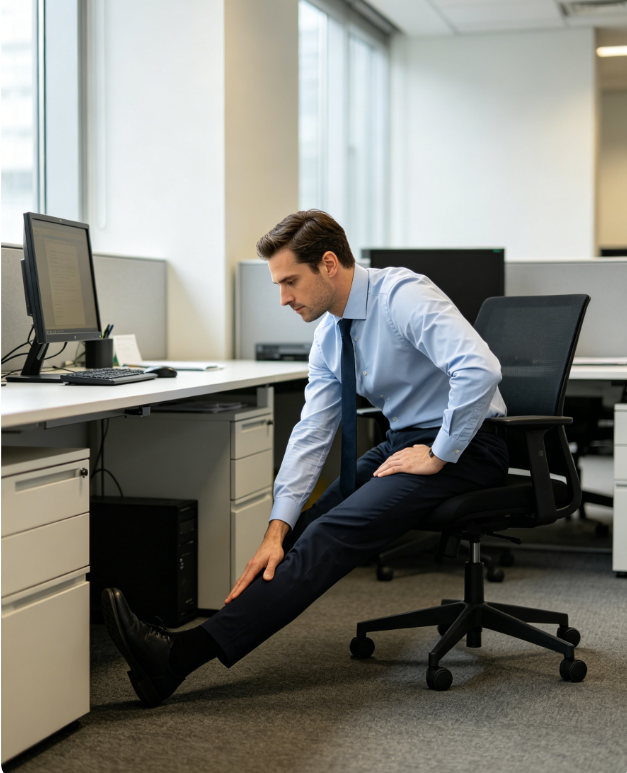
Full Limb Activation: Stretch your legs forward, flex your feet, and shake your limbs gently. This boosts lower-body blood circulation, reduces swelling, and restores muscle flexibility.
The Optimal Movement Cycle to Avoid Sedentary Burnout
Stretching alone cannot fully counteract sitting damage. Building a regular movement cycle is key to maintaining long-term physical balance.
Adopt a 20-minute micro-adjustment routine: every 20 minutes, shift your posture, relax your shoulders, and blink and refocus your eyes to release accumulated tension. Every hour, stand up for one to two minutes to walk, stretch, and break the static sitting state.
Use lunch breaks for longer relaxation. Five minutes of full-body stretching and standing movement can completely release morning strain, restore muscle flexibility, and prevent fatigue from carrying into afternoon work.
Sustainable Lifestyle Habits to Improve Sedentary Sub-Health
Long-term office health relies on consistent daily habits. Maintaining steady water intake promotes blood circulation and helps reduce muscle stiffness and bodily sluggishness caused by inactivity.
Avoid sedentary inertia after work. Take 10 to 15 minutes of casual walking or gentle stretching to activate underused muscles, improve metabolism, and eliminate daytime accumulated tension. Keeping a regular sleep schedule allows strained muscles and spinal soft tissues to repair overnight, effectively reducing chronic soreness and physical fatigue.
Light weekly physical activity further enhances core muscle strength, improves posture stability, and increases the body’s resistance to daily sedentary pressure.
Conclusion
Prolonged desk sitting is an inevitable part of modern professional life, but sedentary physical strain and sub-health issues are entirely reversible. Most office fatigue, postural problems, and muscle stiffness stem from long-term static inertia, unbalanced muscle tension, and insufficient daily movement.
By maintaining scientific ergonomic posture, practicing targeted desk stretches, following a reasonable work-movement cycle, and sticking to healthy daily routines, every desk worker can effectively reverse sedentary damage, stabilize physical comfort, and maintain long-term physical health and steady work vitality.