Beyond Back Pain: Hidden Sedentary Stress and Gentle Office Fixes for All-Day Energy
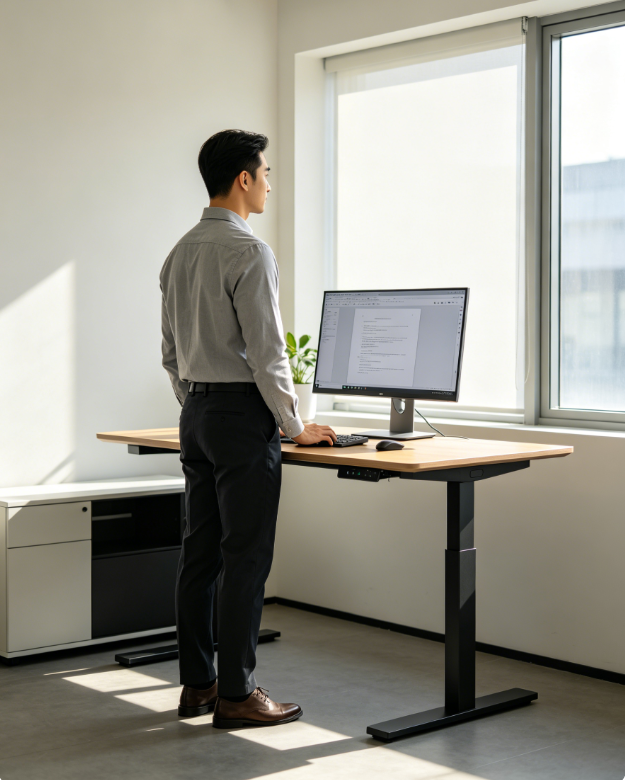
Most discussions about desk job health focus only on obvious issues, such as back pain and stiff shoulders. However, long hours of sitting create far more hidden stress inside the human body, affecting energy levels, nervous system balance, fluid circulation, and even mental focus throughout the workday. Millions of office workers struggle with afternoon exhaustion, brain fog, mild body bloating, and restless tension, even when they do not perform heavy physical work. These subtle symptoms are classic signs of sedentary overload. With low-effort, zero-equipment adjustments and mindful workday habits, anyone can reduce hidden sedentary stress, stabilize physical comfort, and keep consistent energy from morning to evening.
The Hidden Effects of Prolonged Sitting Beyond Muscular Pain
Sitting for six to ten hours daily places the body in a prolonged low-activity state that disrupts multiple natural bodily rhythms. Beyond tight muscles and spinal pressure, sedentary behavior slows lymphatic circulation, which leads to mild body bloating, swollen limbs, and heavy physical feelings that many people dismiss as normal tiredness.
Static posture also keeps the sympathetic nervous system in a subtle state of long-term tension. Even while sitting still, the body remains slightly stressed, causing shallow breathing, accelerated mental fatigue, difficulty concentrating, and restless mood swings. This explains why many people feel mentally drained after a full day of sitting, despite minimal physical movement.
Additionally, long-term inactivity slows down digestive efficiency and cellular metabolism. When the body lacks regular movement stimulation, calorie burning decreases, gastrointestinal movement weakens, and daytime sleepiness becomes frequent. Gradually, the body forms a sedentary sub-health state: easily fatigued, stiff, slow to recover, and lacking vitality.
How Poor Office Breathing and Posture Worsen Fatigue
Many office workers unconsciously develop poor physical habits that amplify sedentary stress. Slouched sitting compresses the chest and abdomen, limiting lung expansion and leading to habitual shallow breathing. Insufficient oxygen intake further aggravates brain fatigue, dizziness, and poor focus.
Fixed forward posture tightens the fascia and muscle chains of the upper body, causing continuous traction on the cervical spine and thoracic spine. Over time, the body becomes stuck in a “tense default state,” making it difficult to relax even during rest breaks. Irregular sitting habits, such as one-sided leaning, uneven hip pressure, and long-term static fixation, deepen physical imbalance and accumulate hidden fatigue.
Mindful Posture Reset: Gentle All-Day Ergonomic Rules
Improving sedentary health does not require perfect posture at every moment. Instead, it requires regular posture resets to prevent long-term fixed strain. A few simple ergonomic principles can greatly reduce overall body pressure.
Keep your chest naturally open and your shoulders relaxed downward, avoiding the habitual forward hunch that compresses breathing space. Maintain a soft lumbar curve with light back support to prevent spinal compression and fascial stiffness. Keep your head aligned with your spine instead of leaning forward, reducing cervical nerve tension.
Ensure your feet stay flat and grounded, with evenly distributed lower body pressure. Grounded posture stabilizes the nervous system, improves overall circulation, and helps the body maintain a calm, non-stressed state during long work sessions. Reset this posture gently every time you feel tired or distracted.
Breathing and Micro-Movement Routines to Release Hidden Sedentary Tension
Muscle stretching alone cannot fully relieve sedentary fatigue. Combining breathing adjustment with micro-movements is the most efficient way to relax the nervous system, improve circulation, and eliminate body heaviness.
Diaphragmatic Breathing Reset: Sit upright, place one hand on your abdomen, inhale slowly through your nose for four seconds, hold for two seconds, and exhale gently for six seconds. Repeat five rounds. Deep breathing expands lung capacity, relieves chest tightness, calms nervous tension, and quickly clears afternoon brain fog.
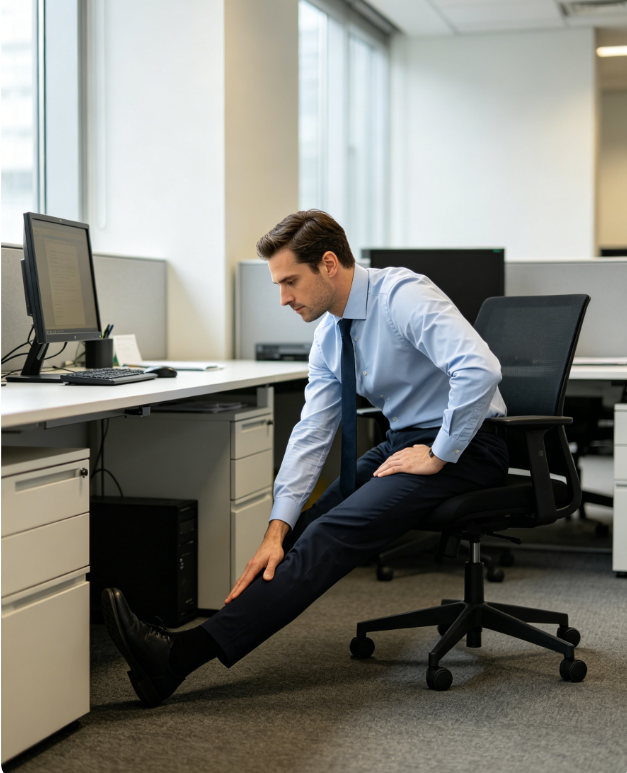
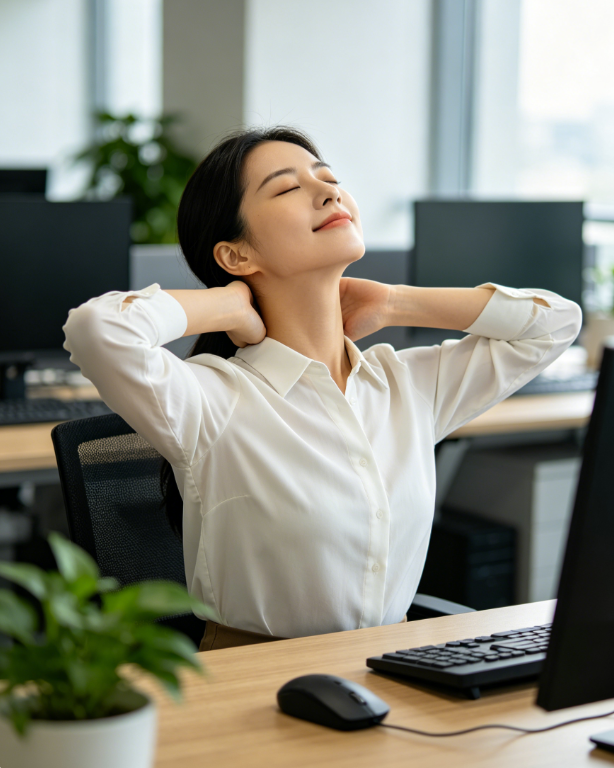
Upper Body Fascial Release: Relax your shoulders, swing your arms naturally forward and backward, and perform slow, large-range shoulder rolling movements. This loosens stiff fascia, releases accumulated upper body tension, and improves blood flow to the neck and head.
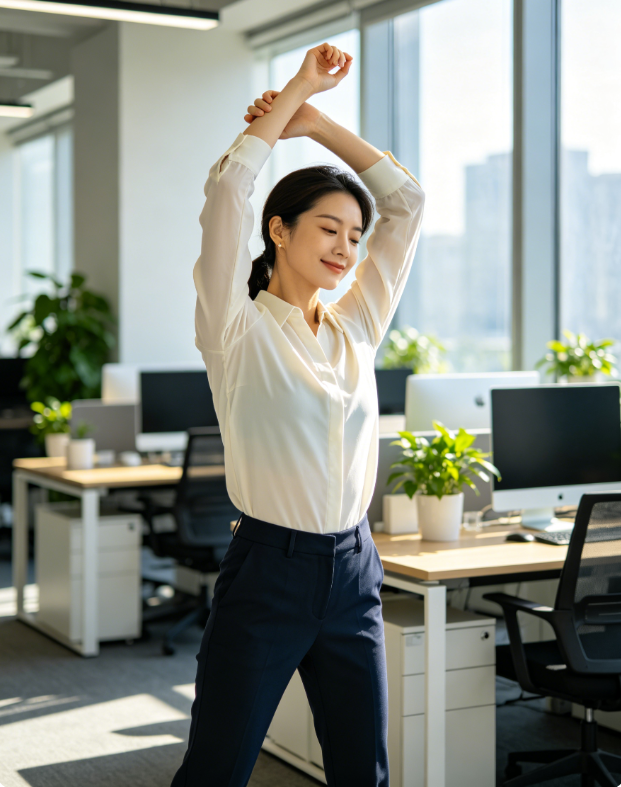
Seated Side Body Stretch: Sit straight, raise one arm overhead, and lean gently to the opposite side. Hold for 20 seconds per side. This stretches the compressed side torso muscles, relieves waist and rib tightness, and corrects unbalanced sitting posture.
Lymphatic Activation Foot Movement: While seated, flex and extend your toes, lift and drop your heels, and rotate your ankles in both directions. These tiny movements boost lower body lymph and blood circulation, effectively improving leg swelling and body bloating caused by inactivity.
Spinal Mobilization: Sit upright and perform slow, gentle forward and backward spinal flexion. Avoid excessive force. This simple movement restores spinal flexibility, relieves lumbar stiffness, and prevents long-term spinal rigidity.
The 30-Minute Office Wellness Rhythm for Sustainable Energy
To avoid sedentary accumulation, building a lightweight work rhythm is more important than occasional intense exercise. A 30-minute micro-cycle is highly suitable for busy office schedules.
Every 30 minutes, take 30 seconds to adjust your posture, correct shallow breathing, and activate your limbs with tiny movements. This frequent micro-reset prevents tension from solidifying into chronic stiffness and keeps circulation stable throughout the day.
Every two hours, take a three-minute standing break to walk, stretch, and fully expand your breathing. This short pause resets your nervous system, eliminates hidden stress, and restores mental clarity for continuous work.
Lifestyle Tuning to Eliminate Long-Term Sedentary Side Effects
Daily lifestyle details determine the body’s ability to resist sedentary damage. Maintaining steady water intake throughout the day promotes lymphatic detoxification and reduces body bloating caused by slow circulation.
Avoid over-reliance on high-sugar drinks and heavy meals during working hours, which easily cause blood sugar fluctuations, drowsiness, and aggravated physical stagnation. Light, balanced meals keep metabolism stable and reduce physical heaviness.
After work, arrange 10 minutes of slow walking or casual stretching. Gentle post-work movement helps the body release accumulated daytime tension, repair nervous system fatigue, and prevent long-term sub-health accumulation.
Keeping a regular sleep schedule allows strained fascia, muscles, and overactive nerves to repair overnight, greatly improving the body’s resistance to daily sedentary pressure.
Final Thoughts
Sedentary office work inevitably brings physical pressure, but most of the resulting fatigue, stiffness, brain fog, and body bloating are reversible through daily minor adjustments. True office wellness is not about intense exercise or drastic lifestyle changes, but about maintaining gentle, consistent body reset habits during work hours.
By correcting breathing patterns, resetting posture regularly, practicing micro-movement routines, and building a balanced daily rhythm, every desk worker can effectively eliminate hidden sedentary stress, maintain stable physical and mental energy, and achieve long-term office health and comfort.