The Ultimate Guide to Beating Chronic Desk Fatigue: Fix Posture, Stiffness and Low Energy

Working behind a desk all day is the standard routine for millions of modern professionals. From morning check-ins to evening overtime, countless individuals remain seated for 8 to 11 hours daily, focusing on screen-based tasks, virtual meetings, and administrative work. While this routine supports productivity, prolonged sitting silently triggers chronic physical strain, persistent muscle stiffness, and unexplained daily fatigue. Many office workers grow accustomed to low-grade body discomfort, assuming tiredness is simply part of their job. In reality, most desk-related sub-health issues are preventable and reversible with simple, consistent, zero-equipment wellness habits designed specifically for busy office schedules.
Why Long Sitting Causes Chronic Fatigue and Body Stiffness
Unlike physical exhaustion from exercise, desk fatigue stems from prolonged physical stagnation. When the human body stays in a fixed seated position for hours without movement, blood circulation slows, muscle groups remain locked in a contracted state, and spinal pressure continuously accumulates.
The upper body bears the brunt of desk work strain. Hours of screen time keep the neck bent forward, shoulders hunched, and the upper back compressed. This creates tight trapezius muscles, stiff cervical joints, and recurring upper body soreness. Over weeks and months, temporary stiffness develops into chronic muscular tension, making daily work feel increasingly tiring.
The lower body faces equal strain. Long-term sitting shortens hip flexors, deactivates glute muscles, and slows venous circulation in the legs. The result is hip tightness, leg heaviness, mild swelling, and persistent lower back discomfort. As metabolism slows due to minimal movement, many professionals experience constant daytime drowsiness, poor focus, and a noticeable drop in work stamina.
Most Common Workplace Posture Mistakes That Worsen Strain
Chronic desk fatigue rarely comes from overworking—it comes from repeated poor posture habits that compound damage every single day. Recognizing and correcting these tiny mistakes is the first step toward better office health.
Hunched screen posture: Leaning forward toward the monitor creates extreme cervical spine pressure, leading to stiff necks and tension headaches.
Unsupported lower back slouching: Sinking into the chair without lumbar support flattens the spine’s natural curve, triggering ongoing lower back pain and spinal compression.
Asymmetrical sitting: Leaning to one side, crossing legs, or resting weight unevenly creates pelvic imbalance and one-sided muscle tightness.
Static non-stop sitting: Working for hours without standing breaks prevents blood flow reset and allows fatigue to accumulate rapidly.
Perfect Ergonomic Sitting Posture for All-Day Comfort
A correct ergonomic sitting posture can eliminate over half of daily sedentary strain. This low-effort adjustment protects spinal alignment, balances muscle tension, and reduces unnecessary physical fatigue throughout your workday.
Keep your head neutral and aligned directly above your shoulders, avoiding forward neck drift. Adjust your monitor height so your eyes gaze slightly downward, reducing cervical stress. Relax your shoulders fully, letting them drop naturally instead of hunching upward while typing or using a mouse.
Maintain a gentle inward curve in your lower back with consistent back support. Distribute your weight evenly across both hips and keep your feet flat on the floor with knees bent at a perfect 90-degree angle. This balanced posture keeps your spine neutral, muscles relaxed, and circulation stable during long work sessions.
7 Zero-Equipment Office Stretches to Eliminate Daily Strain
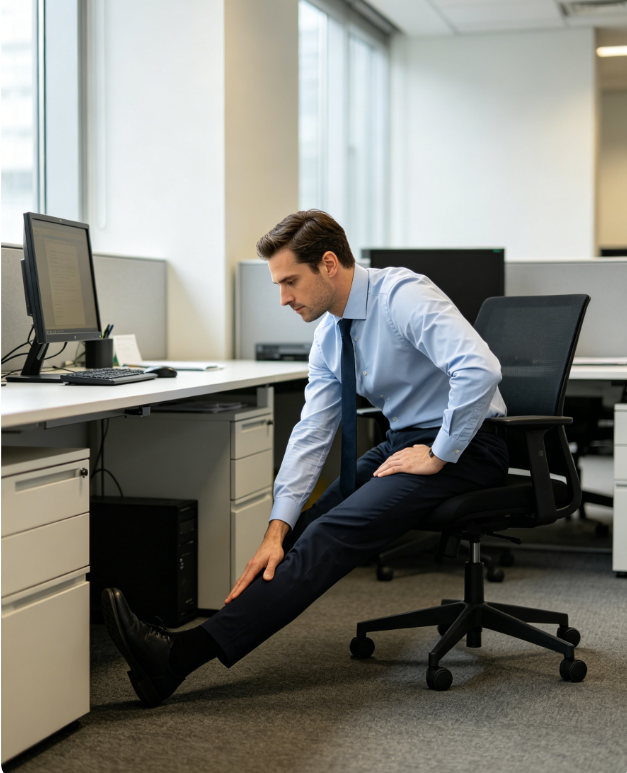
These quick, discreet stretches require no tools, take less than five minutes total, and are designed to target every tension hotspot caused by prolonged sitting. They can be performed quietly at your desk without disrupting your workflow.
1. Slow Neck Release: Gently tilt your head side to side and forward and backward within a comfortable range. Hold each position for 15 seconds to dissolve neck tightness and reduce screen fatigue.
2. Shoulder Roll Reset: Perform slow, large circular shoulder rolls backward and forward. This loosens stiff upper back muscles, relieves shoulder tension, and corrects hunched posture.
3. Seated Chest Opener: Clasp your hands behind your back and lift gently to expand your chest. This counteracts hours of forward-rounded shoulder posture and improves breathing capacity.
4. Gentle Spinal Twist: Fix your hips and twist your torso slowly left and right. Hold each side for 20 seconds to release lumbar pressure and restore spinal flexibility.
5. Seated Hip Stretch: Cross one ankle over your opposite knee and lean forward slightly. This deeply stretches tight hip muscles and reduces lower back dependency strain.
6. Calf and Ankle Activation: Flex, extend, and rotate your feet while seated to boost lower limb circulation and eliminate leg heaviness.
7. Standing Full-Body Reset: Stand tall, stretch your arms overhead, and lengthen your entire torso while taking three deep breaths to instantly refresh body and mind.
The Ideal Work-and-Movement Routine for Desk Workers
Stretching occasionally is not enough to defeat sedentary fatigue. Building a consistent micro-movement routine prevents strain from becoming chronic and keeps your body energized all day long.
Follow a 30-minute mini wellness cycle: every half hour, adjust your posture, relax your shoulders, and shift your gaze to distant objects for a quick reset. Every hour, stand up for 60 seconds to walk, stretch, and break static muscle tension.
Use your lunch break for a longer reset. Five minutes of standing movement and stretching can fully release accumulated morning fatigue, improving energy levels for afternoon focus and productivity.
Daily Lifestyle Habits to Fix Long-Term Sedentary Damage
Office wellness works best when supported by healthy daily habits. Consistent water intake improves blood circulation, reduces muscle stiffness, and flushes metabolic waste caused by inactivity.
Avoid post-work sedentary inertia. Spend 10 to 15 minutes walking or stretching after work to reactivate underused muscles, boost metabolism, and reverse daily sitting strain. Maintain consistent sleep patterns to allow muscles, nerves, and spinal tissues to repair overnight.
Light weekly movement training strengthens core stability, improves posture endurance, and builds long-term resistance against sedentary fatigue and physical sub-health.
Final Thoughts
Prolonged desk sitting is an unavoidable part of modern professional life, but chronic stiffness, low energy, and poor posture do not have to be your permanent norm. Most office sub-health conditions arise from static inertia, uncorrected posture, and insufficient daily movement.
By practicing ergonomic sitting habits, performing quick daily desk stretches, maintaining a balanced work-movement rhythm, and building healthy lifestyle routines, every desk worker can effectively reverse sedentary damage, eliminate chronic fatigue, and sustain long-term physical comfort, vitality, and workplace wellness.