Practical Home Organizing Tips: Sustainable Systems That Reduce Clutter Long-Term
Most home organizing content focuses on quick visual makeovers and aesthetic storage setups that fail to last. Many people spend hours folding clothes, arranging shelves, and buying new organizers, only for clutter to return within days. This common cycle happens not from poor self-discipline, but from unsustainable organizing methods, overcomplicated systems, and misplaced storage habits that do not align with real daily living.
The Real Reason Clutter Keeps Coming Back
Permanent home organization is never about perfect arrangement. It is about solving misallocated storage, unregularized item flow, and overstocked household goods. Most families store items by container or room instead of by usage frequency, forcing daily-used objects into hidden corners and leaving frequently accessed surfaces occupied by rarely used items. This structural disorder creates continuous mess regardless of frequent tidying.
Sustainable organizing follows one core rule: high-frequency items stay accessible, low-frequency items stay stored, and useless items stay out of the home.
Universal Organizing Rules for Every Room
These basic principles apply to all household spaces and eliminate 80% of repetitive organizing work.
Organize by usage frequency, not category. Traditional category-based sorting—grouping all clothes, tools, or cosmetics together—creates invisible access barriers. Daily-used items should be placed at hand height and visible positions. Occasional items can be stored in upper cabinets or deep shelf areas. Seasonal and emergency supplies belong in out-of-the-way storage zones. This frequency-based layout naturally reduces mess.
Adopt the “one in, one out” rule for all consumables and daily goods. Most household clutter accumulates from continuous unregulated purchases. For every new item added to daily supplies, clothing, and small accessories, remove one old or unused counterpart. This rule prevents blind overstocking and keeps household item quantities stable without strict inventory counting.
Reserve blank buffer space in every storage area. Fully filled cabinets, drawers, and shelves have no tolerance for daily messy placement. Leaving 10% to 15% blank space in all storage zones allows flexible temporary placement of sudden items and avoids overall collapse of neat storage systems after casual use.
Bedroom & Closet Organizing: No-Fuss Clothing Storage
Bedroom clutter mainly comes from disordered clothing, idle bedding, and fragmented personal accessories. Complicated folding methods are difficult to maintain long-term; simple classified zoning delivers more stable results.
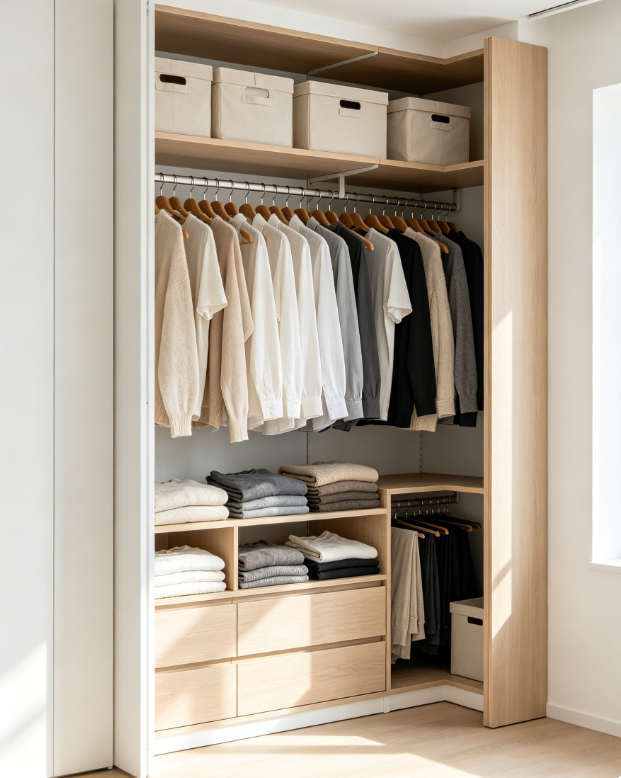
Divide closet space into three fixed zones. Set up a daily wear zone at eye level for current seasonal outfits, a secondary zone for occasional wear, and a top storage zone for off-season clothes and thick bedding. Separating usage zones avoids mixing seasonal garments, which causes repeated rummaging and messy stacking.
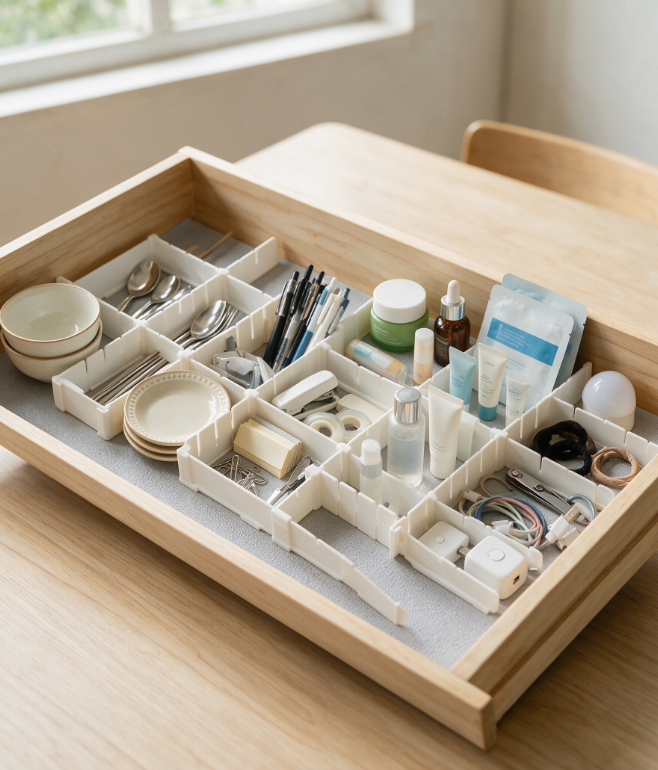
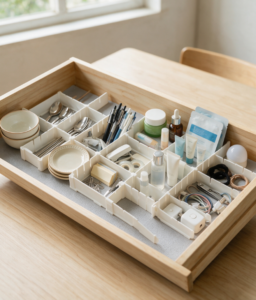
Avoid excessive subdivision for casual clothes. Overly fine partition boxes and layered dividers increase sorting time. Daily T-shirts, pants, and loungewear only need simple drawer zoning. Fine classification is only necessary for small accessories such as socks, underwear, and belts to avoid loss and confusion.
Process idle clothing regularly. Clothes that have not been worn for more than one year, have obvious wear marks, or no longer fit are the main sources of closet crowding. Regular sorting and donation or disposal reduce long-term storage pressure more effectively than increased storage tools.
Kitchen Organizing: Eliminate Countertop Clutter & Overstock
Kitchen disorder affects cooking efficiency and hygiene status. Unreasonable placement of tableware, ingredients, and small appliances leads to crowded countertops and difficult daily cleaning.
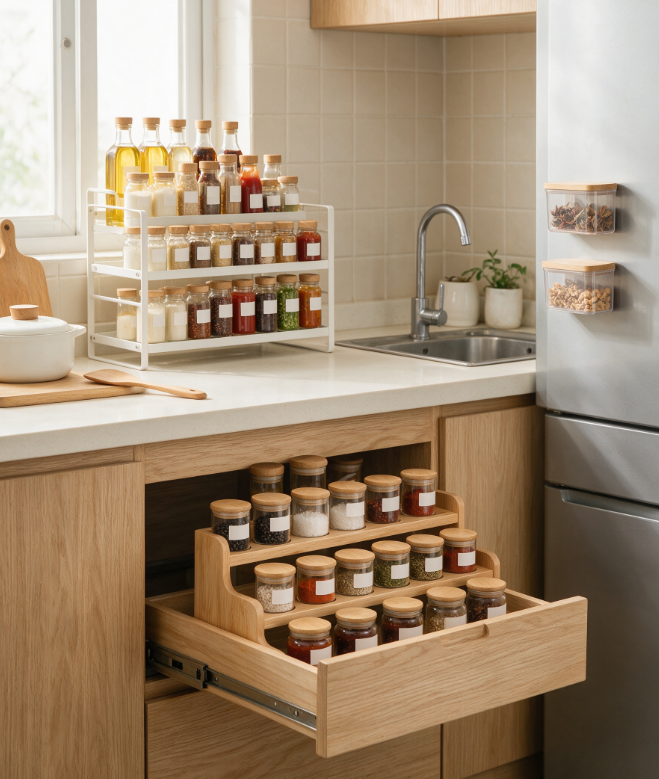
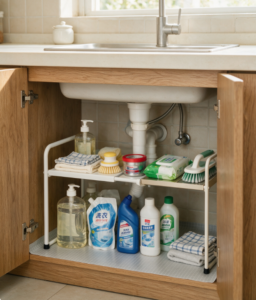
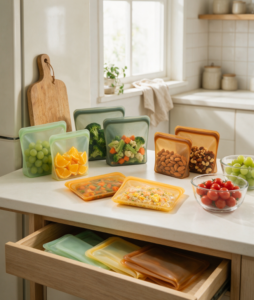
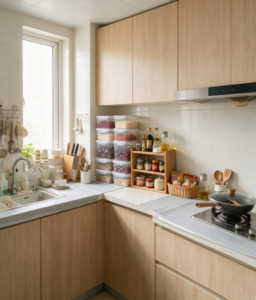
Store kitchen items according to cooking workflow. Place commonly used seasoning bottles, spatulas, and cutting tools near the cooking area. Put cleaning supplies and dishcloths near the sink. Store staple food and ingredients near the preparation area. Workflow-based placement reduces random placement during cooking and keeps countertops naturally tidy.
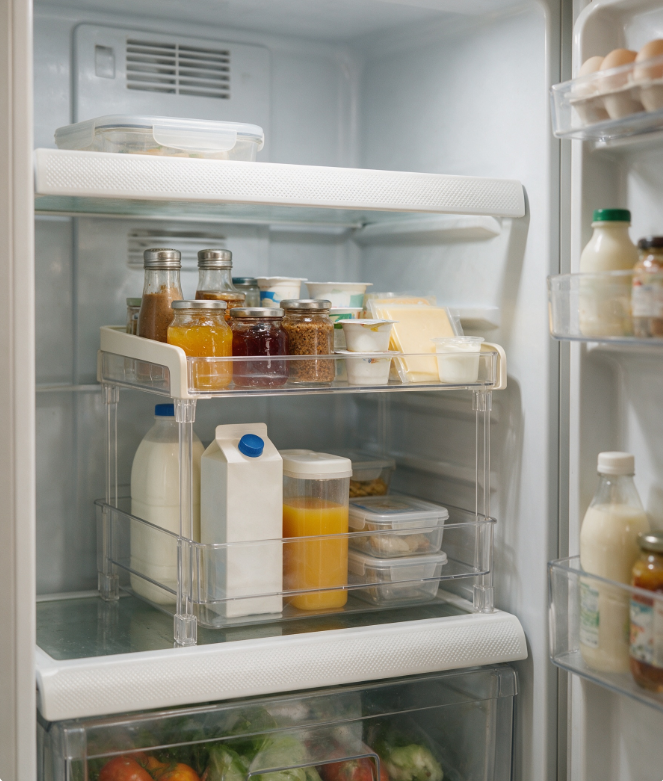
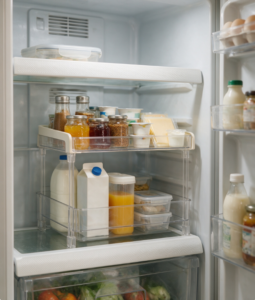
Avoid overstocking dry ingredients and snacks. Many families habitually stock up on grains, snacks, and canned food, exceeding household consumption speed. Expired goods occupy cabinet space and cause messy stacking. Purchase according to monthly consumption and prioritize first-in, first-out storage to avoid waste and crowding.
Centralize small appliances and unified wiring. Multiple small kitchen appliances occupy countertop space and create tangled wires. Concentrating fixed-position appliances in dedicated zones and using simple wire organizers avoids scattered placement and facilitates unified cleaning.
Bathroom Organizing: Moisture-Proof & Mildew-Proof Storage
Bathroom storage must adapt to high-humidity environments. Many popular closed storage boxes cause hidden moisture accumulation, leading to mildew, odor, and product deterioration.
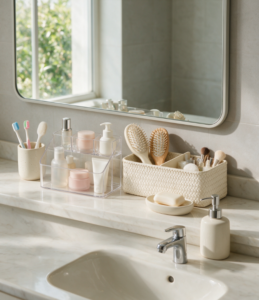
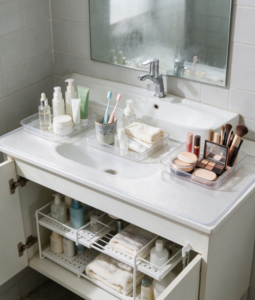
Classify toiletries by usage scenario. Daily facial care products, body washing supplies, and medicated skin products are placed in separate zones to avoid repeated mixing and random placement. High-frequency products are placed on open shelf surfaces for quick access; low-frequency skincare and backup products are stored in ventilated closed cabinets.
Keep towel and cleaning tool storage ventilated. Closed baskets easily trap moisture and breed bacteria. Hanging storage and hollow breathable containers are more suitable for bathroom environments, ensuring timely drying and reducing mildew odors.
Regularly clean expired toiletries. Skincare products, body washes, and oral care items have limited service life. Expired products not only occupy space but also lose efficacy and may cause skin irritation. Monthly inspection and cleaning maintain bathroom storage quality.
Living Room & Entryway: Fix Random Daily Clutter
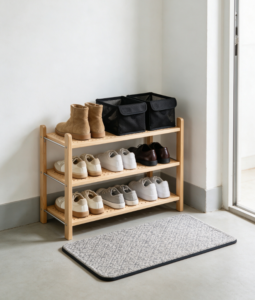
Living room and entryway clutter is mostly temporary messy placement of daily outgoing and leisure items, rather than accumulated idle goods. Fixed temporary storage zones solve most visual messes.
Set up a dedicated temporary storage tray. Keys, wallets, earphones, letters, and sundries are the main sources of desktop and console mess. A fixed shallow tray concentrates scattered small items and avoids random placement throughout the room.
Control decorative item quantity appropriately. Excess ornaments, photo frames, and craft decorations accumulate dust and occupy space. Moderate decoration reduces cleaning pressure and maintains a neat visual effect without sacrificing home warmth.
Low-Burden Weekly Organizing Routine
Long-term neatness relies on fixed micro-maintenance rather than occasional large-scale sorting. A low-burden weekly cycle prevents clutter accumulation.
Daily 2-minute reset. Before resting every night, put randomly placed items back into fixed zones and clear temporary clutter. Short daily resets avoid overnight accumulation of messes.
Weekly partial sorting. Every weekend, check one storage area, dispose of idle and expired items, and adjust misplaced goods. Zone-by-week sorting avoids exhaustive full-house tidying.
Monthly inventory finishing. Check stock quantities of daily consumables, eliminate excess overstock, and optimize storage layout according to seasonal usage changes.
Common Organizing Mistakes to Avoid
Many popular organizing methods increase household burden instead of solving problems.
Blindly buying storage tools is the biggest organizing trap. Most messy homes are not short of containers but lack reasonable zoning habits. Excess storage boxes and dividers divide space fragmentarily, making item access more troublesome and easier to accumulate hidden clutter.
Pursuing overly uniform placement is unsustainable. Forcing all containers to be consistent in style and size often sacrifices practicality for appearance. Different items require different storage forms; uniform aesthetics cannot adapt to complex household needs.
Storing rarely used items in core positions. Placing seasonal goods, spare supplies, and idle items in easy-access zones squeezes daily usable space and causes visual crowding.
Conclusion
Genuine home organizing is a systematic household management habit, not a one-time aesthetic transformation. The core of effective tidying is reducing idle items, matching scientific storage positions, and building low-maintenance sorting logic. Abandoning complicated formal methods and adhering to practical living-oriented organizing rules can keep the home continuously neat, orderly, and easy to manage without frequent repeated tidying labor.