Hype-Free Household Buying Guide: How to Choose Reliable Home Essentials (2026)
Household goods are daily necessities that support a comfortable living environment. However, many consumers make uninformed buying decisions due to trendy social media content, vague marketing terms, and attractive low-price promotions. A large number of popular home products lack durability, practicality, and easy maintenance, resulting in frequent replacements, extra housework, and wasted household expenses.
Basic Principles for Buying Household Items
These universal selection rules apply to all types of home supplies and help users eliminate unsuitable products quickly.
Practicality comes first. A product’s appearance should never be the primary purchasing factor. Many beautifully designed household items have unreasonable structural flaws, accumulate dust easily, and cannot solve actual living problems. When shopping, always confirm whether the product matches your daily usage needs, rather than relying on visual attraction or online popularity.
Choose products that fit your home and lifestyle. No single household product suits all families. Small apartments require compact, space-saving goods to avoid crowded layouts. Households with children or pets need non-toxic, sturdy, stain-resistant, and drop-resistant supplies. Office workers and busy families are more suitable for low-maintenance, easy-to-clean household items that reduce daily housework pressure.
Focus on long-term cost performance. Ultra-low-priced household products usually adopt inferior materials and simple craftsmanship. They are prone to deformation, fading, damage, and performance loss after short-term use, leading to continuous repurchase costs. On the contrary, high-priced products do not always mean high quality. Users should focus on material stability, structural firmness, and easy replacement of accessories to judge real value.
Practical Selection Tips for Common Household Categories
Home Furniture
Furniture is a long-term home investment, and structural stability is more important than trendy design. Qualified furniture has tight joints, stable support frames, and smooth hardware accessories such as hinges and slide rails, which can maintain stable use for years without loosening, shaking, or abnormal noise.
Artificial board furniture with low density easily absorbs moisture and deforms in humid environments. Furniture made of processed dry wood and reinforced structures has better environmental adaptability. For sofas and soft seating, high-density filler can maintain long-term elasticity and flatness, while low-quality filler will sink and deform after daily use. Removable and washable cloth covers effectively reduce cleaning costs and extend service life.
Storage & Organization Supplies
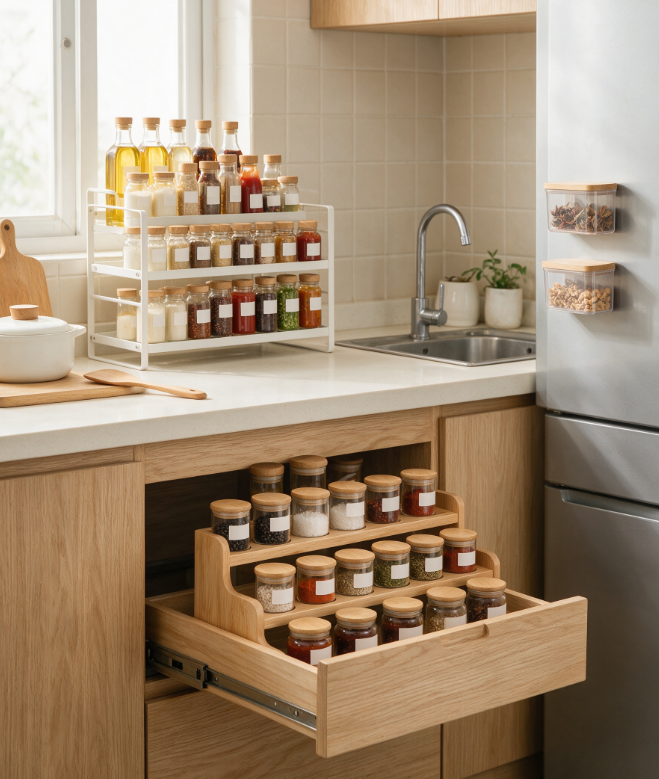
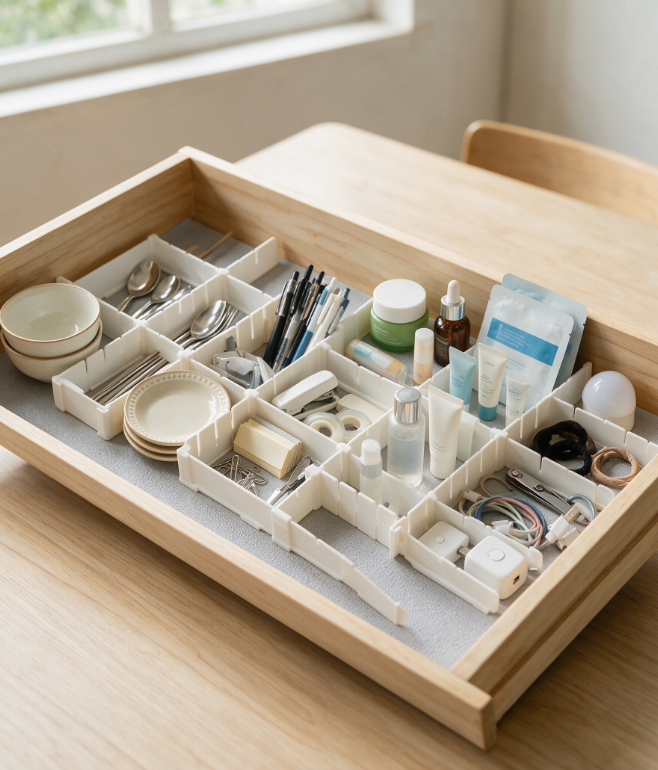
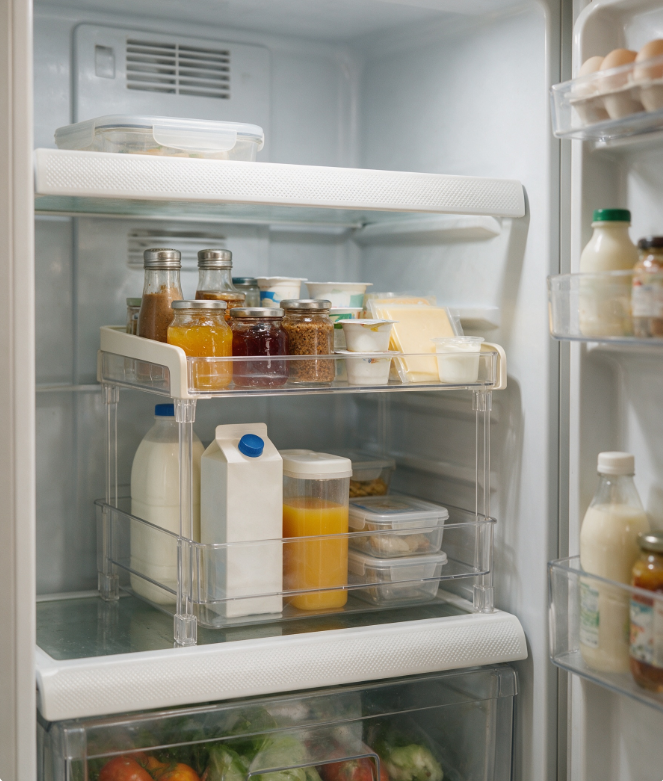
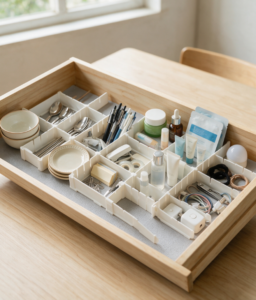
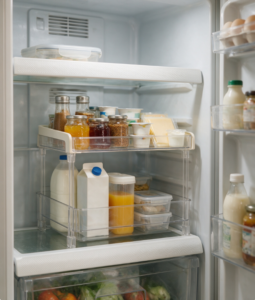
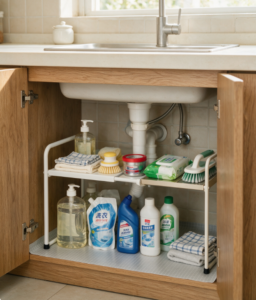
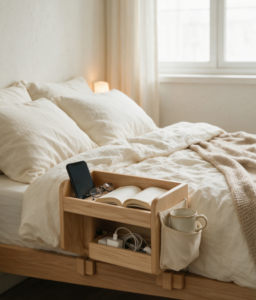
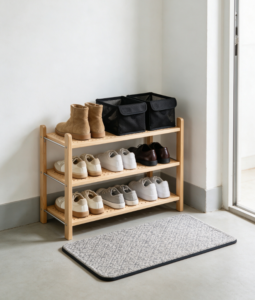
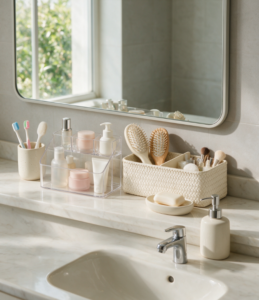
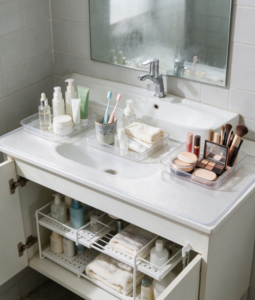
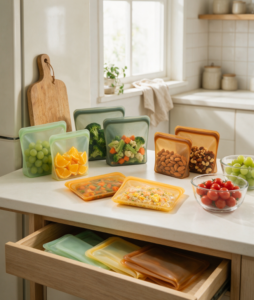
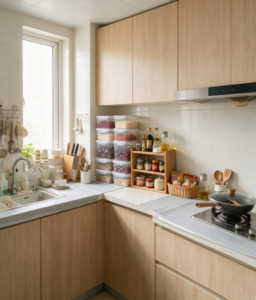
The core purpose of storage supplies is to organize space and reduce clutter. Reliable storage boxes, racks, and partition tools have stable bearing capacity, moisture-proof, and dust-proof properties. Thin and brittle plastic storage products are easy to crack and deform after stacking and extrusion, making them unsuitable for long-term use.
Stackable and unified-size storage products maximize indoor space utilization. Products with too many decorative edges and special shapes will form cleaning dead corners and increase daily housework. Transparent or label-design storage tools improve item management efficiency and are more practical than purely decorative styles.
Daily Cleaning Tools
High-quality cleaning tools are designed with simple and detachable structures. Many multi-functional cleaning tools on the market have complex gaps that easily hide dirt and bacteria and are difficult to clean thoroughly. Single-function cleaning tools with washable parts are more stable and durable for long-term repeated use.
For electric cleaning equipment, users should not judge quality only by parameter data. Actual floor adaptability, noise performance, and the availability of replacement consumables are more important. Products without replaceable accessories will be scrapped early, bringing invisible usage costs.
Home Textiles
Bedding, curtains, carpets and other textiles are in long-term contact with the human body, so material safety is the top priority. Qualified home textiles have complete material labels, no pungent chemical odor, and stable color fastness, and will not fade or pollute during cleaning.
Curtains can be selected according to scene needs: bedroom curtains focus on proper shading to ensure sleep quality, while living room curtains focus on light transmission and ventilation. Fluffy high-pile textiles look warm but easily accumulate dust, mites and pet hair, requiring frequent cleaning. Flat woven textiles are lower-maintenance and more suitable for long-term family use.
Common Shopping Mistakes to Avoid
Blind pursuit of multi-functional products. Most all-in-one household products compromise single-function performance. Professional single-purpose tools usually have better stability and longer service life than multi-functional integrated products.
Buying trending products impulsively. Most viral Internet-famous household goods are designed for novelty, not practicality. They have low universality, cannot match most home styles, and are easily left idle after the freshness period, causing resource waste.
Ignoring after-sales service. Many unbranded cheap household products have no effective warranty and after-sales support. For frequently used daily necessities, basic warranty and complete after-sales channels can avoid losses caused by defective quality and premature damage.
Final Conclusion
Sensible household shopping is based on personal needs rather than market trends. The best household products are practical, safe, durable, and easy to maintain. By staying rational, ignoring commercial hype, and judging products through objective quality standards, users can build a clean, comfortable, and cost-effective home environment and avoid unnecessary consumption waste.