Practical Home Organizing Tips: Sustainable Clutter Control for Everyday Homes
Most home organizing content online focuses on instant visual results rather than long-term sustainability. Many homeowners fall into a tiring cycle: spending hours deep cleaning and rearranging storage spaces, only for clutter to return within a week. This common issue is not caused by poor self-discipline. It results from impractical organizing methods designed for staged, perfect-looking interiors instead of regular lived-in homes with daily use, family activities, and busy schedules.
Why Clutter Keeps Returning After Organizing
The core reason for recurring mess lies in unreasonable storage logic. Most people organize items by rigid category, such as grouping all clothes, toiletries, or sundries together. This method ignores usage frequency and daily habits, creating an awkward space contradiction. Frequently used daily items are hidden in deep cabinets and hard-to-reach drawers, while rarely used seasonal supplies and idle objects occupy convenient, prime storage positions.
When daily necessities require extra time and effort to put back in place, random temporary placement becomes inevitable. Small messy habits accumulate over time and eventually turn into overall household clutter. Sustainable home organization does not rely on strict self-management; it adapts storage layouts to natural daily behaviors.
Four Universal Organizing Principles for the Whole House
These basic, easy-to-follow principles apply to all household spaces and effectively reduce 80% of repetitive tidying work.
Prioritize storage by usage frequency. Classify all household items based on how often they are used. Daily necessities, including casual outfits, basic toiletries, and common tableware, are placed at eye level and arm’s reach. Items used weekly or monthly are stored in middle-layer cabinets and ordinary drawers. Seasonal decorations, spare supplies, and emergency items are placed in high shelves or deep storage areas. This reasonable partition avoids frequent rummaging and messy resettlement.
Control item accumulation moderately. Uncontrolled purchasing and blind stockpiling are the main sources of household clutter. Many families keep buying new items while retaining old, unused duplicates, leading to gradual space crowding. Forming the habit of replacing old items with new ones and cleaning up idle goods regularly can stabilize household item quantity without complicated inventory management.
Reserve appropriate buffer space. Fully filled drawers and cabinets have no tolerance for temporary placement of daily sundries. Leaving 10% to 15% blank space in each storage zone can accommodate occasional messy placement, preventing the entire organizing system from collapsing due to small daily mistakes.
Match storage methods to item attributes. Different items require targeted storage solutions. Damp-prone bathroom goods need breathable placement, fragile items need fixed anti-collision storage, and food supplies need dry and dust-proof zoning. Unified single storage methods will lead to item damage, mildew, and hidden dirt accumulation.
Bedroom and Closet Organization: Low-Maintenance Wardrobe Management
Bedroom clutter is mainly caused by mixed seasonal clothing, piled idle bedding, and scattered small accessories. Complex folding skills and over-refined classification are difficult to maintain in daily life. Simplified zoning and regular screening are more practical for long-term tidiness.
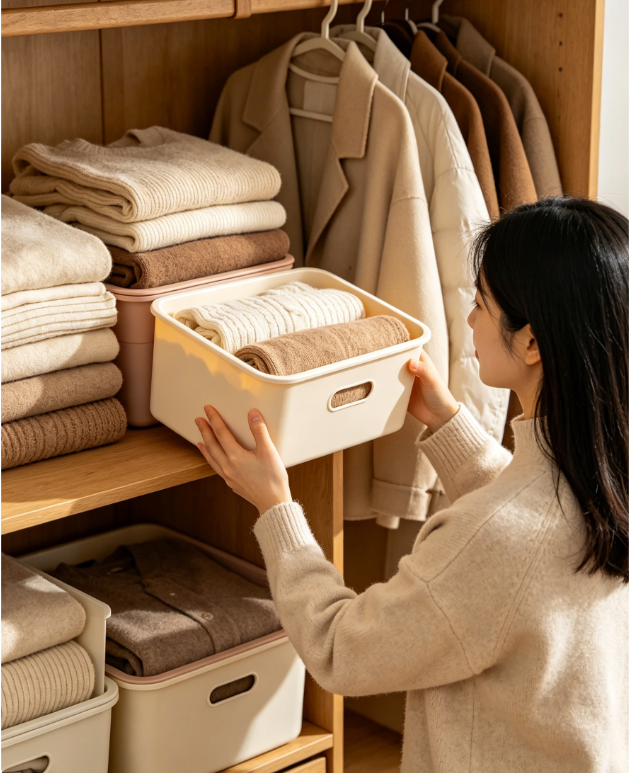
Build seasonal wardrobe zoning. Divide the closet into current-season daily wear area, occasional wear area, and off-season storage area. Put daily matching clothes in the most accessible position to reduce daily sorting time. Store thick quilts and off-season clothes in sealed storage tools to save active living space and avoid dust accumulation.
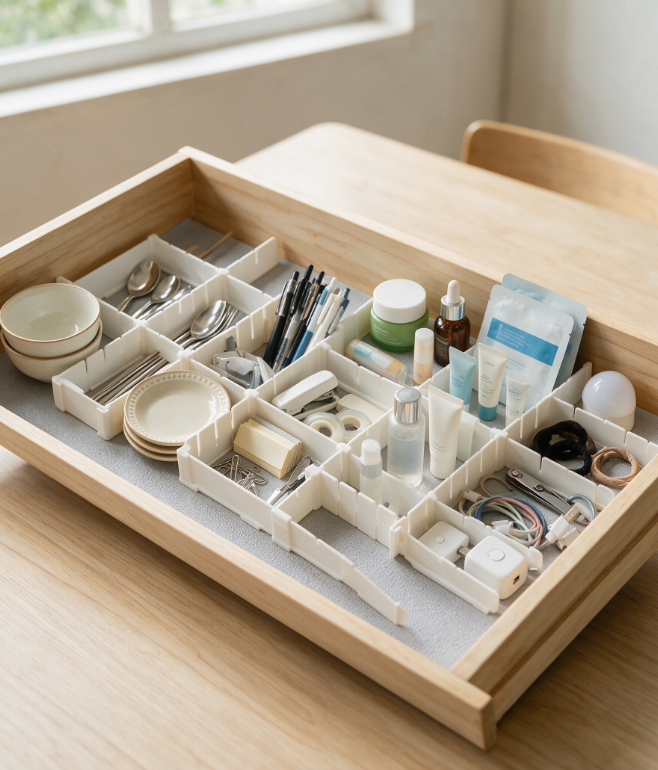
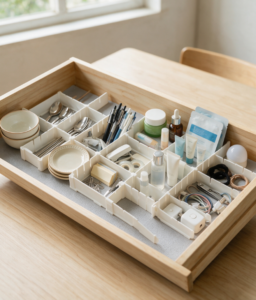
Simplify drawer classification. Daily casual clothes such as T-shirts and pants only need rough partition storage. Excess partition boards will waste space and increase tidying difficulty. Only small items that are easy to lose, including socks, undergarments, and hair accessories, need fine classified storage.
Conduct regular wardrobe cleaning. Clothes that have not been worn for more than one year, ill-fitting garments, and severely worn-out outfits are the main causes of wardrobe bloat. Timely donation, resale, or disposal of idle clothes can fundamentally reduce storage pressure.
Kitchen Organization: Eliminate Countertop Chaos and Hidden Hygiene Risks
Kitchen disorder not only affects visual neatness but also reduces cooking efficiency and breeds hidden bacteria. Most kitchen messes come from misplaced tools, overstocked ingredients, and scattered small appliances.
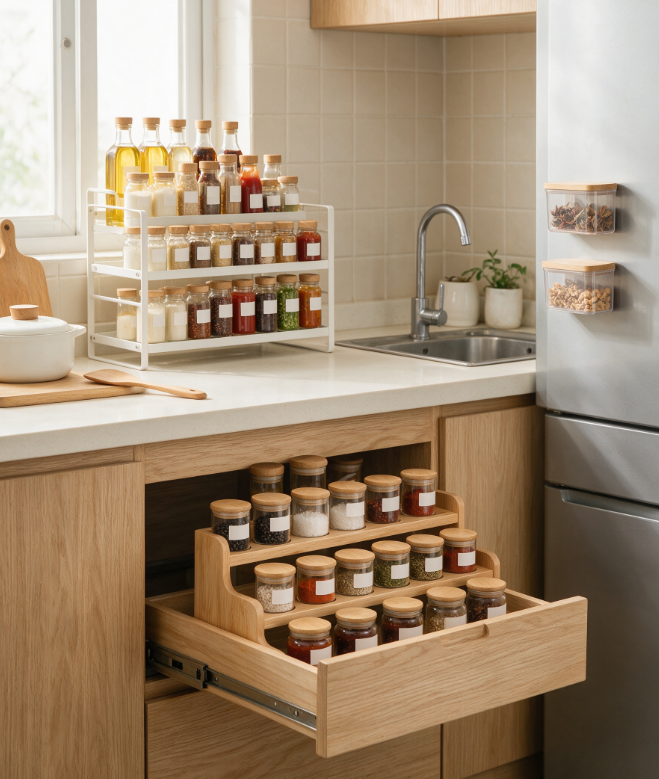
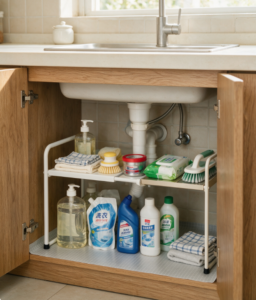
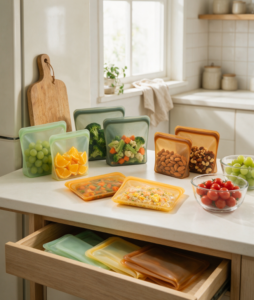
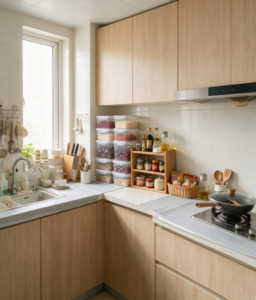
Follow workflow-based storage. Place cooking utensils, seasonings, and spatulas near the stove. Put cleaning tools and dish soap near the sink. Store food containers and cutting tools near the vegetable preparation area. Storing items according to cooking habits allows tools to be put back naturally after use, avoiding random placement.
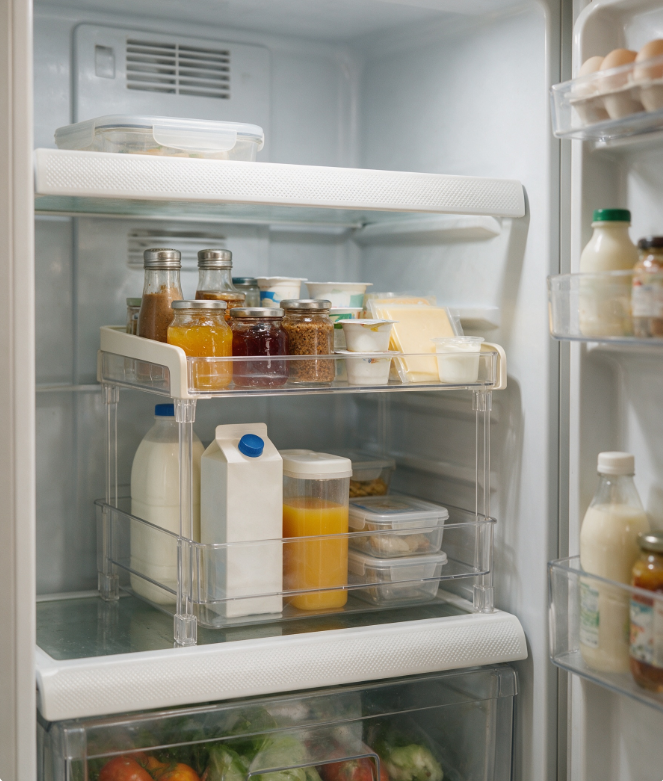
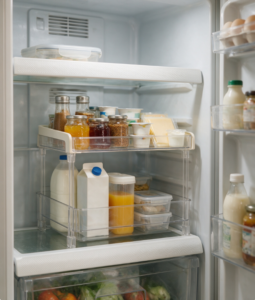
Avoid excessive food stockpiling. Bulk purchases of grains, snacks, and canned goods often exceed family consumption speed. Long-term overstock leads to expired food waste and crowded cabinets. Adhere to the first-in, first-out principle and purchase ingredients according to actual monthly consumption.
Centralize small appliances and tidy wires. Scattered kettles, air fryers, and blenders occupy countertop space, and tangled wires accumulate dust. Concentrate commonly used small appliances in fixed areas and organize wires uniformly to keep countertops smooth and easy to clean.
Bathroom Organization: Moisture-Proof and Mildew-Free Storage
Bathrooms are in a high-humidity environment all year round. Improper storage will lead to mold growth, peculiar odors, and product deterioration. Many fully enclosed storage tools trap moisture and aggravate sanitary problems.
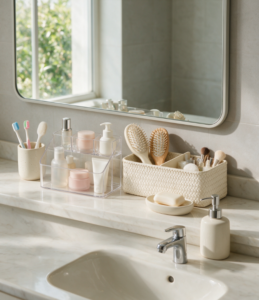
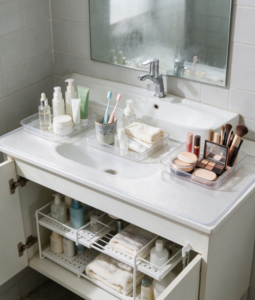
Classify toiletries by usage scenario. Place daily facial care, oral care, and body care products on open layered shelves for quick access. Store backup toiletries and low-frequency skincare products in ventilated closed cabinets to avoid dust and moisture erosion.
Keep damp items breathable. Towels, bath sponges, and cleaning cloths retain moisture after use. Sealed storage cannot drain residual water, which easily breeds bacteria and mildew. Hanging storage and hollow breathable baskets ensure rapid drying and maintain bathroom hygiene.
Clean up expired products monthly. Skincare products, cosmetics, and oral care items have fixed shelf lives. Expired products lose efficacy, may irritate the skin, and occupy valuable storage space. A simple monthly inspection effectively avoids waste and clutter.
Living Room and Entryway Organization: Solve Temporary Visual Clutter
Most living room and entryway clutter is temporary, formed by scattered keys, mail, remote controls, and portable sundries. These small items make the home look messy and affect the overall sense of order.
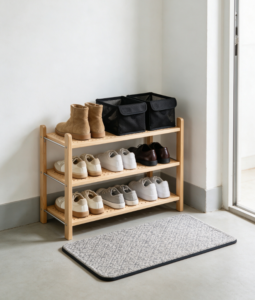
Set up a fixed temporary storage zone. Place a shallow storage tray or small basket at the entryway and living room console to centrally store daily small items. This simple setting prevents sundries from scattering on tables, sofas, and floors.
Reduce invalid decorative accumulation. Excessive photo frames, ornaments, and crafts accumulate dust, increase cleaning pressure, and crowd visual space. Properly simplifying surface decorations can maintain a comfortable and tidy home atmosphere.
Low-Burden Sustainable Tidying Routine
Long-term household tidiness does not depend on occasional large-scale deep cleaning, but on low-frequency and low-burden daily maintenance.
Daily 2-minute reset. Before going to bed every day, simply sort misplaced items and clean up surface clutter to prevent small messes from accumulating overnight.
Weekly regional tidying. Select one room or storage area every week for targeted sorting and idle item cleaning to avoid centralized cleaning fatigue on weekends.
Seasonal layout optimization. Every three months, adjust storage layout according to seasonal changes, replace seasonal supplies, and clear long-term idle items to keep the home space efficient and orderly.
Common Organizing Mistakes to Avoid
Many popular online organizing methods are not suitable for ordinary families and will increase household burden instead.
Blindly buying a large number of storage tools. Most messy homes are not short of storage space but lack reasonable sorting habits. Excess storage boxes and dividers fragment the space, form hidden cleaning dead corners, and make item retrieval more troublesome.
Pursuing aesthetics over practicality. Uniform color and size storage tools look neat in photos, but they ignore the size and usage differences of real household items. Functional practicality is always more important than visual uniformity.
Occupying core spaces with idle items. Seasonal decorations and spare supplies should not occupy the most convenient storage positions, which will squeeze daily living space and cause persistent visual clutter.
Conclusion
Genuine home organization is a set of scientific and practical household management systems, not superficial aesthetic decoration. It does not require expensive equipment or a lot of spare time. By establishing usage-matched storage logic, controlling item accumulation, avoiding wrong organizing habits, and adhering to low-burden daily maintenance, every family can maintain a clean, orderly, and comfortable living environment stably for a long time.