Hard Surface Cleaning Guide: Avoid Streaks, Scratches, and Residue on Floors, Tile and Glass
Most household hard surface cleaning issues stem from incorrect tools, improper cleaning solutions, and wrong wiping techniques, not insufficient cleaning effort. Many homeowners use universal cleaners and scrubbing tools on all hard surfaces, unaware that different materials have unique tolerance limits. This one-size-fits-all approach causes permanent surface scratches, hazy residue, recurring streaks, and gradual finish fading over time.
Why Hard Surfaces Look Dirty Even After Regular Cleaning
Hard surfaces including tile, hardwood, vinyl, glass, and metal fixtures appear clean immediately after wiping but quickly turn dull or streaky due to three invisible problems: residual surfactant film, micro-scratch accumulation, and uneven water mineral deposition. Unlike visible dirt, these hidden issues cannot be fixed with repeated scrubbing.
Chemical residue from over-diluted or mismatched cleaners forms a sticky transparent layer that attracts dust and lint. Improper scrub tools leave tiny surface abrasions that trap grime. Uncontrolled water drying creates uneven mineral spots. Over weeks and months, these minor issues stack up, making once-smooth surfaces permanently matte, discolored, and harder to clean.
Material-Specific Cleaning Rules for Common Hard Surfaces
Glazed Floor & Wall Tile
Glazed tile is durable but prone to soap scum, limescale, and grout dirt buildup. The biggest mistake users make is using rough scouring pads or high-alkaline cleaners for daily tile cleaning. These tools and chemicals gradually wear down the tile’s glossy coating, resulting in irreversible dullness.
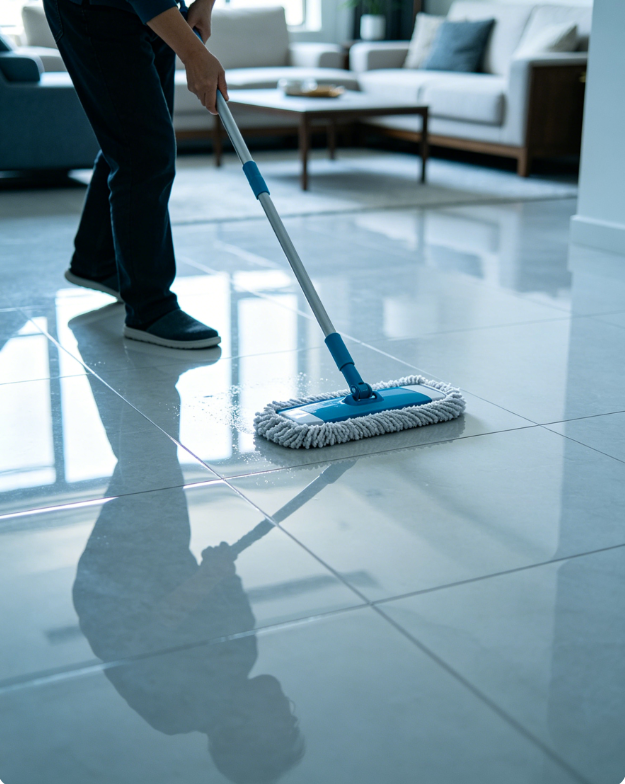
For daily maintenance, use neutral diluted cleaner and soft microfiber mops or cloths to wipe tile surfaces. This removes daily dust and light residue without harming the glaze. For grout line dirt, use a soft detail brush for targeted scrubbing instead of aggressive abrasive tools. Harsh scrubbing cleans grout temporarily but scratches surrounding tile glaze, accelerating future dirt adhesion.
Avoid leaving cleaning solution on tile surfaces for extended periods. Prolonged chemical contact causes uneven fading and residue buildup on glossy finishes.
Wood & Engineered Hardwood Floors
Wood and engineered wood floors are sensitive to excessive water, high humidity, and strong chemicals. Excess moisture penetrates floor gaps, causing warping, swelling, cracking, and mold growth underneath surface layers. Strong alkaline cleaners strip floor wax and protective coatings, leading to color fading and rough texture.
The correct wood floor cleaning method is dry cleaning first, followed by damp wiping with well-wrung microfiber tools. No standing water should remain on the floor surface after mopping. Use only wood-floor-specific neutral cleaners for occasional deep maintenance. Avoid steam mops on unsealed or aging hardwood floors, as high temperature and humidity damage internal bonding layers.
Wipe up liquid spills immediately on wood flooring to prevent water penetration and dark water stains.
Vinyl & Laminate Surfaces
Vinyl flooring and laminate countertops are budget-friendly and widely used, but their surface layers are easily damaged by abrasive scrubbers and concentrated chemicals. Many users mistakenly use heavy-duty degreasers and scouring pads to clean stains, resulting in surface peeling, discoloration, and permanent matte marks.
Daily cleaning only requires warm water and mild neutral detergent. Soft cloth wiping is sufficient to remove routine dust and stains. For stubborn sticky residue, allow the damp cloth to rest on the stain for several minutes to soften grime, then wipe gently. Never use steel wool or hard scrub brushes on vinyl and laminate surfaces.
Glass, Windows & Mirrors
Glass and mirror cleaning frequently suffers from streaks, haze, and lint residue. These problems are not caused by poor cleaner quality but by incorrect wiping sequences and low-quality tools. Ordinary cotton cloths leave lint fibers, while wet uneven wiping creates overlapping water streaks.
For flawless glass cleaning, use lint-free microfiber cloths. Clean glass surfaces in a single direction instead of random circular wiping. For daily light water spots, dry wiping after water evaporation prevents mineral buildup. For heavy haze and soap film, use mild glass cleaner with proper dwell time, then wipe dry completely.
Avoid cleaning glass under direct sunlight. Fast sunlight evaporation traps residue and forms stubborn invisible haze that is difficult to remove.
Stainless Steel Fixtures & Appliances
Stainless steel sinks, faucets, and kitchen appliances easily accumulate fingerprint marks, water spots, and faint oil film. Many users use abrasive cleaners to polish stainless steel, which scratches the fine surface grain and destroys the anti-fouling layer.
Clean stainless steel surfaces following the metal grain direction to avoid visible streaks. Use soft microfiber cloths and mild neutral cleaners. After cleaning, wipe the surface dry to prevent mineral water spots. Well-maintained stainless steel retains its smooth finish and resists daily fingerprint contamination better over time.
Universal Hard Surface Cleaning Mistakes to Avoid
Using excessive cleaner concentration: Over-dosed cleaning solutions do not improve cleaning results. They leave thick residue films that attract dust and cause streaks. Most hard surfaces only require highly diluted cleaner for daily maintenance.
Scrubbing randomly with abrasive tools: Rough sponges, steel wool, and hard brushes create micro-scratches on almost all smooth hard surfaces. These tiny scratches accumulate dirt and make future cleaning more difficult.
Leaving surfaces air-dry uncleaned: Unwiped water and cleaner residue evaporate and leave mineral and chemical layers. Active manual drying ensures residue-free, streak-free surfaces.
Mixing different cleaning chemicals: Random chemical mixing causes surface discoloration and leaves harmful residual compounds, while failing to boost cleaning efficiency.
Long-Term Surface Protection Habits
Consistent protection is more effective than repeated cleaning. Wipe up spills immediately, separate cleaning tools for different surface types, follow material-specific cleaner guidelines, and always finish wet cleaning with complete drying. These simple habits preserve surface gloss, prevent residue accumulation, and extend the service life of home floors and fixtures.
Conclusion
Effective hard surface cleaning relies on material awareness, correct tool selection, and standardized wiping techniques, not stronger cleaners or harder scrubbing. Matching cleaning methods to tile, wood, vinyl, glass, and stainless steel surfaces eliminates streaks, scratches, and hidden residue buildup. Scientific daily maintenance keeps all household hard surfaces smooth, bright, and truly clean, reducing long-term cleaning difficulty and avoiding premature surface aging and damage.