No-Fuss Cleaning Tool Maintenance: Practical Daily Care to Avoid Common Household Cleaning Failures
Many homeowners struggle with inconsistent cleaning results despite using high-quality cleaners and following detailed cleaning routines. The overlooked root cause is poorly maintained cleaning tools. Dirty, worn, or incorrectly cared-for tools introduce hidden grime, bacteria, and streaky residue during every cleaning session, undoing manual efforts and creating recurring household hygiene issues. Most mainstream cleaning content focuses on surface-cleaning techniques while ignoring tool upkeep, which is the foundation of reliable home cleaning.
How Neglected Cleaning Tools Ruin Your Home’s Cleanliness
Cleaning tools are designed to capture and trap dirt, dust, grease, and bacteria. Without timely and proper care, these contaminants remain trapped inside tool fibers, bristles, and components, turning clean tools into active sources of household pollution.
Fabric tools like microfiber cloths and mop pads hold invisible grease and soap residue deep within fibers. With repeated use, this residue builds up, forming a sticky film that attracts more dust instead of removing it. Hardened residue also causes streaks on floors, countertops, and glass surfaces, leaving homes looking dull and unclean shortly after cleaning.
Brushes, sponges, and vacuum accessories harbor moisture and organic debris. In poorly ventilated environments, these trapped materials breed mold spores and bacteria. During subsequent cleaning, these microbes spread across floors, bathroom surfaces, and furniture, leading to unexplained musty odors and hidden hygiene risks.
Over time, unmaintained tools suffer structural degradation. Fiber elasticity fades, bristles deform, and vacuum filters clog permanently. This gradual wear reduces cleaning effectiveness, forcing users to spend extra time re-cleaning the same areas.
Practical Maintenance for Core Household Cleaning Tools
Microfiber Cloths: Eliminate Residue and Restore Adsorption
Microfiber cleaning cloths rely on ultra-fine split fibers to trap fine dust, pet hair, and light oil. The biggest issue affecting their performance is invisible residual detergent and kitchen grease. Simple water rinsing cannot remove deep-set residue, which gradually seals fiber gaps and disables dust adsorption.
For daily upkeep, rinse cloths thoroughly under running water after each use and squeeze firmly to expel all moisture. Weekly deep cleaning is essential: wash cloths with only mild neutral detergent in lukewarm water. Avoid bleach, high-temperature washing, and fabric softeners entirely. These additives damage fiber structure and form a permanent coating that ruins cleaning performance.
Air-dry microfiber cloths in a fully ventilated space. Avoid direct prolonged sunlight exposure, which makes fibers brittle and prone to shedding. Once cloths develop permanent stiffness, frayed edges, or persistent odors after washing, replace them immediately to avoid compromised cleaning quality.
Flat Mop Pads: Prevent Streaks and Mildew Buildup
Flat mop pads are prone to layered residue accumulation. Floor wax, detergent film, and fine sediment embed deep in pad fibers, causing floors to appear hazy and streaky after mopping. Damp storage worsens the problem by fostering mildew growth and sour odors.
After each mopping session, detach the mop pad and rinse repeatedly until no foam or dirty residue remains. For monthly deep maintenance, soak pads in diluted neutral cleaning solution for 10 minutes to dissolve accumulated floor wax and soap film, then rinse and air-dry completely.
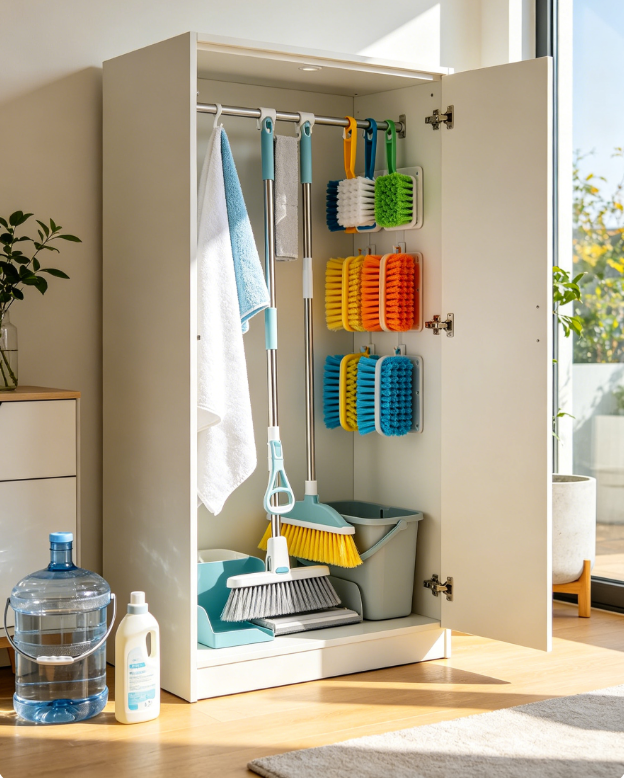
Never store damp mop pads in closed buckets or cabinets. Always hang pads vertically to allow full water drainage and airflow. Replace mop pads when fibers become matted, discolored, or fail to dry completely even with ventilation.
Cleaning Brushes: Preserve Bristle Shape and Cleaning Precision
Tile gap brushes, bathroom scrub brushes, and detail cleaning brushes commonly suffer from two issues: deformed bristles and dirt trapped at bristle roots. Flat storage crushes bristles, while incomplete rinsing leaves mold and soap scum hidden in dense bristle layers.
After every use, rinse brushes thoroughly to flush out gap debris and soap residue. For bathroom brushes exposed to mold and limescale, perform monthly light soaking with mild descaling solution to remove invisible buildup. Always hang brushes upright with bristles facing upward to maintain shape and enable full drying.
Match brush hardness to cleaning surfaces strictly. Hard-bristle brushes are only for rough tile gaps and floor drains, while soft-bristle brushes suit glass, wood, and fabric surfaces. This avoids bristle wear and surface scratching simultaneously.
Vacuum Cleaner Parts: Maintain Stable Suction and Air Quality
Vacuum cleaning failures are mostly caused by neglected filter blockages and tangled roller brushes, not motor faults. Clogged filters restrict airflow, reduce suction power, and blow fine dust back into indoor air, causing secondary pollution.
Empty the vacuum dust bin after each use to prevent dust compaction and bacterial growth. Clean washable sponge filters monthly and ensure 100% dryness before reinstallation. Non-washable HEPA filters require regular replacement according to usage frequency to guarantee effective filtration.
Trim tangled hair, pet fur, and threads from the roller brush every two weeks to reduce operating resistance and maintain consistent cleaning efficiency. Wipe dust off nozzle gaps regularly to avoid hidden debris buildup.
Universal Tool Maintenance Rules for All Households
Adhering to a few universal rules can eliminate over 90% of tool degradation and contamination problems, with minimal daily effort.
First, separate tools by usage scenario. Keep kitchen, bathroom, and living room cleaning tools independent to avoid cross-contamination of grease, mold, and bacteria. Never use bathroom cleaning tools on dining or living area surfaces.
Second, avoid prolonged soaking. Short-time soaking helps dissolve stubborn residue, but overnight soaking causes fiber rot, bristle softening, and tool structural damage, shortening service life significantly.
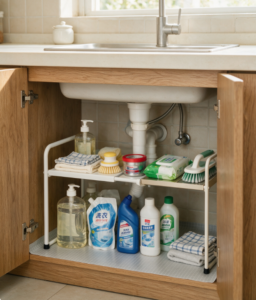
Third, prioritize dry and ventilated storage. All damp cleaning tools must be hung or placed in open spaces. Sealed storage is the primary cause of tool mildew and persistent odors.
Simple Daily & Weekly Tool Care Schedule
Daily routine: Rinse, squeeze dry, and hang all cleaning tools after use; remove visible debris from vacuum accessories.
Weekly routine: Deep clean microfiber cloths and mop pads; inspect brushes for deformation and residue; clean vacuum filter and roller brush.
Monthly routine: Replace severely worn tools; clean tool storage areas to eliminate floating mold spores and dust.
Conclusion
High-quality home cleaning results depend as much on tool maintenance as on cleaning techniques and products. Standardized daily care, scenario-based tool usage, and ventilated storage effectively avoid secondary pollution, streaky surfaces, and musty household odors. By maintaining cleaning tools in good condition, homeowners can achieve cleaner, longer-lasting household hygiene, reduce unnecessary tool replacement costs, and create a truly healthy indoor living environment with low extra effort.