Extend Cleaning Tool Lifespan: Practical Maintenance & Daily Care Tips
Quality cleaning tools are a worthwhile household investment, yet most users replace them far earlier than necessary. Frequent tool damage, performance degradation, odor buildup, and ineffective cleaning are rarely caused by product quality issues. Instead, they stem from daily misuse, improper washing habits, and unscientific long-term storage. Many standard cleaning routines slowly wear down tool structures, waste household budgets, and compromise overall home cleaning results.
Core Principles for Long-Term Cleaning Tool Maintenance
All household cleaning tools have one thing in common: their cleaning ability depends on intact physical structures, including fiber flexibility, bristle toughness, and unobstructed airflow. Any operation that damages these core structures will shorten tool life and weaken cleaning effects.
The first principle is avoiding structural damage. High-temperature washing, strong chemical soaking, and forced extrusion deformation will destroy microfiber gaps, bend brush bristles, and deform vacuum accessories. The second principle is eliminating residual contamination. Invisible dirt, grease, and soap residue accumulate gradually, leading to fiber hardening, mold growth, and permanent tool aging. The third principle is adaptive use. Matching tools to corresponding cleaning scenarios avoids excessive wear caused by mismatched usage.
Targeted Maintenance for High-Frequency Cleaning Tools
Microfiber Towels & Mop Pads
Microfiber tools rely on dense split fibers to capture dust, oil, and fine particles. High-temperature water and harsh chemicals are the biggest threats to their structural integrity. Boiling water or high-heat machine washing melts fine fiber gaps, causing irreversible hardening and loss of adsorption capacity.
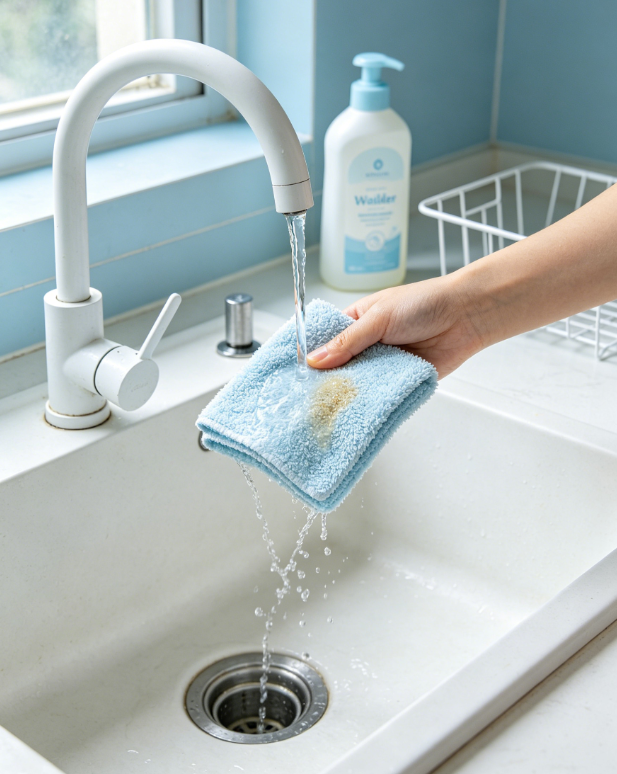
Daily care only requires lukewarm running water and gentle kneading to remove surface dirt. For accumulated grease and embedded dust, use only mild neutral detergent for low-temperature cleaning. Never use bleach, strong alkaline detergents, or fabric softeners. Bleach corrodes fiber structures, while softeners form a coating on fiber surfaces, blocking dust and oil adsorption.
During drying, avoid high-temperature baking and intense sun exposure for long periods. Moderate natural ventilation drying maintains fiber flexibility, while extreme heat makes fibers brittle and prone to shedding. Fold-free hanging storage prevents permanent crease deformation that affects even cleaning contact.
Manual Cleaning Brushes
Tile gap brushes, bathroom scrub brushes, and kitchen detail brushes suffer from two main problems: bristle deformation and hidden dirt accumulation. Many users scrub hard with brushes and rinse casually, leaving organic residue deep in bristle roots. Over time, residue rots, causing odor and bacterial growth, while long-term forced friction bends bristles and reduces cleaning precision.
After each use, fully rinse bristle roots under running water to flush out trapped dirt and soap scum. For aged residue buildup, short-time soaking in diluted neutral cleaner is effective without damaging bristle toughness. Always place brushes with bristles facing upward during drying. Flat placement squeezes bristles flat, distorts their arrangement, and weakens gap-cleaning ability.
Avoid using fine household brushes to scrub rough cement surfaces and rust areas. Excessive friction wears down bristle tips, thinning density and making tools ineffective for detailed gap cleaning.
Vacuum Cleaner Core Accessories
Vacuum lifespan and performance rely entirely on filter integrity and unobstructed airflow. Most users only clean visible dust bins but ignore hidden blockages in HEPA filters, sponge filters, air ducts, and brush roller bearings. Long-term uncleaned fine dust clogs filter pores, reduces suction efficiency, increases motor load, and accelerates equipment aging.
Washable sponge filters need regular cleaning and complete air drying before reinstallation; residual moisture leads to mold growth and internal machine dampness. Non-washable HEPA filters cannot be rinsed with water. Users can only remove surface dust with gentle brushing and replace them according to usage cycles.
Regularly clean tangled hair, threads, and pet fur on the roller brush. Excess winding increases roller operating resistance, causes abnormal noise, and wears down bearing components. Simple monthly maintenance effectively extends the service life of vacuum accessories and the main unit.
Sponges & Scouring Pads
Cleaning sponges have porous structures that easily absorb water, oil, and dirt. Without proper maintenance, sponges become the most bacteria-prone cleaning tools in the home. Squeezing casually after use leaves residual dirt and moisture inside pores, leading to mildew spots and sour odors.
After each use, fully squeeze out all internal water and residue. For weekly deep care, soak sponges in mild diluted disinfectant for a short time to eliminate hidden bacteria, then rinse thoroughly and air dry. Avoid using coarse scouring pads on high-gloss surfaces. Unmatched usage causes surface scratches and also wears down scouring pad texture prematurely.
Hidden Bad Habits That Accelerate Tool Aging
Many unnoticed daily habits greatly reduce cleaning tool durability. Correcting these habits achieves longer tool lifespan without extra maintenance time.
Long-term soaking is a common mistake. Leaving mops, cloths, and brushes soaked in water for hours or overnight causes fiber rot, bristle softening, and glue layer peeling on tool connections. Short soaking aids decontamination, but prolonged soaking destroys tool materials.
Mixed cross-scenario usage accelerates tool contamination and wear. Kitchen tools stained with grease used for bathroom cleaning accumulate mixed dirt that is harder to clean, while bathroom mold-contacted tools used on living room surfaces spread pollutants and shorten overall tool service life.
Over-reliance on manual force during cleaning deforms tools. Excessive scrubbing and twisting damage fiber elasticity and bristle arrangement, making tools lose their original cleaning shape and functionality.
Standard Replacement Judgment for Long-Term Use
Reasonable replacement matches maintenance habits, avoiding unnecessary waste while ensuring cleaning quality. Tools do not need regular fixed replacement; users can judge replacement timing through actual usage status.
Replace microfiber tools when fibers harden, shed heavily, or fail to adsorb dust and oil after deep cleaning. Replace cleaning brushes when bristles bend unevenly, thin out, or cannot clean gaps tightly. Replace sponges and scouring pads when permanent stains, mold spots, or loose porous structures appear. Replace vacuum filters when airflow remains weak even after thorough cleaning.
Conclusion
Extending cleaning tool lifespan depends on standardized daily care and correct usage habits, not frequent replacement or complicated maintenance operations. Avoiding structural damage, eliminating residual contamination, using tools in matched scenarios, and abandoning aging habits can effectively maintain stable cleaning tool performance. Scientific maintenance not only reduces household consumable costs but also avoids secondary pollution caused by aging and contaminated tools, supporting long-term household hygiene with lower living costs.