Realistic Home Organization Tips: Practical, Long-Term Clutter Solutions
Most home organization content overpromises instant results, perfect-looking rooms, and zero future mess. In reality, lasting tidiness does not come from fancy storage products or all-day cleaning marathons. It comes from simple, repeatable, realistic systems that fit everyday life, busy schedules, and normal household use.
Why Most Homes Keep Getting Messy (Real Causes)
Before reorganizing a space, understanding the real source of clutter helps avoid endless repeated tidying. Most household mess occurs for three practical reasons: items have no fixed home, people keep accumulating new possessions without removing old ones, and storage spaces are overfilled with no room for daily movement.
Many people only clean visually messy surfaces instead of fixing storage systems. This leads to a common cycle: tidy for one day, then return to chaos within a week. Sustainable organization fixes systems first, not just appearances.
Core Sustainable Organization Rules (Beginner-Friendly)
These foundational rules require no tools and produce steady, long-term improvements.
One In, One Out system. Every time you bring a new item into the house, remove one similar old item. This applies to clothing, kitchen gear, beauty products, accessories, and household tools. This rule slowly stabilizes your total item count and prevents invisible accumulation, which is the main cause of cramped, messy homes.
Leave buffer space in all storage. Always keep 15–20 percent empty space in drawers, shelves, and storage bins. Daily living creates temporary disarray. Empty buffer space absorbs small messes and keeps storage functional instead of overstuffed and chaotic.
Monthly 20-minute clutter audit. Once per month, quickly scan your home for expired items, broken goods, duplicates, and anything unused for six months or longer. Small, regular audits prevent huge seasonal cleanup workloads.
Room-by-Room Practical Organization Tips
Kitchen Organization
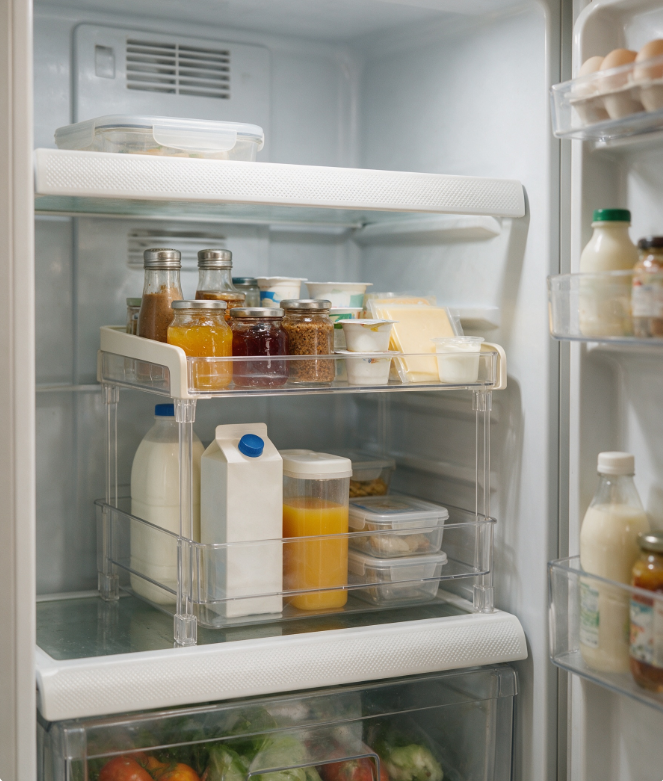
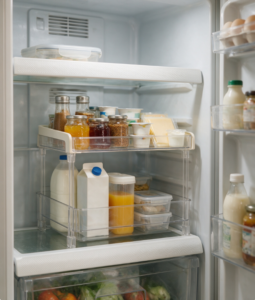
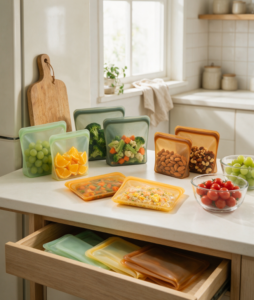
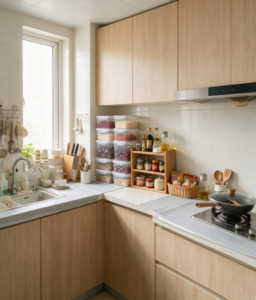
Use uniform transparent containers for dry goods and refrigerated food. Matching containers stack better, save vertical space, and make expired food easier to spot. This reduces waste and eliminates messy, mismatched packaging piles.
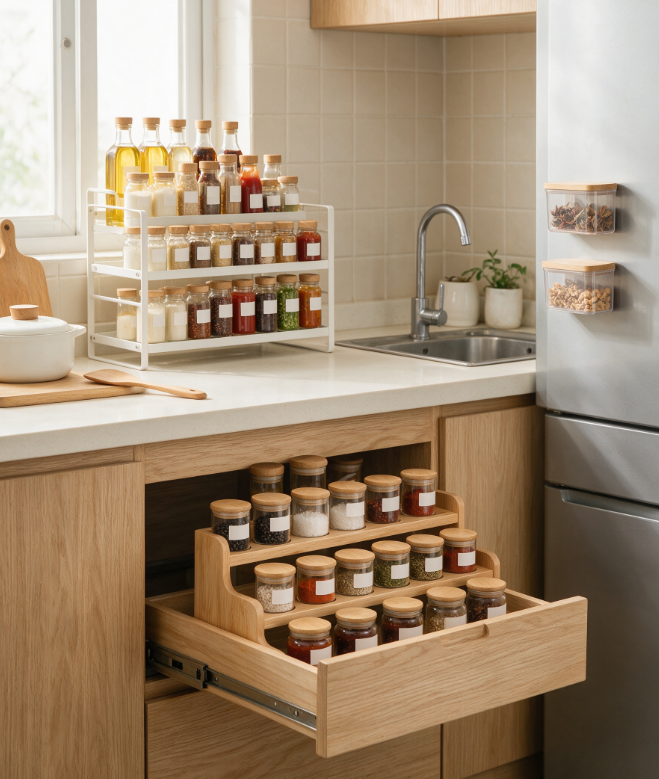
Store items by frequency of use. Place everyday utensils, plates, and common seasonings at easy-to-reach heights. Store specialty tools, holiday cookware, and rarely used appliances on higher or lower storage levels. This reduces drawer rummaging and keeps active kitchen zones clean.
Use wall hooks and narrow vertical organizers for small tools. Kitchen countertops stay messy mainly due to limited flat space. Vertical storage removes small items from surfaces while keeping them accessible.
Bedroom and Closet Organization
Sort clothing by accessibility, not just category. Items worn weekly should be visible and easy to grab. Seasonal and occasional clothing should be stored away in closed bins or high shelves. This prevents daily wardrobe disruption.
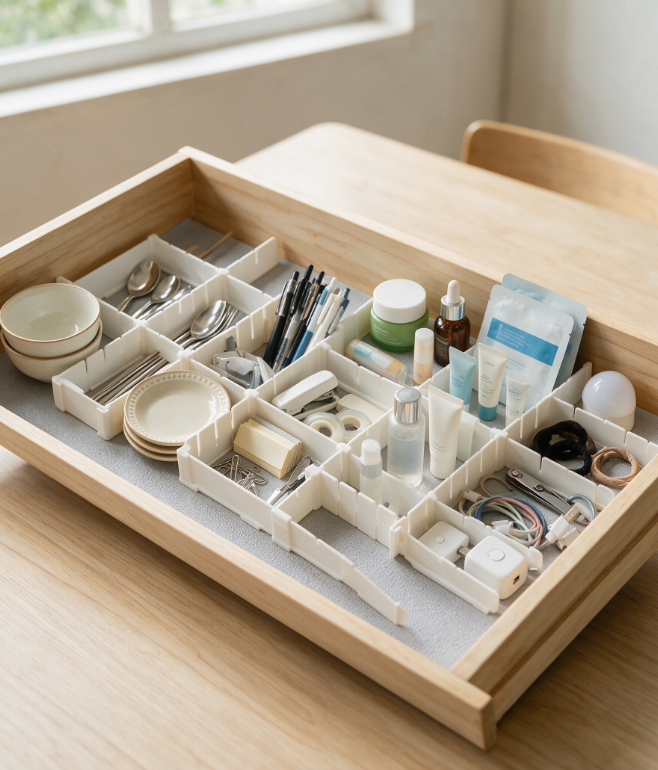
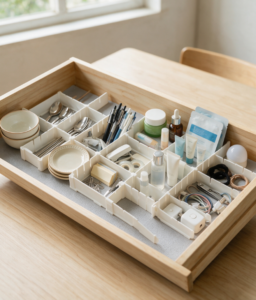
Use divided drawer inserts for small items. Socks, underwear, accessories, and electronics cords easily tangle and create hidden clutter. Simple dividers make drawers functional without requiring constant refolding.
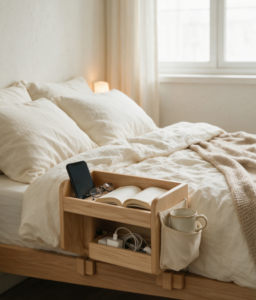
Limit nightstand items to daily essentials. Overcrowded nightstands create visual stress and collect random clutter. Keep only necessary items and use a small tray to contain tiny loose objects.
Bathroom Organization
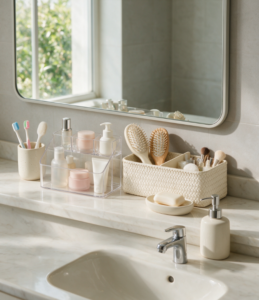
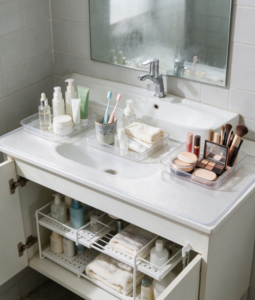
Keep countertops clear whenever possible. Most bathroom mess comes from leaving daily products on wet surfaces. Use wall-mounted shelves, over-door organizers, and drawer storage to contain toiletries.
Separate active products from backup stock. Keep one set of daily-use items visible and store all backups inside cabinets. This avoids over-cluttering active bathroom spaces.
Check expiration dates every month. Skincare, cosmetics, and oral care products degrade over time. Removing expired items immediately reduces hidden bathroom clutter safely.
Home Office and Desktop Organization
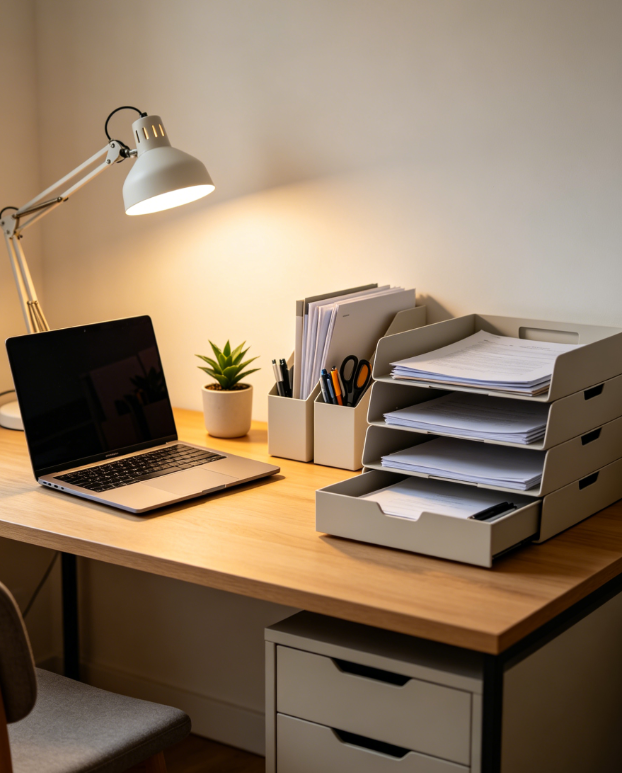
Use a three-paper sorting system: keep, action, recycle. Place three simple trays or folders on your desk. Incoming papers immediately go into one category instead of stacking on surfaces. This eliminates random paper piles.
Manage cables with simple cord clips and ties. Tangled wires create messy visuals and slow down workspace cleaning. Basic cable management improves desktop order with minimal effort.
Clear your desk completely at the end of each day. A daily 2-minute reset prevents minor messes from turning into heavy clutter.
Daily and Weekly Maintenance Routines (Low Effort, High Reward)
Sustained cleanliness depends on routine maintenance, not perfect initial organization.
10-minute daily reset. Before bed or after finishing daily activities, quickly return misplaced items to their homes, straighten main living areas, and clear active surfaces. Short daily prevention is far more effective than occasional deep cleaning.
30-minute weekly system check. Once a week, check storage zones, adjust items that no longer fit their categories, and empty temporary clutter bins. This preserves your organizing systems long-term.
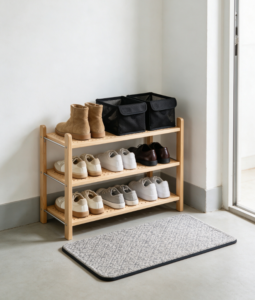
Designate a transition zone for unwanted items. Place one fixed basket near your entrance for items to donate, sell, or discard. This prevents unwanted items from migrating into other rooms.
Realistic Expectations for Long-Term Success
Healthy home organization allows minor, temporary messes. Living spaces are meant to be used, not displayed. The goal is easy maintenance, zero persistent clutter, and functional storage systems that support your lifestyle instead of restricting it.
You do not need expensive organizers, full-day cleaning sessions, or minimalistic living habits to maintain a tidy home. Consistent small actions and logical storage systems create lasting results.
Final Conclusion
Effective home organization is practical, not perfect. By controlling item accumulation, building simple room-specific storage systems, and maintaining short daily and weekly routines, anyone can keep a clean, functional, and low-stress living environment. All methods in this article are real, implementable, and sustainable for regular households, with no overstated benefits or unrealistic lifestyle demands.