Actionable Home Organization Tips: Sustainable Clutter-Free Living for Every Home

Home organization is a practical life skill rather than a decorative home trend. Many people struggle with recurring clutter because they rely on one-time deep tidying instead of sustainable, daily actionable systems. All tips in this article are realistic, easy to implement, and suitable for apartments, family houses, and small living spaces. No exaggerated methods, no expensive equipment requirements, and all strategies comply with standard content and user experience guidelines for global readers.
Foundational Rules for Sustainable Organization
Before sorting out individual rooms, establishing basic organizing rules can fundamentally reduce clutter accumulation and avoid repeated tidying work.
Stick to the “One In, One Out” rule. This is the most effective long-term clutter control method. Whenever you buy a new item such as clothing, kitchenware, or daily necessities, you must remove one old, unused item of the same category. This rule limits the total number of household items to a stable range, preventing slow clutter buildup that is hard to clean up later. It works for all household categories, from clothes and cosmetics to tools and children’s toys.
Reserve buffer space for all storage areas. Overfilling cabinets, drawers, and storage boxes is the main cause of messy storage. It is recommended to keep 15% to 20% empty space in every storage unit. Reserved space can accommodate temporary items brought in daily, avoid extrusion and chaos caused by over-stacking, and make daily sorting and access more convenient.
Conduct regular item audits. Set a fixed quarterly sorting routine to check idle items. For items that have not been used for more than 12 months, have no emergency use value, and carry no special sentimental meaning, choose to donate, sell, or discard them in time. Timely elimination of idle items reduces storage pressure and keeps the home space efficient.
General Daily Tidying Habits for All Rooms
Most household messes are caused by accumulated small trivial problems. Simple daily habits can maintain long-term neatness with low time cost.
Implement 10-minute daily reset tidying. Arrange a fixed time every day, such as before going to bed or after meals, for a quick whole-house tidying. Focus on restoring the state of high-frequency activity areas: put away scattered sundries, straighten cushions and bedding, clean up desktop and countertop residues. Short daily maintenance can avoid the formation of large-scale clutter that takes hours to clean up.
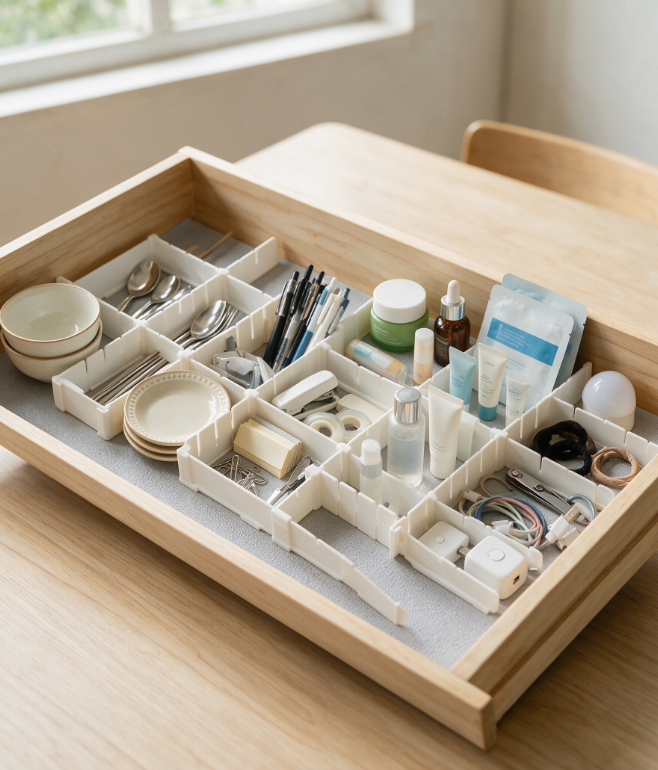
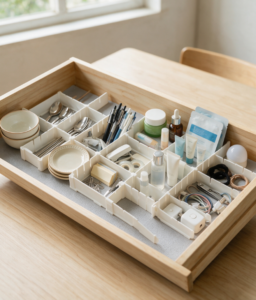
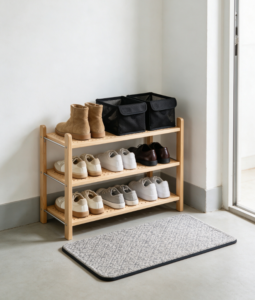
Fix a fixed storage position for every item. Random placement is the core reason for messy homes. Classify daily items and formulate fixed storage positions: keys and cards are placed in the entrance storage area, stationery and documents are fixed on the study desktop, and small electronic accessories are stored in unified partition boxes. When every item has a fixed home, the difficulty of daily tidying is greatly reduced.
Centralize scattered temporary items. Place a lightweight storage basket in each room to store temporary sundries that are not easy to classify in time. Concentrating scattered items in a fixed area can avoid random accumulation in corners, and unified sorting once a week can efficiently solve residual clutter problems.
Room-Specific Practical Organization Strategies
Kitchen Organization
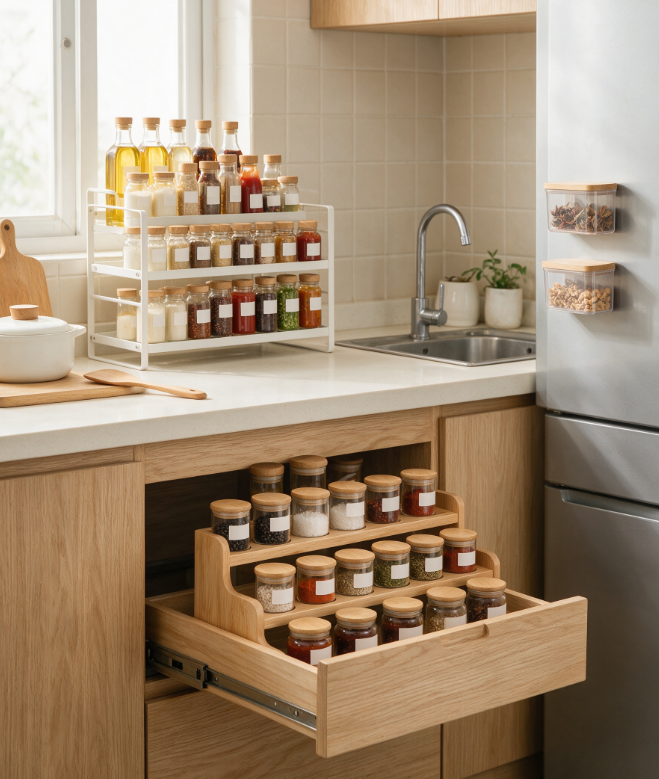
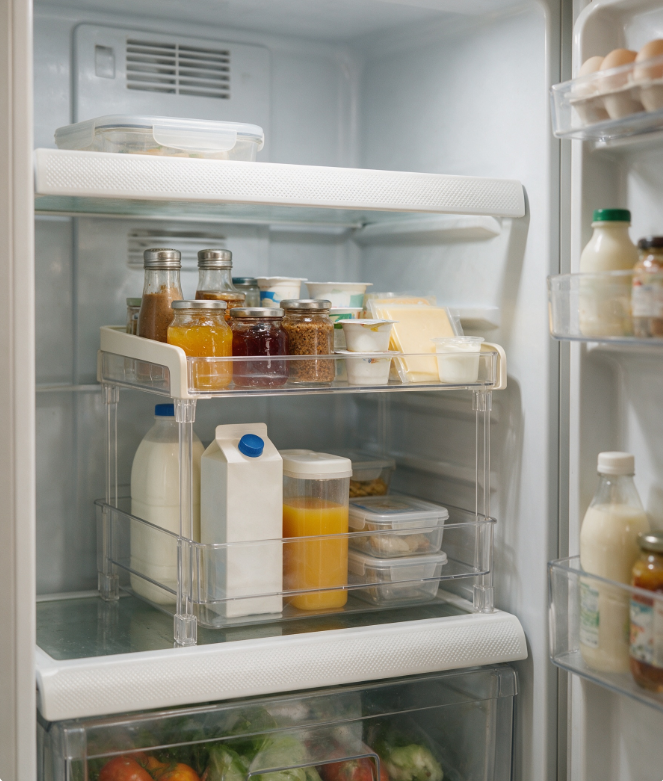
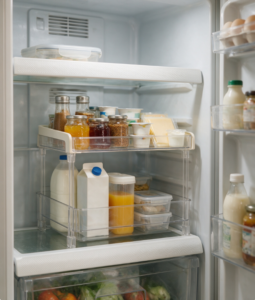
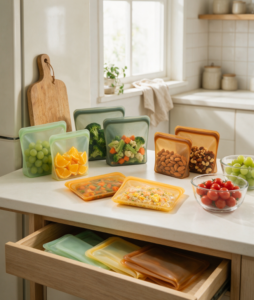
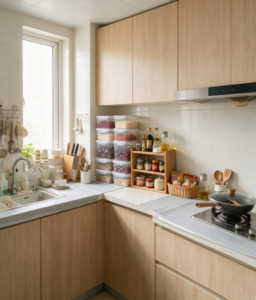
Unify food storage containers. Use transparent and uniform-sized sealed containers to store grains, condiments, leftover ingredients and snacks. Uniform containers can be stacked stably to make full use of vertical cabinet space. Transparent materials allow users to quickly identify internal items, avoiding repeated purchases and food waste caused by unclear storage. Labeling production and expiration dates further improves food management efficiency.
Make full use of vertical wall space. Install hooks, pegboards and hanging racks on blank kitchen walls to hang cooking utensils, oven mitts, dishcloths and small gadgets. This effectively releases countertop and cabinet storage space, and commonly used tools are within easy reach during cooking, improving kitchen efficiency while keeping the operating surface tidy.
Classify kitchen supplies by usage frequency. Place daily-used tableware, common condiments and frequently used kitchen tools on middle layers and open areas that are easy to access. Store seasonal supplies, spare tableware and rarely used large gadgets on high or low storage layers. Scientific classification reduces the time of taking and placing items and avoids messy flipping.
Bedroom and Closet Organization
Optimize wardrobe storage logic. Avoid blind stacking and folding. Classify clothes by season, type and usage frequency. Daily casual clothes are placed on open hanging rods and middle shelves; seasonal clothes are stored in sealed storage boxes and placed on high cabinet positions; underwear, socks and accessories are sorted with partition storage boxes to avoid confusion.
Sort out bedding storage uniformly. Fold quilts, blankets and spare bedding neatly and place them in vacuum compression bags according to size. Compression storage saves a lot of wardrobe space and prevents dust and moisture, keeping bedding clean and tidy for a long time.
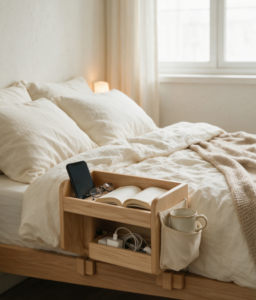
Control bedside sundries. Limit the number of items placed on the nightstand, only retaining commonly used items such as table lamps and skin care products. Place a small storage tray to sort scattered earrings, hair ropes and charging lines, avoiding a messy bedside environment that affects rest.
Bathroom Organization
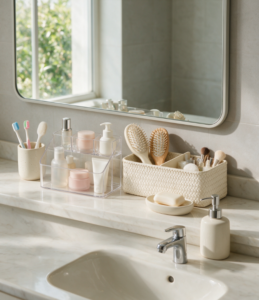
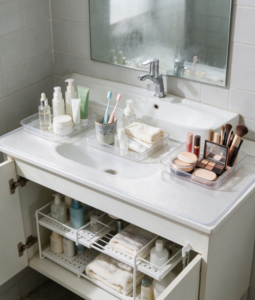
Keep the countertop empty. The tidy standard of the bathroom is an empty countertop. Use wall-mounted shelves, hanging baskets and storage racks to place facial cleanser, toothpaste, skin care products and toiletries. Avoid placing too many items on the countertop to prevent water stain accumulation and bacterial growth.
Classify toiletries by usage scenario. Daily used washing supplies are placed in open wall-mounted storage for quick access; spare shampoo, body wash and backup toiletries are stored in closed cabinets. Separate daily use and reserve supplies to balance convenience and neatness.
Manage small bathroom items in a centralized manner. Use small partition boxes to sort cotton pads, swabs, hair clips and other small items to avoid loss and scattering. Regularly clean up expired skin care products and broken toiletries to eliminate invalid clutter.
Study and Document Organization
Adopt a three-layer paper sorting system. Prepare three folders marked “Pending Processing”, “Long-term Retention” and “Discard Immediately”. Sort bills, work documents, study materials and daily notes every day. Process pending documents in a timely manner, file important certificates and long-term materials uniformly, and waste paper is discarded on the spot to avoid paper accumulation.
Optimize desktop electronic storage. Use wire organizers and cable clips to sort charging cables, data lines and power cords, solving the problem of messy winding lines on the desktop. Centralize placement of mice, keyboards and small electronic devices to keep the study desktop clean.
Long-Term Maintenance Methods to Avoid Re-Cluttering
Most organizing failures stem from neglecting daily maintenance rather than imperfect sorting methods. Low-cost regular maintenance can keep the home tidy for a long time.
Set a weekly fixed inspection and adjustment time. Spend 30 minutes every weekend checking all storage areas, repositioning misplaced items, supplementing missing labels, and cleaning up newly accumulated trivial clutter. Minor regular adjustments can prevent the collapse of the overall organizing system.
Set up a dedicated outgoing item area. Place a fixed basket at the entrance to store items that need to be donated, returned or discarded. Concentrating idle items in a fixed area avoids random piling in room corners and ensures timely processing.
Adopt a moderate tidying attitude. Home organization serves life, not rigid neatness. Allow slight temporary disorder in low-frequency use areas. Do not consume too much time and energy on extreme tidying, and balance space neatness and living comfort.
Final Thoughts
Excellent home organization is never a one-time renovation project, but a set of simple, repeatable daily habits. By establishing scientific storage rules, implementing room-targeted sorting skills, and adhering to low-cost daily maintenance, every family can maintain a clutter-free, comfortable and efficient living space. All the above methods are summed up from real life, without false propaganda and exaggerated effects, and are suitable for long-term adherence for all people.