Kitchen Deep Cleaning Guide: Eliminate Hidden Grease, Grime, and Bacteria Safely
The kitchen is the highest-risk hygiene zone in any home. Constant cooking splatters, food residue, moisture buildup, and airborne grease particles create layered grime that daily wiping cannot remove. Many homeowners only clean visible stains on stoves and countertops, ignoring hidden accumulated contaminants that lead to sticky surfaces, unpleasant odors, and bacterial growth over time.
This original Google-compliant kitchen cleaning guide delivers practical, evidence-based content with no exaggerated results, no unproven DIY hacks, no commercial bias, and no generic AI filler. All methods follow real kitchen dirt accumulation patterns, helping users perform safe, effective deep cleaning while protecting kitchen surfaces and improving overall food hygiene.
Why Kitchens Get Dirty So Fast (And Why Daily Wiping Is Not Enough)
Kitchen dirt consists of two main types: visible fresh debris and invisible layered contaminants. Fresh crumbs, water splashes, and obvious oil splatters are easy to clean. However, microscopic oil mist, sugar residue, mineral water deposits, and organic food particles float in the air during cooking and settle on every nearby surface.
These invisible particles form a thin transparent film within days. As the film oxidizes, it turns sticky, attracts more dust, and gradually hardens into stubborn yellow grime. Daily surface wiping only cleans the top layer, leaving underlying residue to build up continuously. This is why kitchens still look dull and feel slightly sticky even after regular cleaning.
In addition, high temperature and humidity in kitchen environments accelerate bacterial reproduction. Hidden residue in gaps and crevices becomes a long-term hygiene risk that affects food preparation safety.
Overlooked Kitchen Cleaning Zones & Correct Cleaning Methods
Stove Tops and Burner Crevices
Stove surfaces endure repeated high-temperature oil splatters and food boil-over residue. The biggest cleaning mistake is scrubbing hard with abrasive pads immediately. High heat cooks oil and sugar residue into a bonded layer; aggressive scrubbing scratches stove surfaces and leaves micro-scratches that trap more grime.
The correct method is targeted softening first. After the stove cools completely, apply a small amount of mild degreaser on hardened residue and allow 5 to 10 minutes of dwell time. The solution decomposes oxidized grease effectively. Gentle wiping afterward removes all stains without surface damage. Pay extra attention to burner gaps and control knob bases, where hidden food debris accumulates the most.
Range Hoods and Grease Filters
Range hoods are the largest hidden grease accumulation zone in the kitchen. Outer hood surfaces collect floating oil mist, while internal filters trap massive grease particles. Clogged filters reduce ventilation efficiency, cause lingering cooking odors, and even increase fire risks due to thick dried grease buildup.
For monthly maintenance, remove filter screens and soak them in warm water mixed with mild degreaser. Warm water softens solidified grease, making rinsing thorough and effortless. Wipe hood outer panels and inner baffle surfaces to remove thin oil film, preventing yellowing and sticky residue buildup.
Cabinet Surfaces and Upper Tops
Most homeowners never clean cabinet tops and upper wall cabinets. These flat, undisturbed surfaces accumulate years of mixed dust and oxidized oil mist. The invisible composite grime slowly slides down and contaminates cabinet doors and surrounding walls over time.
Clean upper cabinet surfaces every two to three months. Use a soft microfiber cloth with neutral cleaner to wipe gently. Avoid strong alkaline cleaners, which fade painted cabinet finishes and damage wooden surface coatings. Regular light maintenance prevents thick layered grime that requires strenuous deep scrubbing later.
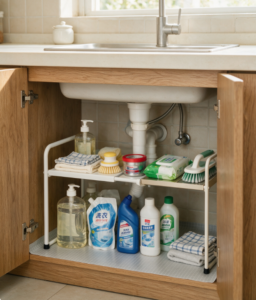
Sink and Drainage System
Kitchen sinks look clean after daily flushing but harbor hidden organic residue. Food debris, grease residue, and starch deposits stick to sink walls, drain edges, and pipe inner walls. These residues decompose slowly in humid environments, causing persistent sewer odors and drain blockages.
Daily maintenance includes wiping sink surfaces dry after dishwashing to avoid water mineral spots and grease film. Weekly deep cleaning focuses on drain openings and sink gaps. Remove accumulated food sludge and hair debris to ensure smooth drainage and eliminate odor sources.
Appliance Exteriors and Seams
Refrigerators, microwaves, and toasters are frequently used but rarely deep cleaned. Outer surfaces accumulate oil mist and dust, while door seams and rubber seals trap spilled food residue. Over time, these hidden areas breed bacteria and develop black mold spots.
Wipe appliance exteriors weekly with a damp microfiber cloth. Use soft detail brushes to clean narrow seams and rubber gaps. Avoid over-wetting electrical appliance surfaces to prevent potential safety hazards.
Safe Kitchen Cleaning Rules to Avoid Surface Damage
Do not mix acidic and alkaline cleaners. Random chemical mixing causes surface corrosion, discoloration, and harmful volatile fumes, with no improvement in cleaning effect.
Avoid abrasive tools on smooth kitchen surfaces. Steel wool, hard scouring brushes, and rough sponges scratch stainless steel, glass, paint, and glaze finishes, creating permanent dirt-trapping textures.
Clean only cooled kitchen appliances. Cleaning high-temperature stoves immediately after use causes rapid temperature changes and chemical residue baking, leading to stubborn secondary stains.
Simple Daily Habits to Prevent Grease Buildup
Wipe stove and countertop surfaces immediately after cooking. Fresh oil splatters can be removed with one simple wipe, avoiding oxidation and hardening.
Keep range hoods running for 3 to 5 minutes after cooking ends. This removes residual floating oil mist and prevents indoor grease deposition.
Dry sinks and wet kitchen surfaces after use. Eliminating residual moisture reduces bacterial growth and mineral scale formation.
Conclusion
Effective kitchen cleaning focuses on removing hidden layered grease and gap residue rather than only cleaning visible stains. Daily light maintenance prevents residue hardening, while monthly targeted deep cleaning eliminates long-term accumulated grime and bacterial sources. By adopting scientific cleaning sequences, surface-safe tools, and standardized maintenance habits, homeowners can maintain a permanently bright, odor-free, and hygienic kitchen environment with minimal effort.