Expert Home Organizing Tips: Practical, Low-Maintenance Systems for Long-Lasting Tidiness
Countless homeowners struggle with a recurring problem: they spend hours deep-organizing their homes, only for clutter to reappear within days or weeks. Most mainstream organizing content focuses on aesthetic setups, perfect shelf styling, and complicated folding methods designed for social media displays, not real lived-in households with daily traffic, family use, and ordinary living habits.
Why Traditional Organizing Methods Always Fail
The core difference between sustainable tidying and temporary sorting lies in logic, not effort. Most people adopt category-based organizing: gathering all clothes, toiletries, tools, and sundries together regardless of usage frequency. This creates a structural contradiction: daily necessities are hidden deep in cabinets and drawers, while rarely used idle items occupy the most accessible surfaces.
When daily items require extra time and effort to store properly, random placement becomes an inevitable habit. True home organization does not rely on self-discipline or frequent cleaning. It relies on reasonable space planning that adapts to human behavior.
Five Practical Organizing Principles for the Entire Home
These universal principles apply to all household spaces and can fundamentally reduce clutter accumulation.
Organize spaces by usage frequency instead of category. High-frequency items including daily outfits, regular tableware, and basic toiletries must be placed at hand height and visible positions. Medium-frequency items used weekly or monthly are stored in conventional cabinet layers. Seasonal and emergency supplies are placed in high, deep, or remote storage areas. This layout minimizes unnecessary movement and random placement.
Implement quantitative control for household items. Excessive item stockpiling is the primary cause of space crowding. Set reasonable quantity limits for daily supplies, clothing, and small accessories. Avoid blind bulk purchases simply because of discounts. Stable item quantity is the foundation of long-term tidiness.
Retain reasonable buffer space. Fully occupied storage spaces have no fault tolerance. Slight random placement will trigger overall clutter. Reserving 10%–15% blank space in drawers, cabinets, and shelves can accommodate temporary items and maintain system stability.
Classify storage according to item attributes. Damp-proof items, fragile items, dust-prone items, and perishable items require targeted storage methods. Unified single storage solutions will lead to item damage, mildew, and hidden dirt accumulation.
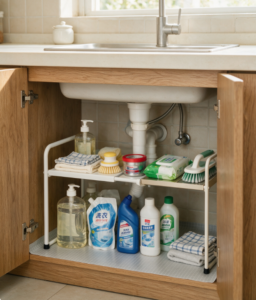
Separate dirty and clean zones. Cleaning tools, worn daily clothes, and wet supplies must be stored independently of clean daily items to avoid secondary pollution and cross-contamination.
Bedroom and Wardrobe Organization: Eliminate Repeated Clothing Chaos
Bedroom clutter is mostly caused by mixed seasonal clothes, unfiltered idle garments, and overly complicated sorting systems. Simplified zoning and regular screening are more effective than fine mechanical folding.
Adopt seasonal dynamic zoning. Divide the wardrobe into current-season daily wear area, occasional wear area, and off-season storage area. Update the zoning layout with seasonal changes to avoid mixing thick and thin clothes. Centralize off-season bedding and bulky clothing in sealed storage to save effective living space.
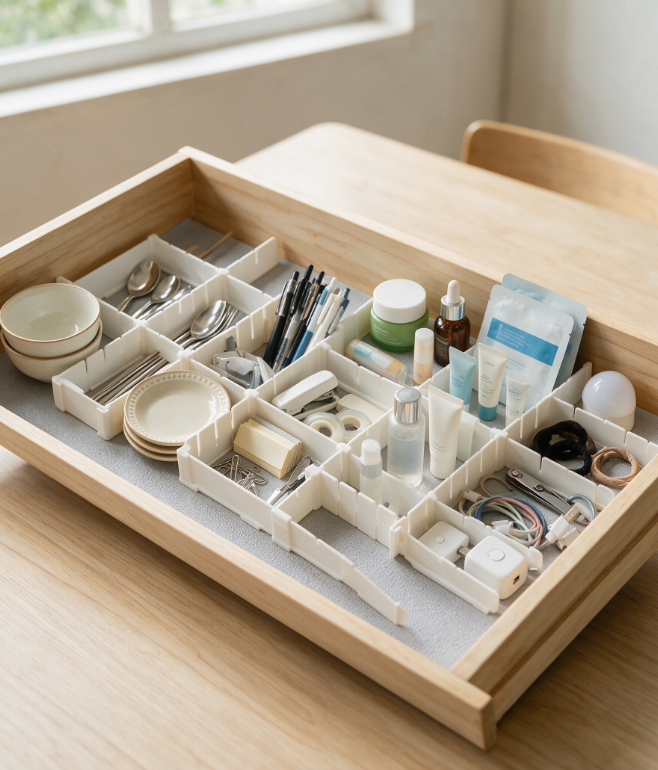
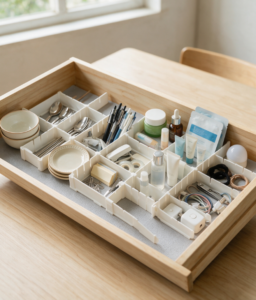
Simplify drawer sorting logic. Daily casual clothes do not require ultra-fine partitioning. Too many dividers will reduce storage capacity and increase tidying difficulty. Only small scattered items such as socks, accessories, and undergarments need independent classified storage.
Conduct regular wardrobe cleaning. Remove clothes that have not been worn for more than one year, ill-fitting styles, and severely worn garments. Timely elimination of idle items can avoid continuous compression of wardrobe space and effectively reduce daily sorting pressure.
Kitchen Organization: Improve Efficiency and Reduce Hidden Hygiene Risks
Kitchen disorder affects cooking efficiency and easily produces hygiene dead corners. Reasonable workflow-based storage can naturally maintain long-term cleanliness.
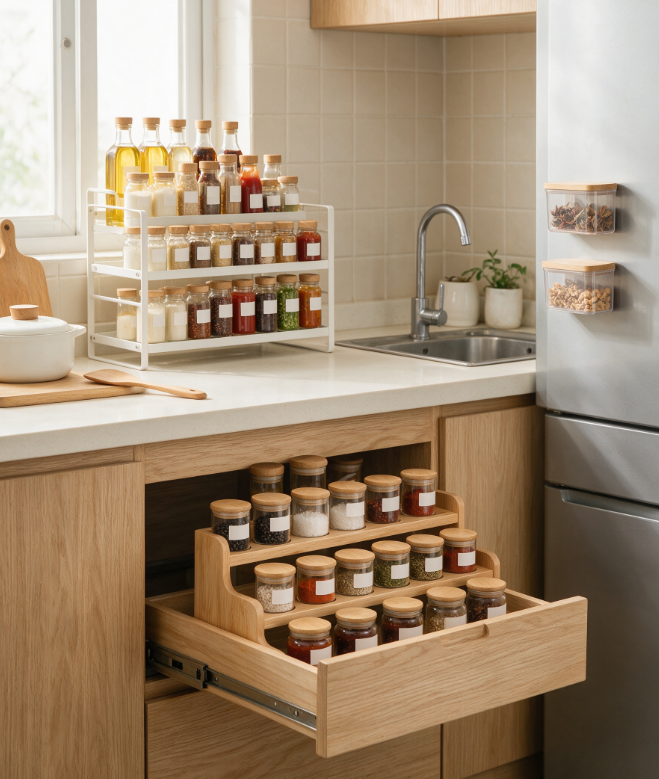
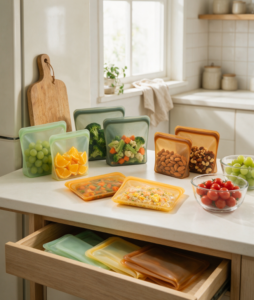
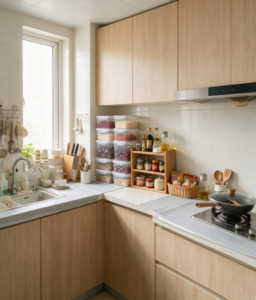
Match storage with cooking workflow. Store cooking tools and seasonings near the stove, cleaning supplies near the sink, and ingredients and cutting tools near the preparation area. Items used in the same workflow are placed centrally to avoid random placement during cooking.
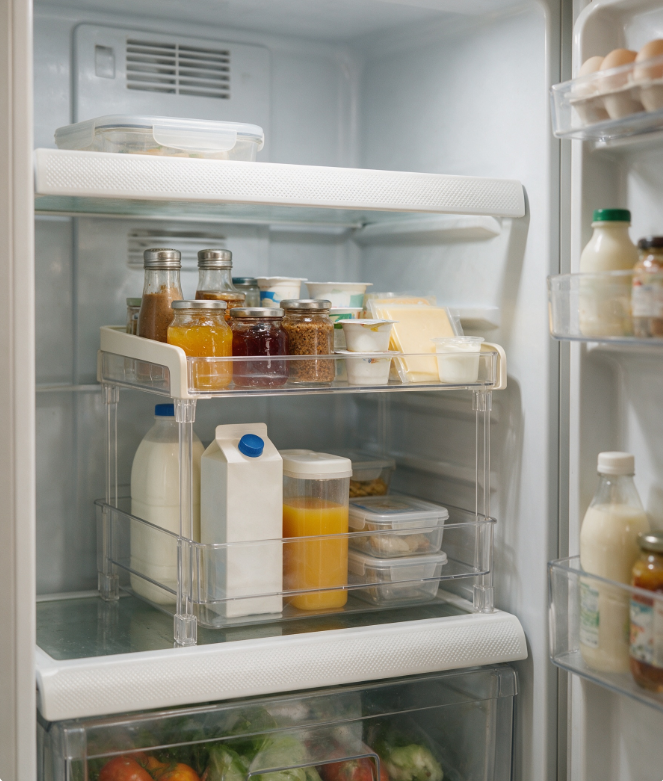
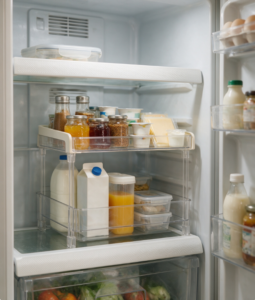
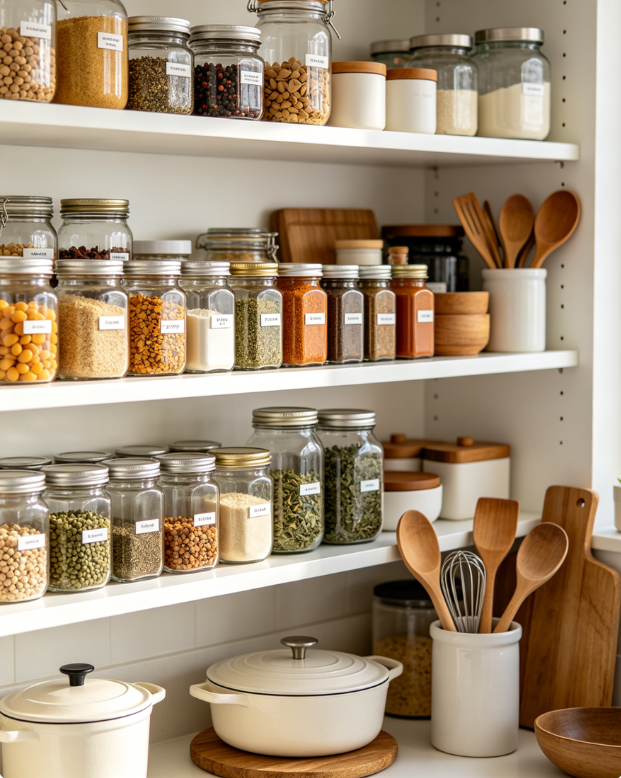
Control food stockpiling and implement first-in first-out. Excess dry goods, snacks, and canned food are prone to expiration and stacking chaos. Purchase according to monthly consumption, place newly purchased items behind old stocks, and prioritize using early-stored ingredients to avoid waste and clutter.
Centralize small appliances and tidy wiring. Scattered kitchen appliances and tangled wires are the main sources of countertop chaos. Concentrate commonly used equipment in fixed areas and organize wires uniformly to keep countertops smooth and easy to clean.
Bathroom Organization: Moisture-Proof, Mildew-Proof and Odor-Free Storage
The high-humidity bathroom environment puts forward special requirements for storage. Simple closed storage easily traps moisture and breeds mold and peculiar smells.
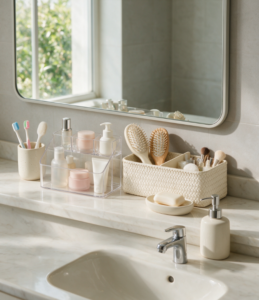
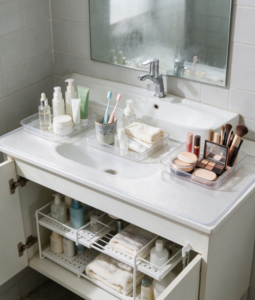
Distinguish open and ventilated storage. Daily toiletries that need frequent access are suitable for open layered storage to avoid repeated flipping. Spare supplies and weekly-use items are stored in ventilated closed cabinets to prevent dust and moisture accumulation.
Keep wet items breathable. Towels, bath balls, and cleaning cloths must be stored in a suspended and breathable manner. Sealed baskets cannot discharge residual water, which will lead to bacterial growth and mildew stains.
Regularly clean expired toiletries. Skincare products, oral care products, and cosmetics have fixed shelf lives. Timely removal of expired items ensures bathroom hygiene and saves effective storage space.
Living Room and Entrance Organization: Solve Temporary Clutter fundamentally
Most living room and entrance clutter is temporary scattered small items rather than large-scale accumulated messes. Fixed temporary storage zones can solve most visual chaos.
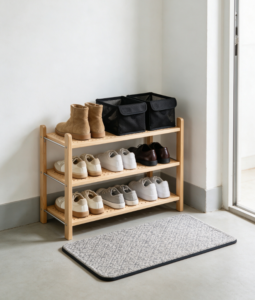
Set up a dedicated entrance sundry zone. Keys, wallets, letters, earphones, and portable sundries are centrally placed in fixed trays or shallow baskets to avoid scattered placement on tables, sofas and floors.
Reduce invalid surface accumulation. Excessive decorative ornaments, photo frames and trinkets accumulate dust, increase cleaning burden, and occupy limited desktop space. Appropriately simplifying decorations helps maintain a long-term clean visual effect.
Low-Burden Daily Maintenance Routine
Long-term home tidiness relies on stable micro-maintenance rather than centralized exhaustive deep cleaning.
3-minute daily reset. Before resting every day, put misplaced items back in place and clean up surface temporary clutter to prevent small messes from accumulating.
Weekly regional sorting. Each week, focus on sorting and optimizing one functional area to avoid fatigue caused by full-house cleaning.
Seasonal overall inspection and adjustment. Every three months, adjust storage layout, update seasonal supplies, and clear long-term idle items to keep the home space always efficient and orderly.
Common Organizing Misconceptions to Avoid
Many popular organizing methods increase household burden instead of solving problems.
Blindly buying storage tools cannot solve clutter problems. Most messy homes have sufficient space; the real problem is unreasonable item management. Excess storage containers fragment space and form hidden cleaning dead corners.
Aesthetics should not override practicality. Uniform and neat storage looks good in photos, but it often ignores the size and usage differences of real items. Functional matching is always the core of effective organization.
Avoid occupying core spaces with idle items. Seasonal decorations and spare supplies should not occupy the most accessible positions, resulting in squeezed daily living space.
Conclusion
Genuine home organization is a set of scientific and sustainable household management systems, not superficial aesthetic decoration. It does not require expensive tools or plenty of spare time. By establishing usage-matched storage logic, controlling item accumulation, avoiding wrong organizing habits, and adhering to low-burden daily maintenance, every family can maintain a clean, orderly, comfortable and long-term sustainable living environment.