No-Hype Home Cleaning Tips: Practical, Material-Safe Methods for Long-Term Cleanliness
Many homeowners overcomplicate home cleaning. They stock dozens of specialized cleaners, scrub surfaces aggressively, or perform unnecessary deep cleans, yet still deal with recurring grime, faint odors, and fast-wearing home finishes. The root cause is usually not “dirty homes,” but mismatched cleaning methods, incorrect tool usage, and unrealistic cleaning schedules.
Why Most Amateur Cleaning Habits Fail
Ordinary household dirt can be divided into three types: dry dust, oily film, and mineral residue. Each type requires a targeted removal approach. Using a single cleaning method for all surfaces leads to incomplete cleaning or surface damage.
Dry dust consists of fine floating particles, fabric fibers, and pet hair. It cannot be fully removed by dry wiping, as friction stirs particles into the air, causing secondary floating dust. Oily film mainly accumulates in kitchens and on frequently touched surfaces; it bonds with dust over time and forms hard-to-remove sticky layers. Mineral residue comes from tap water, leaving white limescale on glass, faucets, and shower surfaces after water evaporation.
Most popular cleaning shortcuts online only address surface visibility instead of solving the root accumulation process, which is why dirt returns quickly within one or two days after cleaning.
Material-Safe Cleaning Rules for Common Home Surfaces
Different home materials have different chemical and physical tolerance limits. Using universal cleaners or brute scrubbing is the main cause of floor dulling, furniture discoloration, and surface scratches.
Wood floors and wooden furniture
Wood is porous and sensitive to moisture and strong alkalis. Excessive water mopping will penetrate gaps, causing floor bulging, mildew, and deformation. Strong alkaline cleaners will gradually dissolve surface wax and paint, leading to fading and loss of gloss.
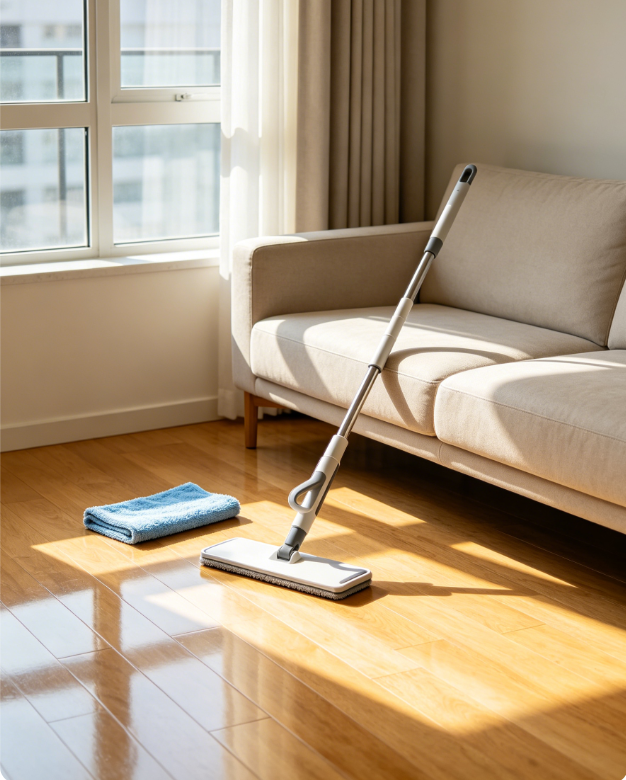
For daily maintenance, use fully wrung microfiber mops for dry or damp mopping. For slight footprints and light stains, use diluted neutral cleaner and wipe dry immediately. Avoid leaving standing water on wooden surfaces for more than 30 seconds.
Marble, quartz and natural stone surfaces
Natural stone contains calcium carbonate, which reacts with acidic substances. Lemon juice, vinegar, and acidic descaling agents will cause irreversible corrosion, forming faint matte etching marks that cannot be polished off by daily cleaning.
Stone countertops only require neutral all-purpose cleaners or clean water for daily wiping. Hard water stains should be removed with stone-specific mild polishing paste instead of acid-based solutions.
Glass and ceramic tile
Glass and glazed tiles are smooth and corrosion-resistant, but prone to mineral limescale. Frequent dry scrubbing with rough tools will produce fine scratches, making the surface easier to accumulate dust in the future.
For daily cleaning, wipe with damp glass cloth. For old limescale, use low-concentration neutral descaling spray, let it sit for several minutes to decompose mineral deposits, then wipe clean and dry to avoid residual water marks.
Textiles: sofas, cushions and curtains
Fabric fibers easily trap deep dust, mites, and skin debris. Simply wiping the surface cannot remove internal dirt. Large-area wet cleaning will cause fiber hardening, local color difference, and mildew growth inside thick fabrics due to incomplete drying.
The most stable daily method is regular low-suction deep vacuuming. Local stains can be treated with foam-based fabric cleaners, which clean surface stains while keeping the bottom fiber layer dry.
Rational Cleaner Selection: Avoid Over-Reliance on Chemicals
No single cleaner works for all stains. Overusing compound chemical cleaners will cause indoor chemical accumulation and accelerate surface aging. Reasonable household cleaning only requires three basic types of cleaners to cover most scenarios.
Neutral all-purpose cleaner
Suitable for walls, wooden surfaces, plastic appliances, and daily floor cleaning. With mild pH value, it does not corrode coatings or leave strong residues. It is the only necessary daily conventional cleaner for families.
Degreasing cleaner
Used exclusively for kitchen range hoods, stove surfaces, and cabinet oil stains. It contains mild emulsifying ingredients to decompose oil film. It should not be used on wooden and metal decorative surfaces for long periods to avoid oxidation and paint peeling.
Scale remover
Targeted for bathroom faucets, shower glass, and toilet water scale. It only acts on mineral deposits and must be kept away from stone and marble materials to prevent chemical damage.
It is unnecessary to purchase niche cleaners for single tiny scenarios. Most over-segmented cleaning products bring little improvement in cleaning effect but increase household chemical storage risks.
Low-Effort Recurring Cleaning Schedule for Ordinary Families
Sustainable cleaning relies on fixed low-frequency maintenance rather than occasional exhaustive deep cleaning. The following schedule matches the natural dust and stain accumulation cycle of ordinary residential spaces.
Daily maintenance (3–5 minutes)
Wipe kitchen counter oil residue, tidy up scattered debris, and remove obvious floor crumbs. This prevents loose dirt from bonding with moisture and turning into fixed stains.
Weekly routine cleaning
Vacuum sofa gaps and carpets, wipe high-touch points including switches and door handles, clean sink strainers, and mop floors thoroughly. This controls bacterial reproduction and floating dust density within a safe range.
Monthly deep maintenance
Clean electrical filters, lamp surfaces, furniture bottoms, and bathroom corner mold spots. Focus on hidden dead corners that do not affect daily vision but easily breed bacteria.
Common Misconceptions That Increase Cleaning Burden
Disinfecting the entire house every day
Daily full-house disinfection is unnecessary and counterproductive. Excessive residual disinfectant will irritate the respiratory tract and skin, and accelerate the aging of fabric and plastic materials. Daily regular cleaning is sufficient for household hygiene; targeted disinfection is only needed for kitchens and bathrooms periodically.
Using more cleaner for cleaner results
Excessive detergent dosage cannot improve cleaning efficiency. On the contrary, residual chemical components will adhere to surfaces, absorb more dust, and make the house look dirty faster. The correct approach is “small dosage and secondary wiping”.
Ignoring cleaning tool hygiene
Mops, cleaning cloths and brushes are the dirtiest items in the house. Rinsing only cannot remove deep bacteria and residual stains. Tools that are not cleaned regularly will spread bacteria repeatedly during use, resulting in ineffective cleaning.
Conclusion
Qualified household cleaning is standardized, material-friendly, and low-frequency maintenance. It does not require a large number of cleaning products or long cleaning time. Understanding the characteristics of different household materials, selecting targeted cleaners, and maintaining a stable cleaning cycle can avoid most recurring dirt problems. Rational cleaning habits not only keep the home hygienic and tidy but also effectively extend the service life of home decoration and household facilities.