No-Nonsense Home Organization Tips: Practical, Actionable Storage Solutions for Every Room
Most homeowners and renters face the same persistent problem: household clutter that keeps coming back. Many people spend weekends deep cleaning and tidying their homes, only to see messy countertops, overstuffed drawers, and misplaced daily items reappear within a few days. This frustrating cycle is not caused by poor self-discipline or having too many possessions. In most cases, recurring mess results from inefficient space utilization, unreasonable item categorization, and unsuitable storage routines that do not match real daily living habits.
The Root Causes of Persistent Household Clutter
Standard residential storage designs are universal and lack personalized functionality. Kitchen cabinets only provide single-layer space and cannot classify small utensils, spices, and loose dry goods, leading to crowded countertops and wasted cabinet gaps. Bathrooms suffer from year-round high humidity without scientific wet-dry zoning, causing toiletries to get damp, dusty, and disorganized. Conventional single-rod closets fail to separate daily outfits, seasonal clothing, and bulky bedding, resulting in wrinkled clothes and chaotic wardrobe layouts. Living rooms lack fixed storage solutions for tangled electronic cords, remote controls, books, and scattered sundries, creating continuous visual clutter.
Many people also fall into common organizing errors that worsen mess over time. Purchasing unlabeled universal storage bins creates hidden clutter, where items are stored out of sight but impossible to locate quickly. Placing frequently used daily essentials in deep, hard-to-reach cabinet corners increases repetitive tidying work. Ignoring vertical walls, door gaps, and narrow floor dead spaces wastes a large amount of usable area. Correcting these trivial but critical mistakes is the core of sustainable home organization.
Kitchen Storage: Clear Countertop Chaos and Maximize Cabinet Efficiency
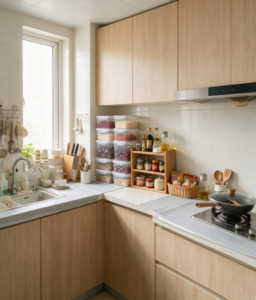
The kitchen is the highest-frequency clutter area in every home. Cooking utensils, condiment bottles, small kitchen appliances, and packaged groceries easily occupy limited countertop space, slowing meal preparation and increasing cleaning difficulty. Practical kitchen organization focuses on freeing up operating surfaces and making full use of idle vertical space without structural modifications.
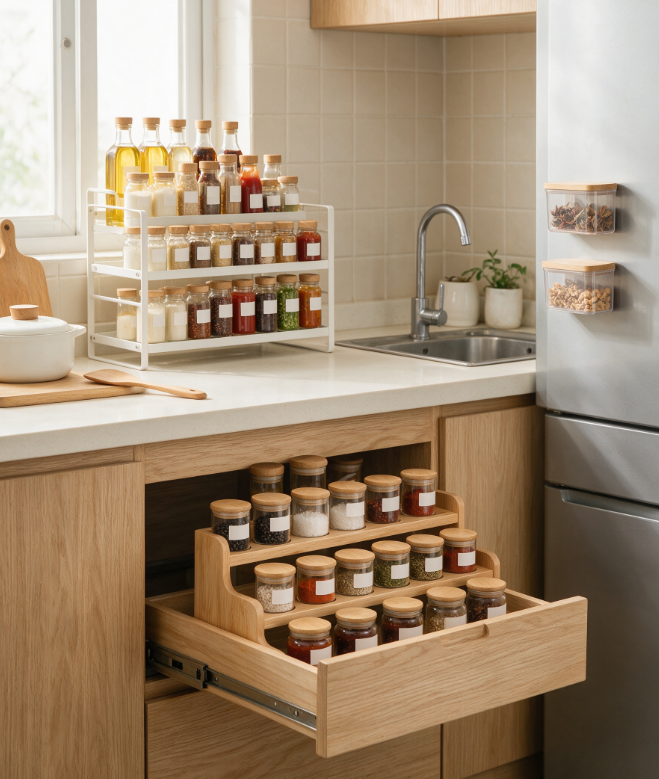
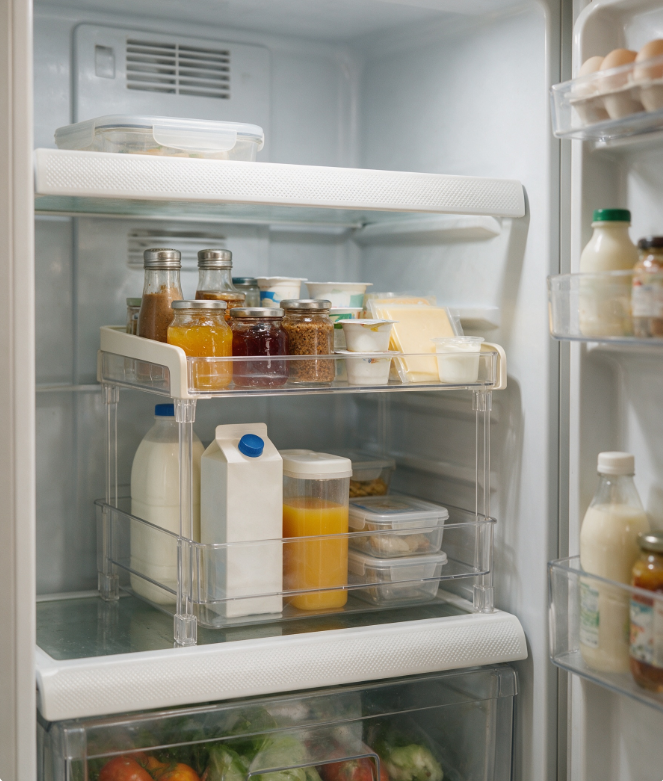
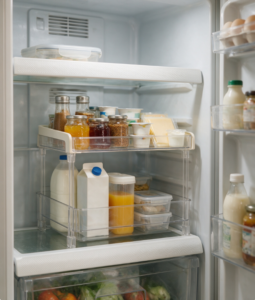
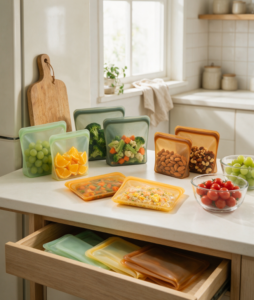
Optimize cabinet interiors with tool-free layered accessories. Most kitchen cabinets waste massive vertical air space above stored items. Affordable adhesive shelf risers and under-shelf hanging racks instantly create extra storage layers for spoons, measuring tools, spice packets, and small tableware. Transfer scattered grains, nuts, and condiments into uniform airtight containers. This practice eliminates irregular gaps caused by messy original packaging, prevents food dust and moisture accumulation, and unifies cabinet layout for easier daily management.
Classify kitchen items by usage frequency. Reserve countertop space solely for daily necessities, including dish soap, cleaning sponges, and commonly used tableware. Store infrequently used appliances, bulk reserve ingredients, and seasonal baking tools in closed lower cabinets. Avoid long-term placement of idle equipment on countertops to prevent grease buildup and space occupation.
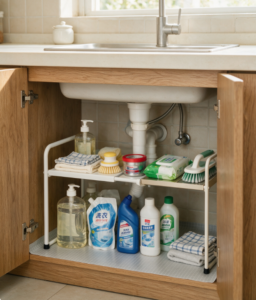
Repurpose kitchen dead gaps with movable storage. Slim rolling storage carts perfectly fit narrow gaps beside refrigerators, stoves, and cabinet sides. These flexible mobile units store cleaning supplies, backup condiments, and spare groceries, turning wasted blank gaps into fully functional storage zones.
Bathroom Storage: Resolve Humidity-Related Mess and Vanity Overcrowding
Bathrooms have unique storage challenges due to persistent high humidity. Mixed placement of wet shower supplies and dry grooming products often leads to mildew growth, rusted metal tools, expired skincare products, and sticky, hard-to-clean vanity surfaces.
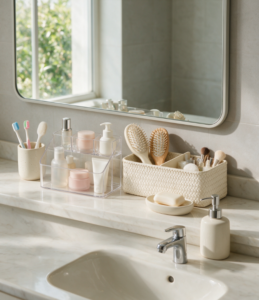
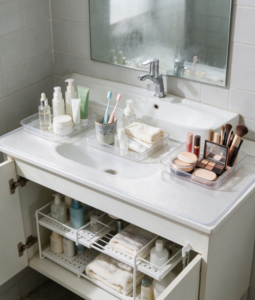
Implement strict wet and dry storage separation. Install wall-mounted adhesive shower caddies to place shampoo, body wash, razors, and bath accessories. Concentrating all wet items in the shower area avoids water stains and soap scum from spreading to dry vanity surfaces. Arrange skincare, makeup, oral care products, and dry grooming tools on layered countertop shelves to maintain air circulation and prevent moisture erosion.
Utilize the underrated vertical space above the toilet. The blank wall above the toilet is one of the most underutilized areas in the bathroom. Freestanding slim shelves store spare toilet paper, backup toiletries, and cleaning supplies without occupying floor space. Never stack items on the toilet tank, as it blocks ventilation and accumulates dust and bacteria.
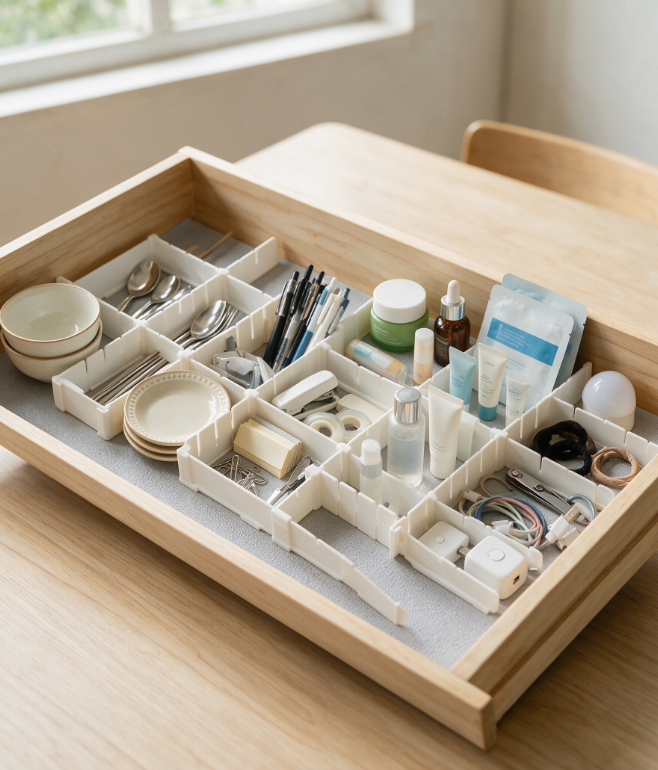
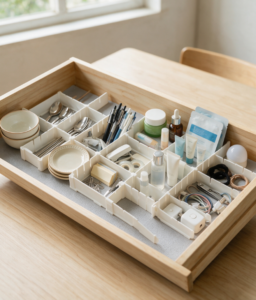
Sort tiny scattered items with compartmentalized trays. Cotton pads, swabs, hair clips, and disposable toiletries are prone to random scattering and loss. Divided mini organizers realize centralized classification and instant access. Conduct a monthly inspection to discard expired cosmetics and deteriorated products to avoid passive item overstocking.
Bedroom & Closet Storage: Eliminate Seasonal Clothing and Bedding Disarray
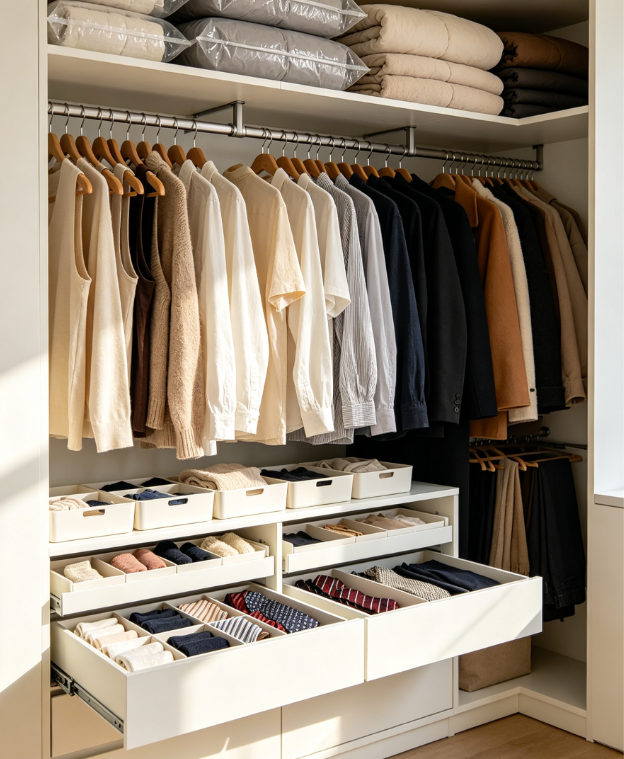
Most standard single-rod closets cannot meet diverse mixed storage needs. Daily casual wear, seasonal outerwear, thick quilts, and small accessories stored together result in wrinkled garments, overstuffed drawers, and time-consuming item searching every morning.
Restructure closet layouts with non-destructive tools. Adjustable tension rods divide single hanging areas into upper and lower layers, separating long coats and dresses from short daily tops to double effective hanging space. Drawer dividers independently organize socks, underwear, belts, and jewelry, completely solving the problem of tangled small accessories.
Compress seasonal bulky textiles to save core storage space. Thick winter quilts, down jackets, and heavy sweaters occupy more than half of ordinary closet space during off-seasons. Vacuum-sealed storage bags reduce fabric volume efficiently while protecting items from dust, moisture, and mildew. Place compressed storage bags on high closet shelves to reserve convenient middle areas for daily wearable outfits.
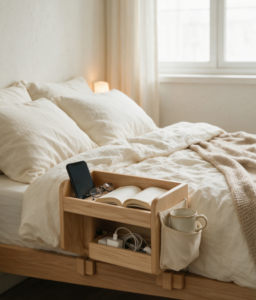
Set up a dedicated semi-clean clothing zone. Place a lightweight basket in a bedroom corner for clothes worn once but not ready for laundry. This practical setup avoids clothes piling on beds and chairs, fundamentally eliminating the biggest source of recurring bedroom clutter.
Living Room Storage: Minimize Visual Clutter in Shared Spaces
Living room clutter directly affects home aesthetics and living comfort. Tangled electronic cords, scattered remote controls, loose books, stationery, and children’s toys create continuous visual noise, making even spacious homes feel cramped and disordered.
Standardize cable management for all electronics. TVs, game consoles, chargers, and table lamps generate messy tangled wires that easily accumulate dust. Simple cable clips and cord storage boxes neatly bundle loose wires, keeping TV cabinets and floors clean and streamlined.
Balance open display and hidden storage. Place frequently read books and simple decorative ornaments on open shelves for easy access. Store seasonal ornaments, idle gadgets, and miscellaneous sundries in opaque closed bins to avoid visual chaos while ensuring item accessibility.
Adopt categorized toy storage for family households. Use labeled modular bins to sort building blocks, dolls, and art supplies by category. Cultivating the simple habit of using and returning items significantly reduces daily toy mess and lowers long-term cleaning pressure.
Low-Effort Sustainable Habits to Prevent Clutter Rebound
One-time deep cleaning only achieves temporary tidiness. Long-term household order relies on repeatable, low-effort daily habits instead of occasional exhausting large-scale reorganization.
Follow the one-in one-out inventory rule. When purchasing new clothes, daily supplies, or household gadgets, sort out equivalent unused items for donation or disposal. This habit balances total household belongings and fundamentally avoids storage saturation.
Stick to a 5-minute daily home reset. Before bedtime, return scattered keys, cups, chargers, and small sundries to fixed positions. Short daily maintenance prevents trivial clutter from accumulating into messy piles.
Conduct quarterly household inventory. Regularly clear expired food, outdated skincare products, broken tools, and long-idle items. Timely removal of invalid inventory keeps the entire home storage system efficient and orderly throughout the year.
Conclusion
Reliable home organization is a practical daily management system rather than a costly renovation project or superficial tidying task. All common household storage problems can be solved through reasonable space utilization, scientific item classification, and simple sustainable maintenance. These budget-friendly, renter-safe techniques fit small apartments, rental homes, and family residences perfectly. A well-organized home eliminates visual anxiety, improves daily living efficiency, and creates a calm, comfortable, and orderly living environment for long-term well-being.