Cervical Health: Common Problems, Risk Factors, and Science-Backed Prevention Tips

Cervical spine discomfort has become one of the most prevalent chronic health issues in modern daily life. From office workers and remote employees to students and frequent smartphone users, people of all ages experience recurring neck stiffness, shoulder tightness, and persistent cervical pain. Unlike acute injuries caused by accidents, most cervical problems develop gradually due to long-term poor posture, sedentary routines, and unhealthy lifestyle choices. Without timely adjustment and scientific care, mild neck strain can evolve into chronic cervical spondylosis, nerve compression, and recurring physical discomfort that affects work efficiency, sleep quality, and overall quality of life. Understanding cervical spine mechanics, identifying daily risk factors, and adopting evidence-based protective habits are essential for long-term physical health.
Basic Structure and Functions of the Cervical Spine
The cervical spine refers to the upper segment of the spinal column, consisting of seven cervical vertebrae, elastic intervertebral discs, nerve roots, and layered neck and shoulder soft tissues. As the most flexible and movable part of the entire spine, it supports the average head weight of 5 kilograms, enabling daily movements such as head rotation, flexion, extension, and lateral bending. Meanwhile, the cervical spine protects the delicate spinal cord and nerve pathways that connect the brain to the upper limbs and torso.
A healthy cervical spine maintains a natural forward physiological curvature, which acts as a physiological buffer to disperse pressure, reduce movement vibration, and balance mechanical force. When this natural curvature is flattened or reversed, the entire cervical force system becomes imbalanced, leading to uneven disc pressure, persistent muscle tension, and gradual degenerative changes in spinal tissues.
Most Common Cervical Spine Problems in Modern Life
Text Neck and Postural Neck Strain
Text neck is the most typical cervical problem in the digital era. Long hours of looking down at mobile phones, tablets, and laptop screens force the cervical spine into a forward-flexed position. As the head tilts forward, the mechanical load on the neck increases significantly. Continuous forward posture overstretches posterior cervical muscles and ligaments, causing persistent muscle fatigue, stiffness, and dull pain. Most young people’s cervical sub-health problems belong to reversible postural strain, which can be fully improved with correct intervention.
Cervical Curvature Straightening and Reversal
Long-term uncorrected bad posture gradually changes the natural curvature of the cervical spine. Continuous compression causes the original forward curve to straighten, and in severe cases, it forms a reverse curve. This structural change destroys the body’s natural force balance, making the cervical spine more vulnerable to fatigue and injury. Patients often feel neck rigidity, difficulty in head rotation, and frequent shoulder and upper back soreness, even after short periods of work.
Nerve Compression and Cervical Spondylosis
If postural strain accumulates for years, intervertebral disc elasticity decreases, and disc bulging or protrusion may occur, triggering nerve root compression. Typical symptoms include radiating pain in the arms, finger numbness, intermittent dizziness, and persistent migraine. In severe chronic cervical spondylosis, long-term nerve and vascular compression may cause poor blood supply to the brain, resulting in frequent drowsiness, fatigue, and decreased concentration.
Core Risk Factors for Cervical Degeneration
Prolonged Sedentary and Static Posture
Sitting still for hours is a major hidden danger to cervical health. Most modern workers maintain a fixed desk posture for six to eight hours daily. Long-term static fixation keeps neck muscles in a state of continuous isometric contraction, leading to blocked local blood circulation, lactic acid accumulation, and muscle adhesion over time. Weakened muscle support increases spinal burden and accelerates cervical aging and degeneration.
Unreasonable Sleeping Posture and Pillow Use
Sleep is the key period for cervical tissue repair. Improper pillow matching and sleeping posture will make the cervical spine stay in a distorted state all night. Pillows that are too high cause cervical flexion, while overly flat pillows cannot support the neck curve. Prone sleeping leads to long-term unilateral torsion of the cervical spine, resulting in asymmetric muscle tension and spinal misalignment. Long-term incorrect sleeping habits greatly reduce the self-repair efficiency of cervical soft tissues.
Cold Stimulation and Lack of Physical Activity
The neck area has thin subcutaneous fat and weak cold resistance. Long-term air conditioning blowing and cold wind stimulation cause cervical blood vessel contraction, muscle spasm, and reduced tissue metabolism, aggravating stiffness and pain. In addition, long-term lack of full-body exercise leads to weak core muscle strength. Insufficient support from the neck, shoulder, and upper back muscles makes the cervical spine bear excessive pressure alone, accelerating the occurrence of strain.
Scientific Prevention and Daily Improvement Strategies
Standardize Daily Posture to Reduce Cervical Pressure
Correct posture maintenance is the most fundamental and effective way to prevent cervical problems. During desk work, keep the torso upright, shoulders naturally relaxed, and chin slightly retracted to restore the natural physiological curvature of the cervical spine. Adjust the display height to eye level to avoid long-term head lowering and forward leaning. When using mobile devices, lift the screen appropriately instead of bowing the head for a long time.
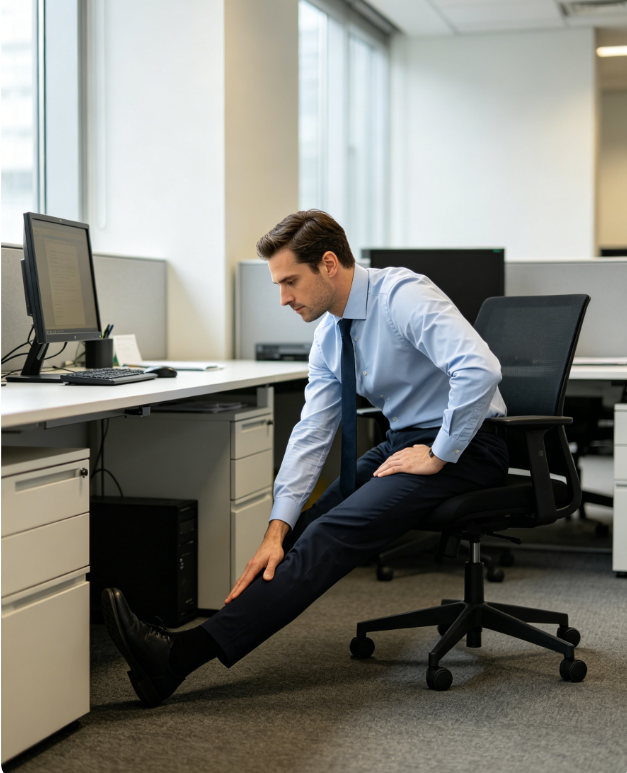
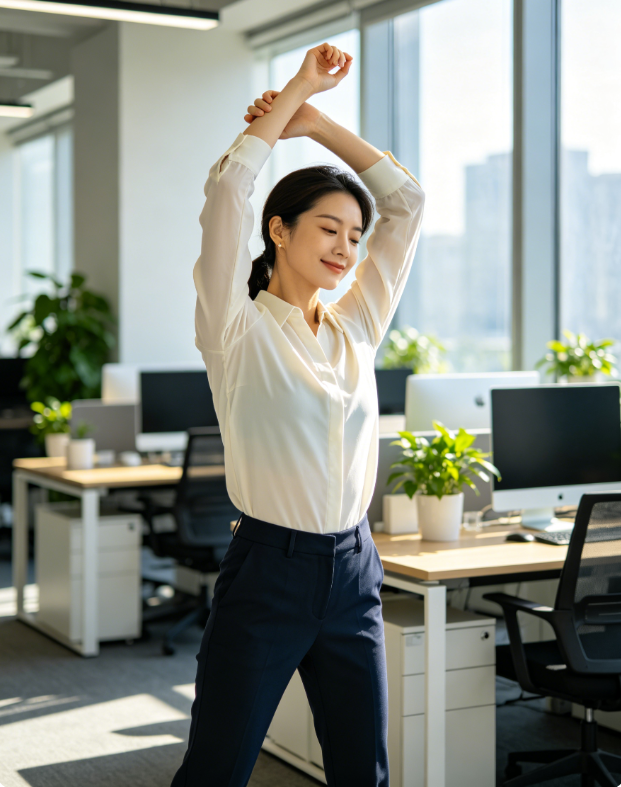
Adhere to the 30-minute activity rule: stand up, stretch the neck and shoulders, and rotate the joints gently every half hour of continuous work. Short and frequent relaxation can effectively relieve muscle fatigue and avoid cumulative strain.
Optimize Sleeping Conditions for Cervical Restoration
Choose an ergonomic pillow that fits the neck curve, providing uniform and stable support for the head and cervical spine. The pillow should fill the gap between the neck and the mattress to avoid suspended pressure on cervical muscles. Priority should be given to supine and lateral sleeping postures, and prone sleeping should be completely avoided. Maintaining a stable and spine-friendly sleeping environment helps the cervical spine complete tissue repair and energy recovery during deep sleep.
Moderate Stretching and Targeted Muscle Training
Daily gentle cervical stretching can effectively relieve muscle spasm, improve local blood circulation, and restore soft tissue elasticity. Slow neck extension, lateral stretching, and shoulder relaxation movements are suitable for daily office relaxation. At the same time, strengthen the training of neck, shoulder and upper back muscles. Strong muscle groups can share spinal pressure, stabilize cervical alignment, and fundamentally improve the body’s ability to resist strain.
Low-impact sports such as swimming, brisk walking, and gentle yoga are ideal for cervical health care. These exercises relax tense muscles, correct bad posture, and enhance overall spinal stability without causing compression or damage to the cervical spine.
Develop Healthy Protective Habits
Keep the neck warm in daily life and avoid direct long-term blowing of air conditioners and cold wind. Reduce bad habits such as single-shoulder weight-bearing, violent neck shaking, and long-term bowing before going to bed. Maintain a regular work and rest schedule to avoid chronic fatigue caused by staying up late, which helps stabilize nerve function and reduce cervical sensitivity.
When to Seek Professional Cervical Examination and Treatment
Most mild neck stiffness and postural strain can be significantly improved through daily adjustment and exercise. However, if symptoms such as persistent neck and shoulder pain, repeated dizziness, frequent finger numbness, limited neck movement, and prolonged poor sleep occur, timely professional medical examination is required to exclude disc protrusion, nerve compression, and spinal structural abnormalities.
It is crucial to avoid blind violent massage and excessive traction. Improper physical intervention may aggravate cervical instability and nerve irritation. All professional rehabilitation and physiotherapy measures should be carried out under the guidance of certified medical personnel to ensure safety and effectiveness.
Conclusion
Cervical health is an important part of overall physical wellness. Most modern cervical diseases are not caused by sudden trauma but by the long-term accumulation of minor bad habits. The cervical spine has strong self-regulation and repair capabilities in the early stage of strain. By maintaining scientific posture, optimizing sleeping conditions, adhering to daily stretching and exercise, and avoiding long-term static compression, people can effectively prevent and improve most cervical sub-health problems. Paying continuous attention to cervical protection in daily life is the most reliable way to maintain flexible movement, comfortable physical state, and long-term bodily health.