Understanding Cervical Spine Issues: Causes, Symptoms, and Evidence-Based Prevention

Cervical spine problems have become one of the most prevalent musculoskeletal disorders in modern society. Affecting office workers, students, and smartphone users of all ages, chronic neck discomfort no longer only troubles middle-aged and elderly groups but has rapidly spread among younger populations. The cervical spine, consisting of seven small vertebrae, supports the entire weight of the human head while enabling flexible rotation, bending, and tilting. Due to its high flexibility and relatively weak structural stability, this area is extremely vulnerable to strain, misalignment, and degenerative changes under long-term incorrect living habits. Most cervical spine disorders develop slowly over time, and early intervention can completely reverse mild symptoms and avoid irreversible chronic damage.
The Structural Characteristics of a Healthy Cervical Spine
A healthy cervical spine presents a smooth forward physiological curvature, which acts as a natural buffer to disperse head pressure, reduce vibration during movement, and protect the spinal cord and nerve roots. Complete cervical health relies on the coordination of vertebrae, intervertebral discs, ligaments, and neck and shoulder muscles. Intervertebral discs cushion external pressure, while surrounding muscles and ligaments fix the spinal position and maintain posture balance.
Once this balanced system is broken, a series of problems will occur. Long-term abnormal force will straighten or reverse the physiological curvature of the cervical spine, resulting in disc compression, muscle spasm, nerve irritation, and local blood circulation disorders. These changes are the fundamental causes of almost all chronic cervical spine issues.
Primary Causes of Modern Cervical Spine Disorders
Digital Overuse and Forward Head Posture
The widespread use of electronic devices is the leading cause of modern cervical lesions. When the head leans forward to look at mobile phones or computer screens, the mechanical pressure on the cervical spine increases exponentially. A 15-degree forward tilt doubles the neck burden, while a 45-degree tilt brings extremely high compression to cervical discs and posterior muscles. Sustained low-head posture for hours every day leads to continuous muscle tension, ligament fatigue, and gradual deformation of the cervical spine curvature, forming the typical “text neck” syndrome.
Prolonged Sedentary and Static Posture
Long-term fixed sitting posture greatly reduces the activity frequency of the neck and shoulder muscles. Office workers often keep their necks stationary for 6 to 8 hours a day or longer. Static muscle contraction causes lactic acid accumulation, blood stasis, and muscle stiffness. Over time, the muscle groups that support the cervical spine become weak and fatigued, losing the ability to stabilize the spine. The spine is forced to bear excessive pressure alone, accelerating disc aging and degeneration.
Unreasonable Sleeping Habits
Sleep is the critical period for cervical spine repair, and inappropriate sleeping habits will completely offset daily self-protection efforts. Pillows that are too high, too low, too hard or too soft will destroy the natural alignment of the cervical spine. High pillows force the neck to flex forward, while pillow-free sleeping causes cervical hyperextension. Prone sleeping will twist the cervical spine unilaterally, leading to asymmetric muscle tension. Long-term wrong sleeping postures prevent cervical rest and repair, inducing chronic strain.
Cold Stimulation and Acute Improper Movement
The neck skin is thin, with less subcutaneous fat, making it sensitive to cold stimulation. Long-term blowing of air conditioners and cold wind will cause neck blood vessels to contract, muscle spasm, and reduced local metabolism, aggravating stiffness and pain. In addition, sudden violent neck rotation, excessive stretching, and incorrect fitness movements may cause acute cervical soft tissue strain, laying hidden dangers for chronic cervical diseases.
Common Symptoms of Cervical Spine Problems
Early Mild Symptoms
In the early stage of cervical strain, the main manifestations are neck and shoulder stiffness, soreness, and fatigue after long sitting. Many people feel difficulty in rotating the neck, tight upper back muscles, and occasional dull pain in the posterior neck. These symptoms are usually relieved after rest, so they are easily ignored. In fact, recurrent neck stiffness is the earliest warning signal of cervical sub-health, indicating that muscle balance and spinal curvature have begun to change.
Moderate and Severe Manifestations
If early strain is not corrected in time, symptoms will gradually worsen. Patients will experience persistent neck pain, frequent dizziness, migraine, and upper limb numbness and tingling. When the compressed nerve root affects blood circulation and nerve conduction, symptoms such as finger numbness, arm soreness, and weakened grip strength will appear. In severe cases, cervical spine lesions may affect spinal cord stability, leading to physical fatigue, poor sleep, and even limited daily movement.
Scientific Prevention and Daily Rehabilitation Methods
Correct Posture to Reduce Cervical Pressure
Maintaining standard daily posture is the core of preventing cervical diseases. When working and studying, keep the chest upright, shoulders naturally relaxed, and chin slightly retracted to restore the physiological curvature of the cervical spine. Adjust the computer screen to eye level to avoid long-term head lowering. When using mobile phones, lift the screen instead of bowing the head. Follow the 30-minute activity rule: stand up and move the neck and shoulders every half hour to relieve continuous muscle compression.
Optimize Sleeping Environment and Pillow Selection
Choose a professional ergonomic pillow that can fit the neck curve, provide uniform support for the head and neck, and avoid local pressure concentration. The pillow height should match the individual neck length, ensuring that the cervical spine remains naturally straight during supine and side sleeping. Give up prone sleeping habits to prevent spinal torsion and soft tissue strain. Maintaining regular work and rest helps the cervical spine complete self-repair during deep sleep.
Moderate Stretching and Muscle Training
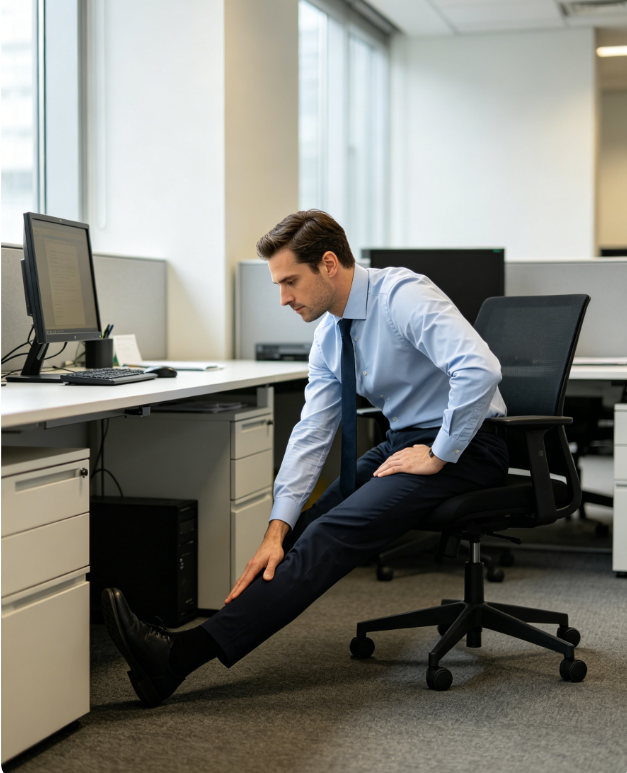
Daily gentle cervical stretching can effectively relieve muscle spasm and improve spinal flexibility. Slow neck lateral stretching, backward extension, and shoulder relaxation movements promote blood circulation in the neck and shoulder area and eliminate fatigue accumulation. At the same time, strengthen the training of neck, shoulder and upper back muscles. Strong core muscle groups can share spinal pressure, stabilize cervical alignment, and fundamentally improve the ability to resist strain.
Low-intensity aerobic exercises such as swimming, brisk walking and yoga are very suitable for cervical health care. These exercises relax tense muscles, correct bad posture, and enhance the stability of the entire spine system without causing cervical compression.
Keep Warm and Avoid Bad Habits
Keep the neck warm in daily life and avoid long-term direct blowing of cold wind and air conditioners to prevent muscle spasm caused by cold stimulation. Give up bad habits such as single-shoulder bag carrying, neck clamping mobile phones, and violent neck shaking. Reduce high-intensity desk work before going to bed to avoid long-term cervical tension and affect sleep quality.
Professional Treatment Timing for Cervical Lesions
Most mild cervical muscle strain and postural curvature changes can be improved through daily adjustment and exercise. However, if persistent neck pain, frequent dizziness, repeated numbness of upper limbs, and limited neck movement occur, professional medical examination and rehabilitation intervention must be carried out in time. Early imaging examination can accurately judge disc condition, spinal curvature and nerve compression, avoiding the development of mild symptoms into irreversible cervical spondylosis.
It is worth noting that blind violent massage and excessive spinal traction may aggravate cervical instability and nerve compression. All rehabilitation treatments need to be completed under the guidance of professional medical personnel to ensure safety and effectiveness.
Conclusion
Cervical spine health is an important guarantee for daily work, study and physical activity. Most cervical problems in modern people are not caused by sudden trauma, but by the accumulation of long-term bad posture, insufficient exercise and unhealthy living habits. The cervical spine has a strong self-repair ability in the early stage of strain. By maintaining scientific posture, developing good living habits, adhering to daily stretching and muscle training, and avoiding long-term static compression, everyone can effectively prevent and improve cervical sub-health problems. Paying attention to minor cervical discomfort in daily life and taking early protective measures are the most reliable ways to maintain long-term cervical spine health.