Renter Pantry & Food Storage | No Stains, No Mold & Zero Cabinet Damage
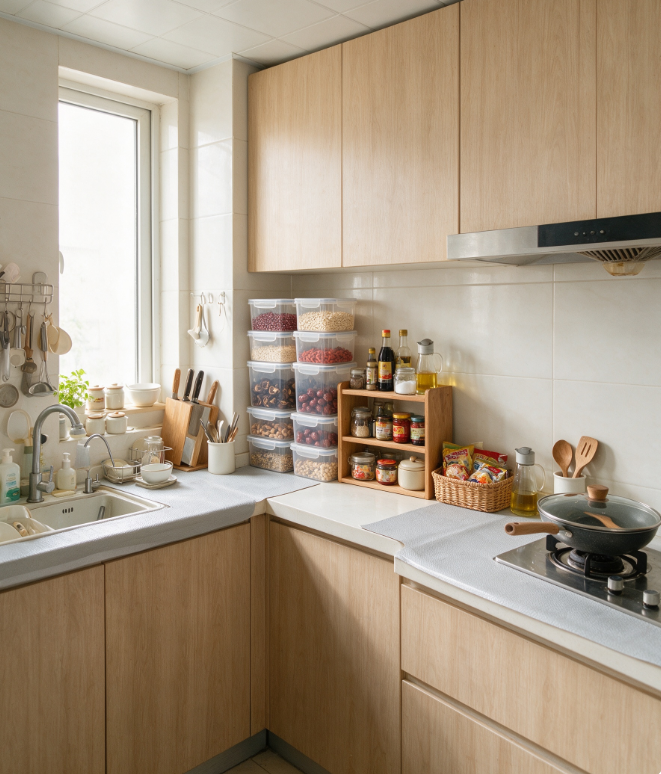
Rental kitchen pantries, cabinet shelves and open food storage zones are some of the highest-risk organizing areas for tenants. Unlike permanent homeowner pantries, rental kitchen cabinets feature fragile particleboard surfaces, unsealed wood gaps, poor internal ventilation and easily stained finishes. Improper food storage leads to common move-out penalties: permanent oil and sauce stains, swollen water-damaged cabinet boards, moldy shelf corners, sticky adhesive residue and pest-attracting crumb buildup. I have made every classic rental food storage mistake across multiple apartments. I placed unsealed oil bottles directly on bare shelves that left dark penetrating stains, used adhesive shelf organizers that peeled cabinet paint, and stacked loose snacks that spilled crumbs into hidden cabinet gaps. Most generic pantry guides focus on large walk-in pantry systems, ignoring renter limitations: shallow rental cabinets, no drilling permission, easily damaged shelf surfaces, and temporary living cycles that require fully removable setups. After repeated deep cleaning and move-out inspections, I created a fully renter-safe food storage system categorized by cabinet material, food type, and kitchen humidity levels.
Why Renter Food & Pantry Storage Always Fails (My Costly Mistakes)
My worst rental kitchen damage came from overlooked food storage issues that seemed harmless day-to-day. Early on, I skipped shelf liners and stored cooking oil, vinegar and sauce bottles directly on particleboard shelves. Minor unseen seepage soaked into the porous wood, creating permanent dark stains and slight board swelling that could not be cleaned off. The landlord charged full shelf resurfacing fees. I also installed sticky adhesive basket organizers inside cabinet doors for snacks. Kitchen heat and humidity baked the glue hard, and removal peeled large paint patches. Worst of all, I stored open dry goods in unzipped fabric bins. Hidden crumbs accumulated for months, attracting tiny pests and creating hard, crusty grime along shelf edges. These failures are never shown in social media pantry tours because they are exclusive to low-quality, non-renovated rental kitchen cabinetry.
1. Porous Particleboard Pantry Shelves (Stain & Swell Risk)
Surface weaknesses & forbidden habits
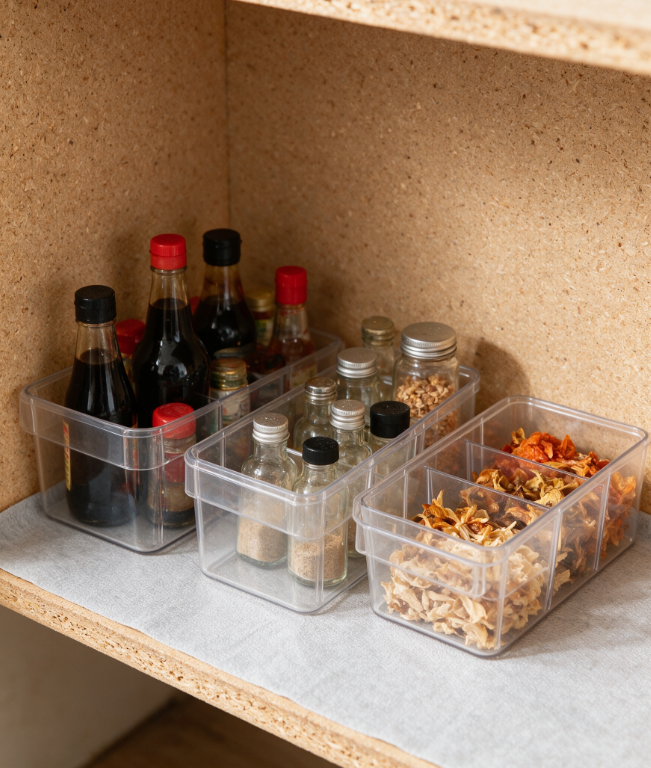
Nearly all rental kitchen cabinets use porous, unfinished particleboard shelf interiors. This material absorbs liquid, oil and food dye instantly. Even tiny bottle condensation or minor spills penetrate deep into the board, causing irreversible discoloration, bloating and rough textured surfaces. Aggressive scrubbing to remove food stains only peels the thin top layer and worsens damage.
Renter-safe full-protection system
Non-adhesive waterproof shelf liners are mandatory for all particleboard pantry shelves. These glue-free protective mats cover the entire shelf surface, blocking oil, water and sauce penetration completely without leaving residue. I use divided clear plastic bins to group spices, sauces and small condiments. Segmented containment prevents scattered spills and localizes any leakage, protecting bare wood at all times.
Key tradeoff
Liners slightly reduce shelf height, but this minor sacrifice eliminates 100% of permanent stain and swelling risks that cause expensive move-out deductions.
2. Humid Closed Cabinet Pantries (Mold & Odor Risk)
Hidden environmental hazards
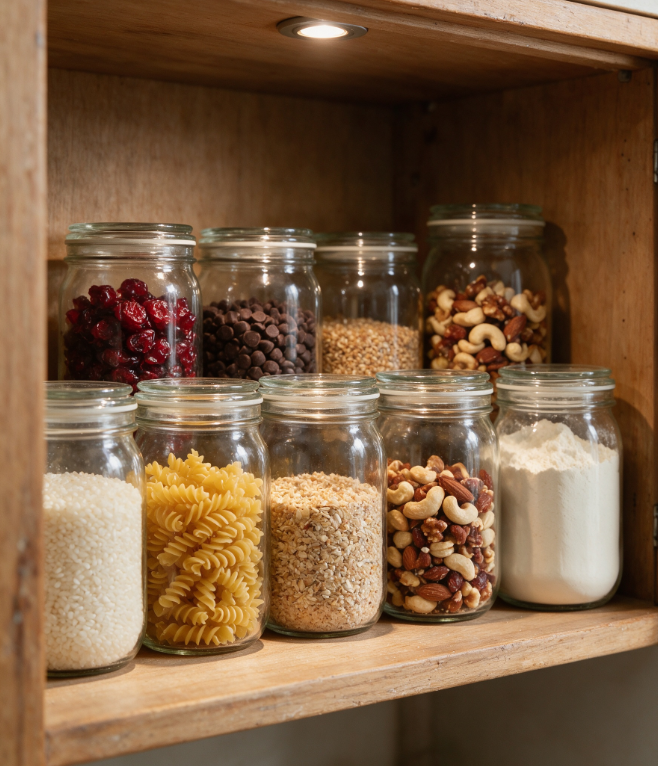
Closed kitchen cabinets have stagnant, unventilated air. Cooking steam, ambient humidity and bottle condensation get trapped inside dark pantry zones. Unsealed food containers, open snack bags and porous fabric storage bins absorb moisture rapidly. This creates musty cabinet odors, fuzzy mold on food packaging, and damp shelf corners that grow hidden bacteria over time.
Mold-proof sealed food organization
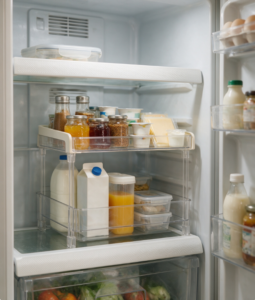
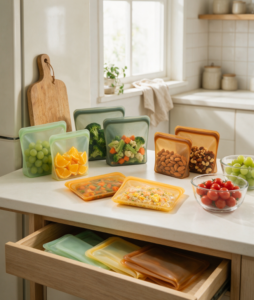
Airtight clear plastic food containers are the only reliable solution for humid rental pantries. Fully sealed lids lock out humidity, keep dry goods fresh, and prevent crumb dispersal. Clear bodies allow easy inventory checks without rummaging. I store rice, pasta, cereal, nuts and baking supplies in individual sealed containers. For frequently used snacks, I use ventilated open-top clear bins to balance accessibility and dust protection.
Items to never store loose
Open flour bags, unpackaged grains, loose sugar and paper-wrapped snacks. They attract moisture, grow mold and leave fine residue that contaminates entire cabinet shelves.
3. Small Open Counter Pantry Zones (Clutter & Dust Risk)
Space limitations & common errors
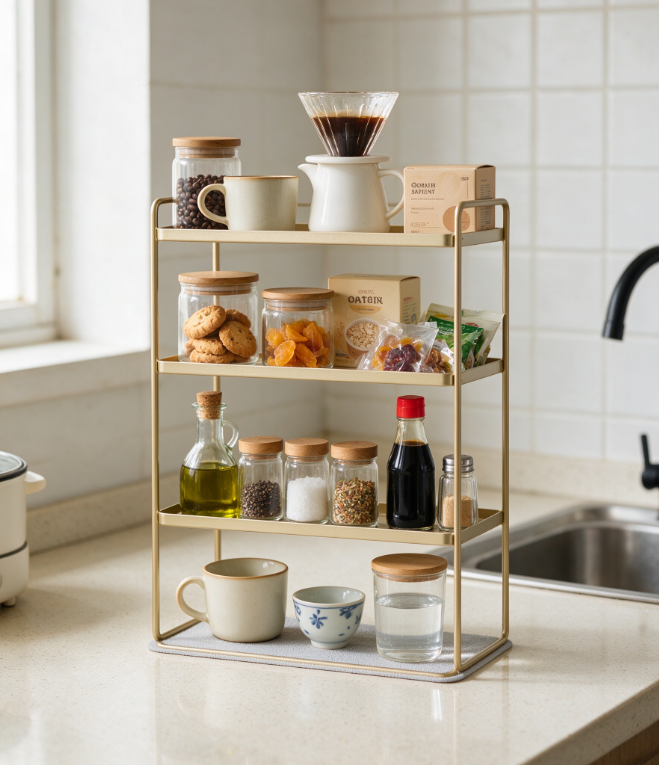
Most rentals lack dedicated walk-in pantries, forcing renters to store food on limited countertop space. Overcrowded counter food setups collect airborne grease, kitchen dust and splatter residue. Tall unorganized stacks topple easily, create visual chaos, and block food prep areas. Many popular counter shelf designs use suction cups or adhesive bases that damage counter finishes and leave rings.
Low-profile counter pantry strategy
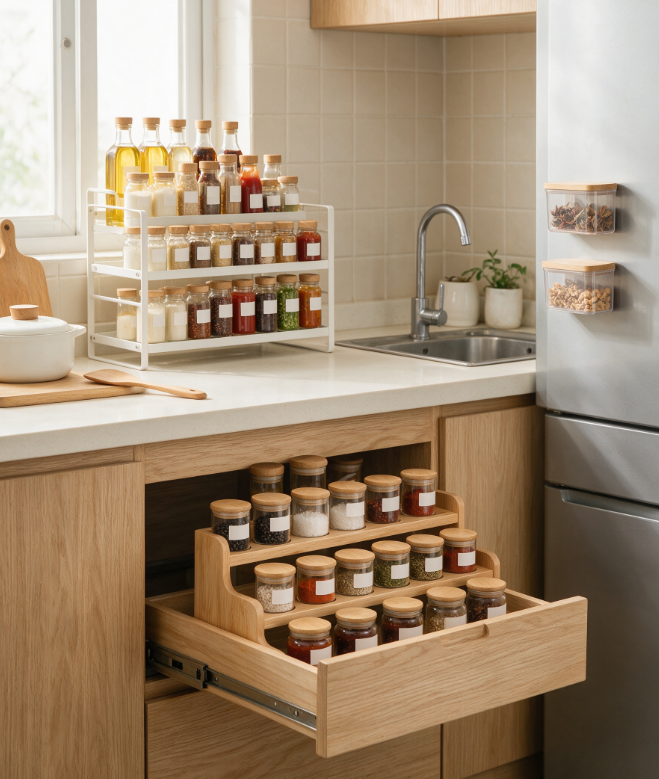
Freestanding tiered shelf organizers with soft non-slip bases work best for rental counter pantries. Glue-free, suction-free designs leave stone, tile and laminate countertops completely unmarked. Tiered layering maximizes vertical space without overcrowding. I group coffee supplies, daily snacks, frequently used seasonings and drinkware on these open shelves for easy access.
Short-Term vs Long-Term Renter Decision Guide
Short-term renters (under 1 year)
Prioritize basic universal shelf liners and lightweight clear bin sets. They are affordable, fully removable, and pack flat for moving. Avoid bulky custom pantry systems that offer little temporary value.
Long-term renters (2+ years)
Invest in thick waterproof cut-to-size liners, airtight food container sets and reinforced tiered counter shelves. Long-term humidity and daily usage accumulate heavy grime and hidden spills. Durable protective setups preserve cabinet condition and keep food sanitary year-round.
Budget Tier Comparison & Tool Avoidance List
Low budget & zero damage risk: non-adhesive shelf liners, basic clear snack bins, freestanding mini tier shelves (portable, residue-free, full protection)
Mid budget & best durability: airtight food storage containers, thick waterproof anti-oil liners, reinforced non-slip counter pantry racks (mold-resistant, stain-proof, easy to clean)
Never use in rental pantries: adhesive shelf paper, sticky cabinet baskets, unlined fabric food bins, permanent suction cup shelves (peeling paint, trapped mold, permanent stains, residue buildup)
Frequently Asked Questions
How do I protect rental pantry shelves from stains? Glue-free waterproof shelf liners create a full barrier against oil, sauce and condensation stains on porous particleboard.
Can food storage cause mold in rental cabinets? Yes. Unsealed food and loose snacks trap cabinet humidity. Airtight containers eliminate mold and musty odors entirely.
Are adhesive pantry organizers safe for renters? No. Kitchen heat hardens adhesive, causing paint peeling and stubborn residue that leads to move-out deductions.
What is the best pantry setup for small rental kitchens? Freestanding tiered shelves + segmented clear bins maximize space without drilling, gluing or counter damage.
How do I stop pantry crumb buildup? Fully contained bin systems prevent loose crumbs from falling into hidden cabinet gaps, keeping shelves pest-free and clean.
Final Verdict
Renter-friendly pantry and food storage succeeds through surface protection and sealed containment, not overpacking cabinet space. Fragile particleboard shelves require full waterproof liner coverage to block stains and swelling, humid closed cabinets demand airtight sealed containers to fight mold and odors, and small counter pantry zones need non-invasive tiered shelving for clutter-free organization. Short-term renters benefit from simple portable protective tools, while long-term renters gain lasting sanitary and financial value from durable food storage systems. By avoiding adhesive fixtures, unprotected shelf storage and loose unpackaged food piles, renters can maintain clean, functional pantry spaces while preserving cabinet integrity and protecting their full security deposit.