Renter Drawer Storage: Damage-Free, Residue-Free & Mildew-Resistant Organization
Drawers are among the most heavily used yet easily overlooked surfaces in rental apartments. Bedroom dressers, kitchen cabinets, and bathroom vanity drawers typically come with thin factory finishes, rough wooden bases, and limited moisture resistance. Many renters encounter common drawer-related challenges: surface scuffs, stubborn adhesive residue from temporary organizers, hidden mildew growth, unsightly stains, and stiff sliding caused by overpacking. Having tested countless drawer organization methods across multiple rental homes, I’ve experienced every common pitfall firsthand. Temporary tape dividers often leave tough leftover residue, placing sharp items directly on bare wood creates gradual abrasions, and overloading shallow drawers can warp thin bases and hinder smooth movement. Most generic drawer organizing guides cater to sturdy custom furniture, overlooking the unique limitations of rental fixtures: lightweight particleboard construction, shallow depth, non-replaceable interiors, and strict no-alteration lease policies. After repeated move-out cleanups and small deposit deductions over the years, I’ve developed a practical, renter-friendly drawer storage system tailored to different drawer materials, sizes, and room humidity levels.
Why Regular Drawer Organization Fails in Rental Apartments
Drawer damage builds up gradually and often becomes noticeable only during final apartment inspections. Early in my renting experience, I used adhesive drawer dividers in my kitchen drawers. Fluctuating indoor temperatures locked glue residue into porous particleboard surfaces, and removing the strips peeled away fine wood fibers, leaving uneven, textured bases that required extra restoration work. Storing damp bathroom accessories and uncovered toiletries in unlined drawers also trapped lingering moisture, leading to dark discoloration and mildew growth in hidden back corners. Additionally, overloading shallow bedroom drawers with heavy everyday items created uneven pressure, warping thin bases and disrupting drawer alignment over time. These common issues are rarely mentioned in general organizing content, as they primarily apply to the lightweight, unmodified furniture standard in rental properties.
1. Particleboard Rental Drawers: Preventing Scratches & Stains
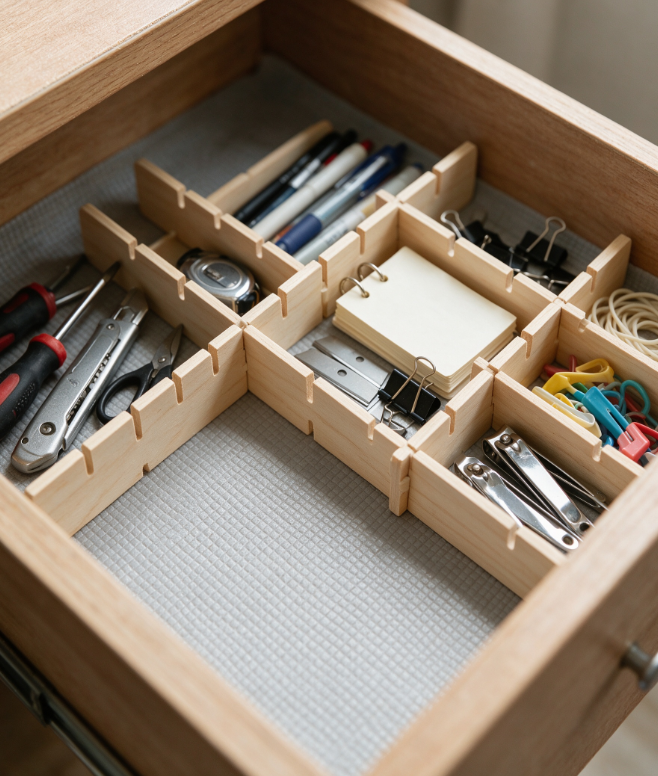
Common Surface Weaknesses & Improper Tools
Nearly all rental drawers are constructed from lightweight particleboard with thin laminated coatings. These surfaces scratch extremely easily from metal tools, sharp stationery, and hard plastic edges. Liquid spills from skincare, sauce residues, and cleaning chemicals penetrate micro gaps in the lamination, causing permanent dark staining and board swelling. Any adhesive tape, sticky divider strips, or glued organizers will leave unremovable residue or peel the thin finish layer.
Practical Renter-Safe Protection Method
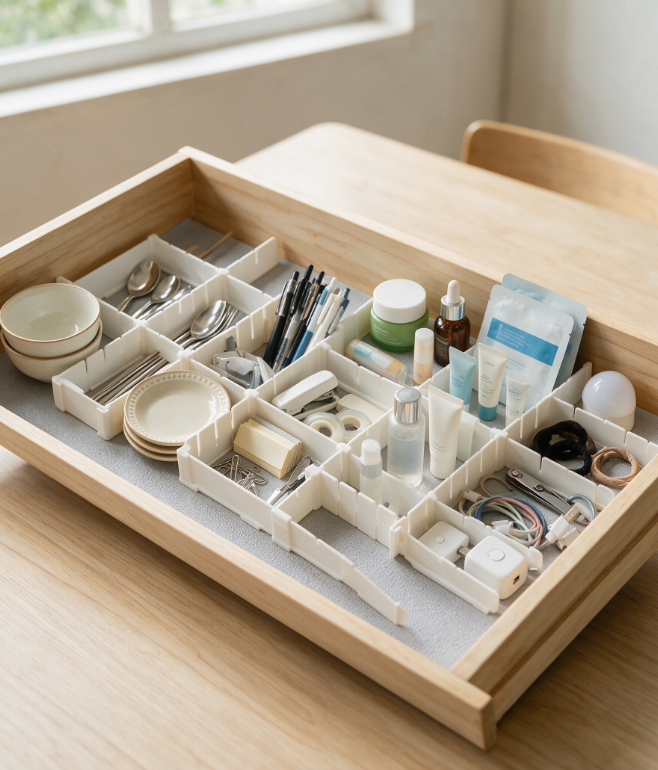
Non-adhesive, reusable drawer liners paired with tool-free adjustable dividers offer a reliable, rental-friendly alternative. Glue-free liners cover rough base surfaces to create a protective barrier against scratches, liquid stains, and daily abrasion. Freestanding, tension-style dividers sort clutter neatly without any surface attachment or furniture alteration. I apply this setup for kitchen utensils, office stationery, makeup tools, and small everyday accessories to maintain tidy drawer layouts while preserving the original furniture condition.
Key Rental Rule
Sticky adhesive products and permanently attached organizers should be avoided on delicate rental drawer surfaces, as they commonly cause finish peeling, leftover residue, and irreversible surface damage.
2.Shallow Kitchen & Bathroom Drawers: Managing Overstuffing & Moisture
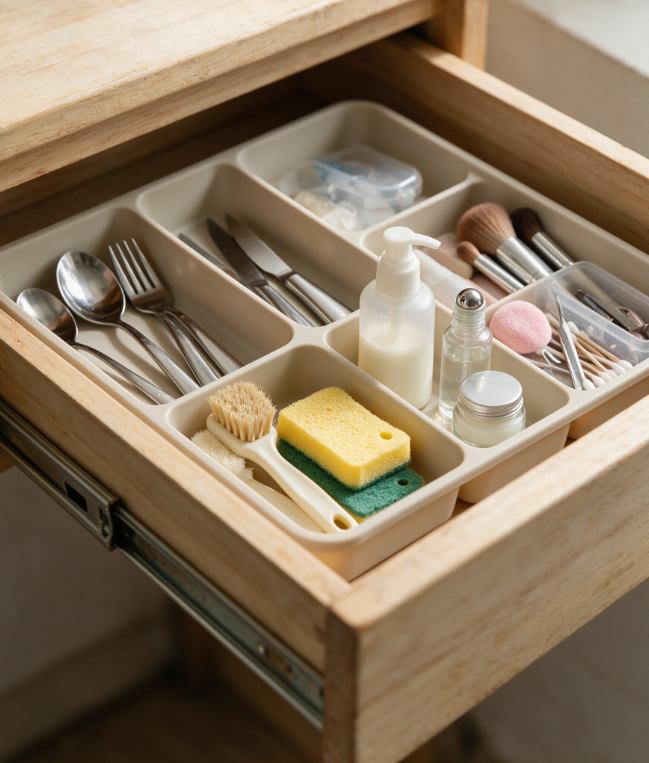
Layout Limitations & Common Mistakes
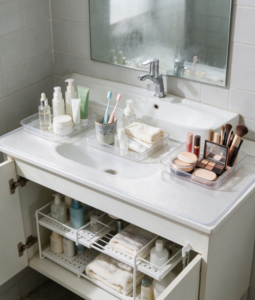
Kitchen and bathroom rental drawers are usually shallow, with minimal internal depth. Bulky standard storage trays often sit too tall, encouraging overpacking that jams drawer tracks and gradually warps internal structures. Bathroom drawers face additional moisture-related challenges: residual water on toiletries, humid indoor air, and accidental liquid spills can create damp, stagnant conditions that foster musty odors and mildew buildup in enclosed spaces.
Low-Profile Moisture-Resistant Solution
Ultra-slim, low-profile segmented trays and waterproof thin liners work exceptionally well for shallow rental drawer layouts. Their streamlined design fits limited depth without obstructing drawer movement or causing jams. Waterproof material resists kitchen grease, bathroom moisture, and everyday spills, reducing stain absorption and mildew development. I recommend arranging dry, sealed items in easy-to-access front sections and placing liquid-prone accessories in elevated segmented compartments to minimize direct contact with drawer surfaces.
Items to Store With Caution
Unsealed liquid containers, damp cleaning tools, loose sharp blades, and overstuffed utensil piles can contribute to stains, rust marks, scratches, and persistent odors in enclosed shallow drawers.
3. Deep Bedroom Dresser Drawers: Reducing Layered Clutter & Dust Buildup
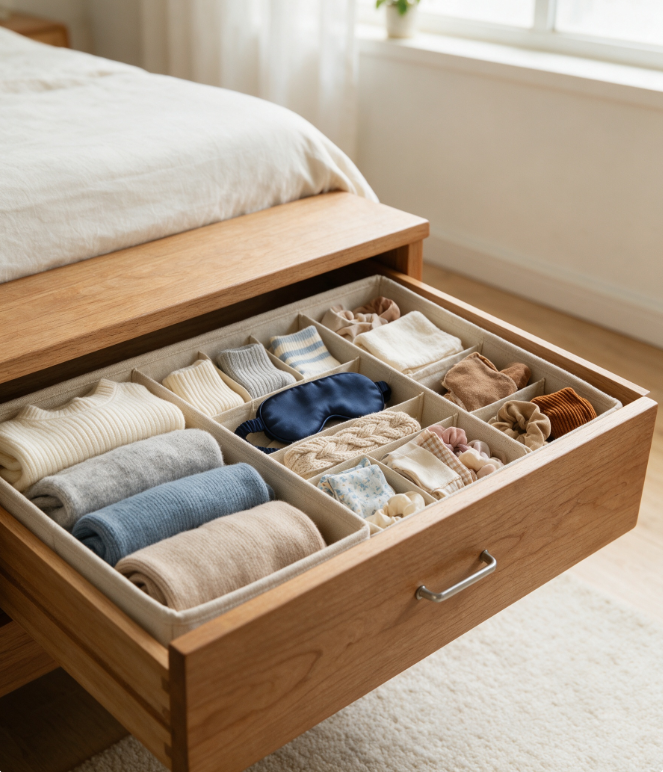
Hidden Organizational Challenges
Deep bedroom drawers easily accumulate layered, out-of-sight clutter. Many renters stack clothing and accessories in thick piles, burying frequently used items and creating disorganized storage. Unlined deep drawers also collect hidden dust, fabric lint, and debris in back corners, with stagnant air contributing to mild musty smells during humid weather.
Layered, Dust-Conscious Organization System
Stackable slim fabric storage bins and vertical segmented dividers transform chaotic deep drawers into structured, visible storage zones. Vertical compartmentalization eliminates hidden clutter and keeps all items easily accessible. Soft fabric constructions prevent interior surface scratches and require no complex installation. When paired with full-size non-slip liners, this setup significantly reduces hidden dust buildup and keeps stored garments and accessories fresh throughout the year.
Short-Term vs Long-Term Renter Storage Guide
Short-Term Renters (Under 1 Year)
Basic non-adhesive drawer liners and simple flat segmented trays deliver cost-effective, temporary organization. These lightweight accessories are fully removable, washable, and easy to pack for relocation, making them ideal for short tenancies with no need for premium hardware.
Long-Term Renters (2+ Years)
Thick anti-slip waterproof liners, reinforced adjustable dividers, and soft fabric organizer sets offer improved durability for long-term daily use. Extended wear gradually causes scuffs, dust accumulation, and moisture exposure; sturdy protective setups preserve drawer finish quality and minimize staining or mildew risks across changing seasons.
Budget Tier Comparison & Rental-Friendly Shopping List
Low Budget, Zero Surface Risk
Universal non-adhesive liners, basic flat segmented trays, and lightweight fabric bins. All options are residue-free, scratch-resistant, and fully portable for moving.
Mid Budget, Long-Lasting Durability
Waterproof anti-slip liners, tool-free adjustable dividers, and reinforced vertical compartment organizers. These provide reliable stain resistance, mildew resistance, and jam-free daily use.
Items to Avoid for Rental Drawers
Sticky tape dividers, permanently glued accessories, and oversized rigid trays. These commonly cause finish peeling, stubborn residue, sliding obstructions, and unnecessary surface damage.
Frequently Asked Questions
Do drawer organizers damage rental furniture? Damage typically occurs only with adhesive or oversized rigid organizers. Glue-free, freestanding setups protect original drawer surfaces with no permanent changes.
How can I reduce mildew risks in rental drawers? Waterproof liners and proper storage of damp or unsealed items minimize trapped moisture, creating a drier drawer environment that discourages mildew growth.
Are sticky drawer dividers safe for rental homes? Adhesive dividers are generally not renter-friendly. Temperature fluctuations set glue firmly into particleboard, leaving hard-to-remove residue and often peeling delicate finish layers.
What organizers work best for shallow rental drawers? Low-profile, ultra-flat trays fit limited depth dimensions without disrupting drawer sliding or causing structural pressure.
How do you organize deep rental drawers effectively? Vertical segmented dividers and slim fabric bins eliminate hidden layered clutter and reduce hard-to-clean dust accumulation in back corners.
Final Verdict
Effective rental drawer organization centers on gentle surface protection, size-appropriate accessories, and residue-free setup rather than overpacking for maximum capacity. Fragile particleboard drawers benefit from full glue-free liner coverage to reduce scratches and stains. Shallow kitchen and bathroom drawers perform best with low-profile waterproof trays that prevent jams and moisture-related issues. Deep bedroom drawers stay tidy with vertical segmented systems that minimize hidden dust and layered clutter. Short-term renters can rely on simple, portable protective tools, while long-term renters benefit from durable, adjustable organizer sets. By skipping adhesive fixtures, oversized rigid trays, and unprotected sharp-item storage, renters can maintain clean, functional drawer spaces while protecting furniture conditions and security deposits.