Sitting Less Fatigue: Science-Backed Health Tips for Full-Time Desk Workers
For modern desk-based professionals, sitting for most of the day has become an unavoidable work pattern. From morning shifts to evening overtime, countless people spend eight to ten hours seated in front of screens, focusing on tasks, meetings, and paperwork. While sitting feels effortless and time-saving, prolonged physical inactivity slowly weakens bodily functions, drains daily energy, and creates chronic sub-health problems. Many office workers ignore these gradual changes until persistent back pain, stiff shoulders, body heaviness, and low energy start affecting work efficiency and quality of life. Fortunately, with simple workplace-friendly adjustments, regular micro-movements, and correct daily habits, anyone can effectively reduce sedentary damage and keep the body healthy and energetic during long work hours.
How Chronic Sitting Affects Your Body and Energy
Sedentary harm is cumulative and systemic. Unlike sudden injuries, long hours of static sitting slowly disrupt muscle balance, blood circulation, and metabolic rhythm, bringing a series of hidden physical problems.
First, continuous fixed posture tightens the upper body muscles. The neck, shoulders, and upper back remain contracted for hours, leading to stiff cervical muscles, rounded shoulders, upper body tension, and frequent neck and shoulder soreness. Over time, poor sitting alignment increases spinal pressure, causing chronic lumbar discomfort and poor upper body flexibility.
Second, prolonged sitting severely weakens lower body activity. Hip flexors stay shortened, glute muscles gradually become inactive, and leg blood circulation slows down significantly. This results in heavy legs, mild swelling, hip tightness, and stiff joints after work. In the long run, muscle strength declines, making the body more prone to fatigue and soreness.
In addition, a sedentary lifestyle reduces metabolic efficiency. Low physical activity during work hours slows digestion, lowers calorie consumption, and makes people feel sleepy, sluggish, and mentally unfocused. Many office workers feel exhausted after a full day of sitting, even without heavy physical labor, which is a typical symptom of sedentary physical fatigue.
The Most Overlooked Bad Habits That Hurt Desk Workers
Most office health issues do not come from work intensity, but from repeated small bad habits that destroy physical balance day after day.
Static sitting for hours without breaks: Many people stay seated for three to four hours straight while focusing on work, cutting off body circulation and accumulating muscle tension.
Screen leaning and forward head posture: Unconsciously leaning toward the screen puts huge pressure on the cervical spine, accelerating strain and stiffness.
Lazy slouching and unsupported sitting: Slumping into the chair relaxes muscles temporarily but flattens the natural spinal curve, causing long-term lumbar strain.
Minimal movement throughout the day: Lack of walking, stretching, and standing makes the body stay in a low-metabolism state for a long time.
Ergonomic Sitting Habits to Protect Your Body All Day
Correct sitting posture is the cheapest and most effective way to prevent sedentary fatigue. A standardized ergonomic sitting state can evenly disperse body pressure, reduce muscle compression, and greatly lower the risk of chronic soreness.
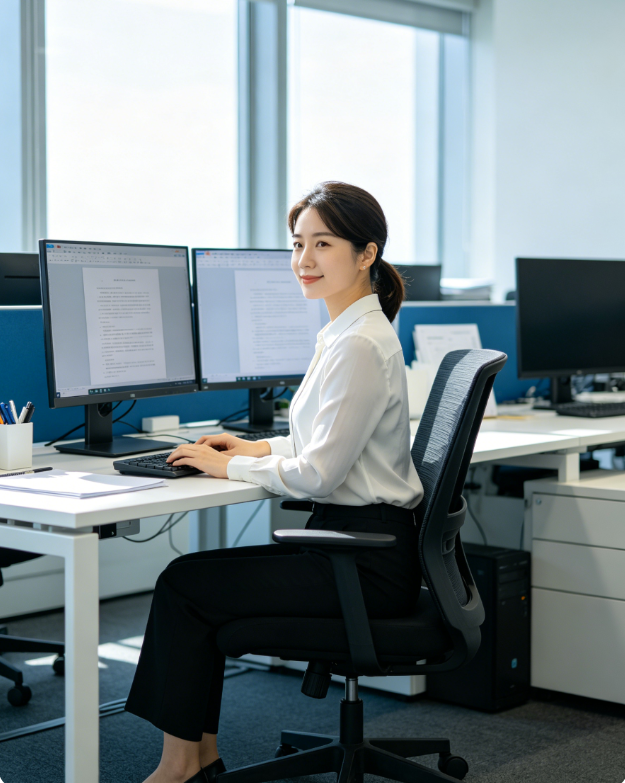
Keep your head neutral and your neck naturally straight, aligning your ears with your shoulders. Adjust your monitor height so that your eyes look slightly downward at the screen, avoiding neck strain. Relax your shoulders naturally without hunching or shrugging, and keep your upper back gently extended. Maintain a slight natural curve in your lower back and use back support to avoid slumping.
Place your hips fully on the chair cushion, keep your knees at a 90-degree angle, and place both feet flat on the ground. Avoid tilting your body to one side or crossing your legs for a long time. This balanced posture keeps the spine, muscles, and joints in the most relaxed and stress-free state during long desk sessions.
Quick Desk Workouts: No Equipment, No Disturbance
These ultra-simple desk movements are designed specifically for office scenarios. They are discreet, time-saving, and require no equipment, perfect for relaxing tight muscles during work gaps.
Neck Gentle Release: Slowly tilt your head left and right, forward and backward within a comfortable range. Hold each position for 15 seconds to release stiff cervical muscles and relieve screen fatigue.
Shoulder Blade Squeeze: Sit upright, straighten your back, and squeeze your shoulder blades backward and inward, then relax. Repeat 10 times to open the chest, correct rounded shoulders, and relieve upper back tension.
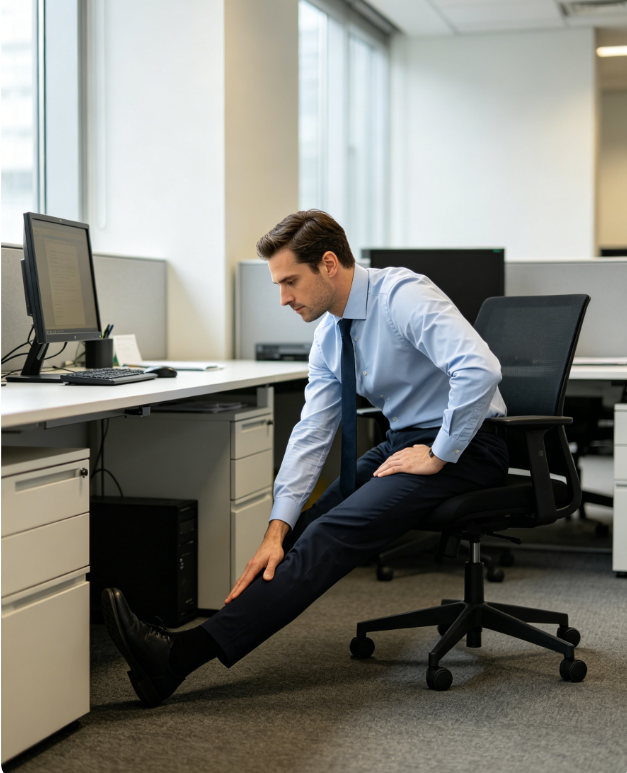
Seated Waist Relaxation: Place both hands on your knees, straighten your spine, and gently lean forward and backward in a small range to stretch the lumbar muscles, easing waist stiffness caused by long sitting.
Ankle and Leg Activation: Sit straight, lift your feet off the ground, and rotate your ankles clockwise and counterclockwise. Then stretch your toes upward to activate calf muscles and promote lower limb blood circulation.
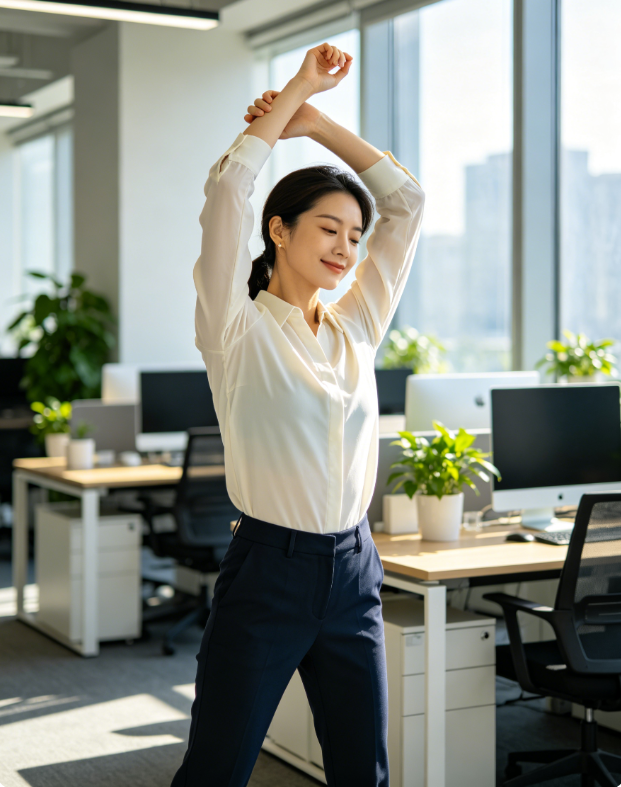
Standing Body Stretch: When standing up to rest, stretch your arms upward, extend your whole body, and take deep breaths to relax the compressed spine and relieve overall body heaviness.
The Best Work-Rhythm Rules to Avoid Sedentary Burnout
Stretching alone cannot completely offset sedentary damage. Building a healthy work rhythm is the key to long-term office physical health.
Form a fixed habit of standing and moving every 45 to 60 minutes. Even one minute of standing, walking, or simple stretching can break the static state of the body and restore blood circulation. Arrange standing time for simple tasks such as replying to messages and reading documents to reduce continuous sitting duration.
Adjust your eye focus regularly to relax cervical muscles and relieve brain fatigue. Arrange a 5-minute full-body relaxation during lunch breaks to release morning muscle tension and restore physical vitality for afternoon work.
Lifestyle Adjustments to Repair Sedentary Damage
After-work daily habits determine whether sedentary damage accumulates or is repaired. Sufficient water intake throughout the day accelerates metabolism and relieves muscle stiffness caused by inactivity. A 10 to 15 minute walk after work can fully activate sedentary muscles, improve circulation, and eliminate body heaviness.
Avoid staying sedentary for a long time after getting off work. Reduce lying down and sitting immediately after dinner, and maintain gentle daily activity. Keeping a stable sleep schedule allows strained muscles and the spine to repair efficiently at night, reducing chronic fatigue accumulation.
Final Thoughts
Desk work is an indispensable part of modern life, but sedentary fatigue and physical sub-health are completely controllable and reversible. Most office physical discomfort comes from long-term static posture, uncorrected sitting habits, and insufficient daily movement.
By maintaining scientific ergonomic posture, insisting on zero-equipment desk relaxation exercises, forming regular intermittent activity rhythms, and matching healthy daily lifestyles, every desk worker can effectively resist sedentary damage, maintain body flexibility and vitality, and achieve a balanced state of efficient work and sustainable physical health.