The Ultimate Office Wellness Guide: Reverse the Harm of Long-Term Sedentary Work
For modern professionals, sitting for long hours has become the default working mode. Whether working from an office or a home desk, most people spend 7 to 11 hours seated every day, focusing on screen-based tasks and daily work responsibilities. While sitting feels effortless and time-efficient, prolonged inactivity slowly undermines physical health, creating cumulative sub-health issues that affect energy levels, physical comfort, and long-term bodily function. Unlike acute injuries, sedentary damage develops silently over months and years. Fortunately, with scientific posture habits, micro-workout breaks, and simple daily adjustments, office workers can effectively reverse sedentary strain and maintain stable physical wellness throughout busy workdays.
The Science Behind Sedentary-Related Body Strain
Many people believe that sitting is a neutral, harmless state for the body. In reality, prolonged static sitting places continuous compression and tension on multiple body systems. When the human body remains seated for hours without movement, muscle groups stay locked in a contracted state, blood circulation slows down, spinal pressure increases, and joint flexibility gradually decreases.
The cervical and thoracic spine bear the most pressure during desk work. Forward head posture, rounded shoulders, and unsupported lower backs cause chronic muscle tightness, leading to frequent neck stiffness, shoulder tension, upper back soreness, and persistent fatigue. In the lower body, prolonged sitting shortens hip flexors, weakens glute and leg muscles, and slows venous circulation, resulting in swollen legs, stiff hips, numb limbs, and recurring lower back discomfort.
Beyond muscular and skeletal strain, a sedentary daily routine also reduces metabolic efficiency. Low physical activity during work hours leads to sluggish digestion, decreased energy metabolism, and daytime drowsiness. Over time, long-term sedentary habits weaken physical vitality, reduce body flexibility, and lower the body’s natural resistance to fatigue.
Common Bad Office Postures That Worsen Physical Damage
Most office physical discomfort is not caused by sitting itself, but by incorrect sitting postures that amplify bodily pressure. Recognizing and correcting these bad habits is the first step toward office wellness.
Forward head posture: Staring at low screens causes the head to lean forward, overstretching cervical muscles and straining the upper spine.
Slouched lower back: Sinking into the chair without lumbar support flattens the natural spinal curve, triggering chronic waist soreness and spinal compression.
Crossed legs and tilted hips: Long-term leg crossing creates unbalanced pelvic pressure, stiffens hip joints, and causes asymmetric muscle tension in the waist and legs.
Raised and tense shoulders: Keeping shoulders lifted while typing or operating a mouse tightens trapezius muscles, leading to stiff shoulders and upper body heaviness.
Ergonomic Correct Sitting Posture for Long Work Hours
Adopting a standard ergonomic sitting posture can reduce over 60% of sedentary physical strain. This zero-cost adjustment is the most foundational way to protect spinal health and muscle relaxation during desk work.
Keep your head upright and your gaze level with the upper third of the screen to avoid cervical strain. Relax your shoulders naturally and keep your upper back slightly extended, maintaining a straight but relaxed spine. Support your lower back with a slight natural curve to prevent slumping and spinal compression. Place your hips evenly on the chair surface and keep your feet flat on the ground with knees bent at a 90-degree angle. Maintain symmetrical body posture and avoid unilateral leaning for long periods.
Following this posture standard helps disperse body pressure evenly, protect spinal alignment, and reduce muscle fatigue during long working hours.
Zero-Equipment Office Stretches to Relieve Sedentary Strain
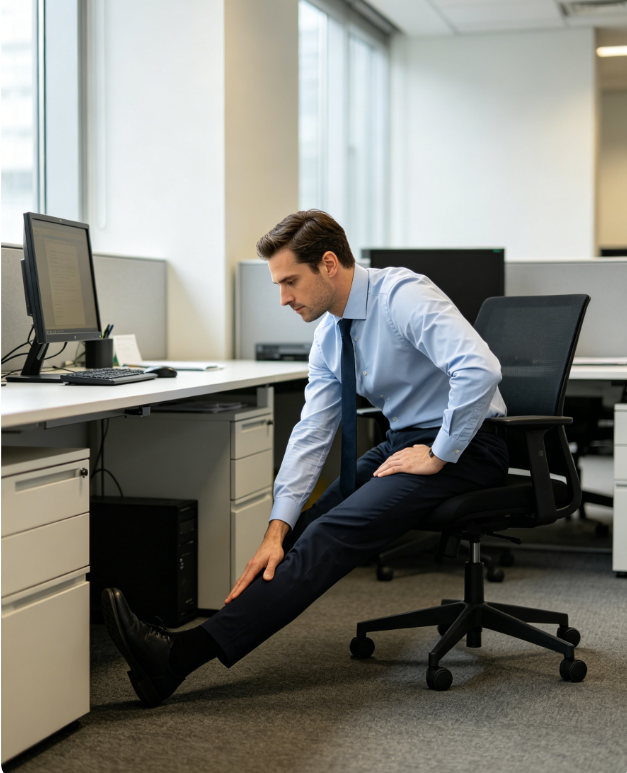
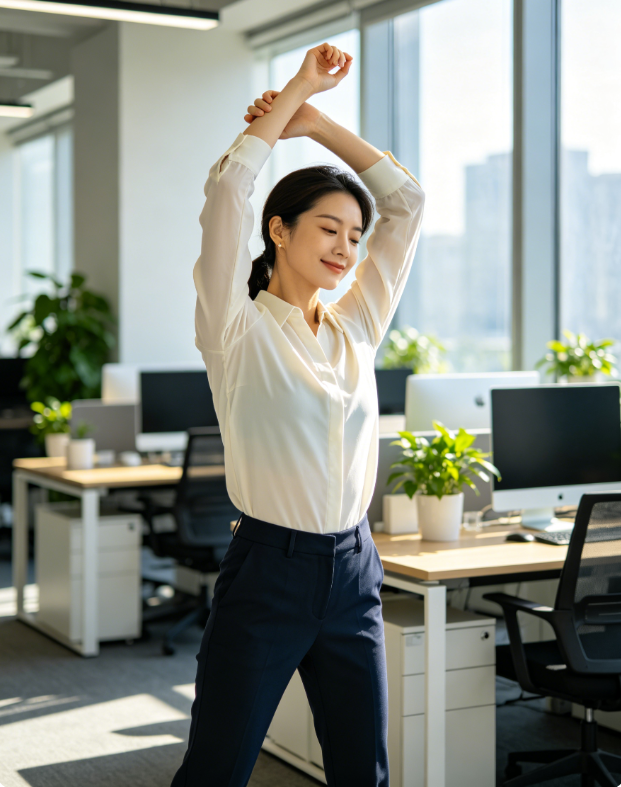
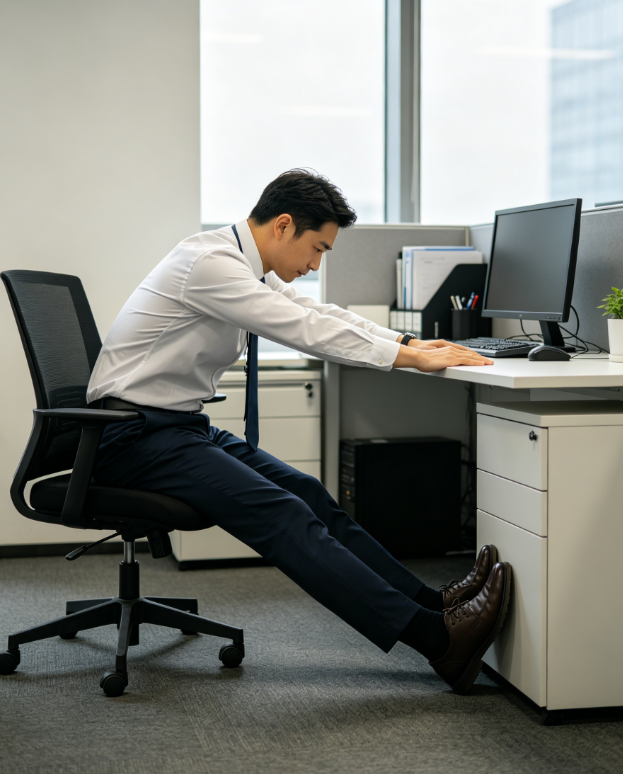
These quick, discreet stretches require no equipment and can be performed directly at your desk during work breaks. Each movement takes 20 to 30 seconds and effectively targets stiff muscle groups caused by prolonged sitting.
Cervical Release Stretch: Sit upright, slowly tilt your head side to side, and hold each stretch gently. Avoid fast or forceful rotation. This movement releases tight neck muscles, relieves cervical pressure, and reduces dizziness and neck stiffness from screen time.
Shoulder and Chest Opener: Straighten your back, interlace your fingers behind your back, and lift gently to open your chest and stretch rounded shoulders. This corrects hunchback posture, relieves upper back tension, and improves upper body blood flow.
Seated Spinal Twist: Stay seated upright, twist your torso slowly to the left and right, and hold each side steadily. This relaxes stiff lumbar muscles, releases spinal pressure, and alleviates daily lower back soreness.
Hip and Thigh Stretch: Sit at the edge of the chair, cross one ankle over the opposite knee, and lean forward slightly to stretch the hip muscles. This movement improves hip stiffness, relieves pelvic tension, and prevents sedentary hip tightness.
Lower Limb Activation: Straighten your legs forward, flex your toes upward, and shake your legs gently after stretching. This boosts lower limb circulation, reduces leg swelling and numbness, and prevents prolonged leg static strain.
Scientific Micro-Activity Rules for Sedentary Workers
Stretching alone cannot fully offset sedentary harm. Building regular micro-activity intervals is the core of long-term office physical health. Simple intermittent movements break long static states and restore bodily vitality.
Follow the 20-20-20 rule: every 20 minutes, shift your gaze to distant objects for 20 seconds and relax your neck and shoulders. Every hour, stand up for one minute to walk, adjust your posture, and stretch your limbs. Every two hours, complete a full set of desk stretches to release accumulated muscle tension.
Whenever taking calls or brainstorming, choose standing positions appropriately to reduce continuous sitting time. These tiny, frequent movements effectively prevent pressure accumulation and keep the body in a flexible, active state throughout work hours.
Daily Lifestyle Habits to Reverse Sedentary Sub-Health
To completely improve sedentary physical problems, office workers need to match desk adjustments with healthy daily routines. Sufficient daily water intake accelerates blood circulation and relieves muscle stiffness caused by inactivity. Moderate post-work walking, stretching, or light exercise activates muscles that remain static during the day, improving overall metabolism.
Maintaining regular sleep schedules allows strained muscles and the spine to repair overnight, reducing chronic soreness and fatigue. Reducing prolonged screen time after work helps relax overused cervical muscles and relieves physical and mental tension.
Final Thoughts
Long-term sedentary work is an inevitable part of modern professional life, but physical fatigue and sub-health issues are completely reversible. Bad posture, long static states, and lack of micro-activity are the root causes of office physical discomfort.
By maintaining ergonomic sitting posture, insisting on zero-equipment desk stretching, forming scientific intermittent activity habits, and building healthy daily routines, every office worker can effectively reduce sedentary damage, protect spinal and muscle health, and maintain high energy levels during busy workdays. Small daily wellness adjustments create long-term physical vitality, helping people balance efficient work and sustainable physical health.