Renter-Friendly DIY: Craft a Sliding Semi-Transparent Window Privacy Cover for Urban Japanese Apartments
Introduction
A large number of urban Japanese rental apartments are situated in densely packed residential districts. Narrow building spacing and low floor levels allow pedestrians and neighboring residents to easily observe indoor activities through plain glass windows. Although thick blackout curtains ensure privacy, they completely block natural daylight and create a cramped indoor atmosphere. Additionally, permanent frosted window films are strictly discouraged because they leave stubborn adhesive residues that incur move-out deductions. To balance natural illumination, visual privacy, and non-damage rental rules, tenants can create a manual sliding semi-transparent window cover. Constructed from milky translucent plastic panels and silent sliding rails, this low-profile tool softens outdoor visibility while preserving gentle daylight. Beyond its basic shielding function, this delicate handmade tool reflects the subtle Japanese spatial aesthetic: maintaining transparent boundaries between private living and public urban space.
Design Concept of the Sliding Window Cover
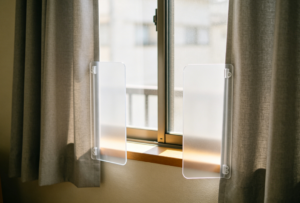
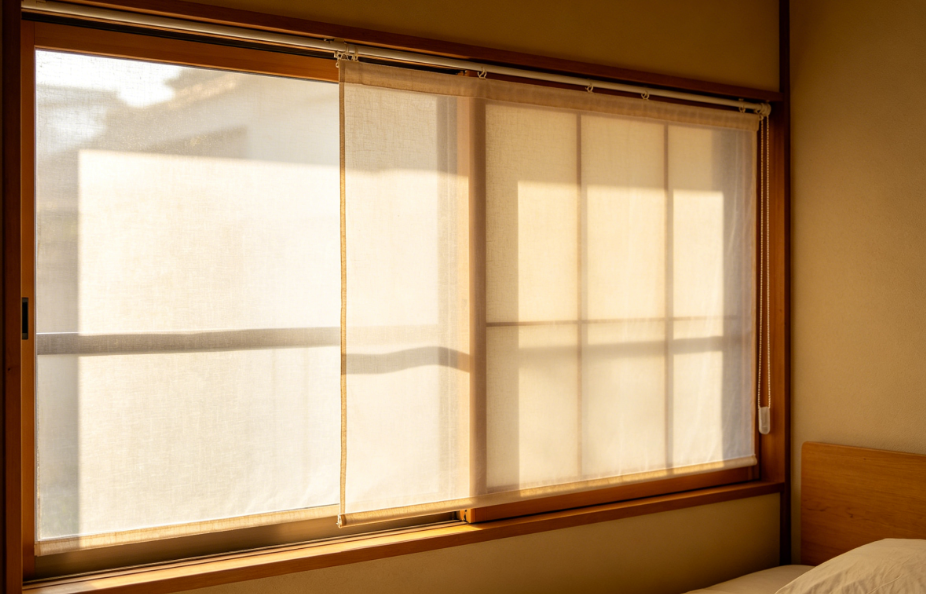
Unlike one-way opaque curtains or static adhesive films, this handmade privacy cover adopts a movable semi-transparent structure customized for Japanese narrow window frames. It follows three renter-centered design principles: traceless fixation, light permeability, and adjustable coverage. The milky panel blurs exterior outlines without darkening the room, responding to Japan’s preference for soft diffused daylight. Moreover, the detachable sliding mechanism requires no drilling or screws, ensuring full compliance with rental restoration obligations. Instead of completely isolating residents from the outer city, this blurred translucent layer builds a gentle visual buffer between indoor intimacy and urban public view.
Required Materials (Available at Japanese 100-Yen Shops)
- Milky frosted translucent plastic board (ultra-thin hard panel)
- Mini clear plastic sliding rail sets (two straight rails)
- Transparent nano adhesive strips (residue-free)
- Silicone silent anti-friction pads
- Lightweight clear plastic stoppers
Step-by-Step Fabrication Process
Step 1: Measure Window Frame and Cut Plastic Panel
Examine the vertical height and horizontal width of the rental window. Most Japanese residential windows have slim metal frames with flat edges suitable for external rail attachment. Cut the milky plastic board into a moderately sized panel that covers sixty to seventy percent of the glass area. This reserved transparent space ensures adequate daylight penetration. Round all sharp edges to prevent scratching metal frames during repeated sliding movements. The frosted material is intentionally chosen to scatter strong sunlight and soften harsh outdoor reflections.
Step 2: Attach Silent Sliding Rails to Window Frame
Clean the upper and lower edges of the window frame with dry wipes to eliminate dust particles. Paste transparent nano adhesive strips onto the back of the plastic sliding rails, then firmly attach the rails parallel to the window boundary. The clear rail design minimizes visual interruption and maintains the window’s original minimalist appearance. The adhesive strips are water-based and removable, leaving no yellow marks or sticky remnants after long-term adhesion.
Step 3: Embed Plastic Panel and Install Buffers
Slowly slide the milky plastic board into the fixed upper and lower rails. Gently push the panel back and forth to test sliding fluency. Attach tiny silicone anti-friction pads to the contact points between the panel and rails. These soft buffers eliminate scraping noise and prevent abrasion on the smooth plastic surface. For safety, install clear plastic stoppers at both rail ends to avoid accidental panel slipping and falling.
Step 4: Adjust Position and Test Visual Blurriness
Manually shift the panel to different horizontal positions to observe light transmittance and privacy effect. In general, middle positioning achieves the optimal balance between daylight and shielding. Double-check the firmness of adhesive rails under room temperature. The entire assembly process requires no power tools, wet glue, or structural modification, achieving pure physical attachment suitable for temporary rental accommodation.
Daily Usage and Functional Advantages
This handmade sliding cover brings flexible visual control to compact rental rooms. During daytime, users slide the panel to cover the lower window section, blocking pedestrian sightlines while retaining bright natural light from the upper glass. At night, the panel can be fully shifted to one side for unobstructed exterior views. The smooth non-porous plastic surface resists humid mold growth and can be instantly wiped clean with wet tissues. Unlike disposable window films, this durable panel can be repeatedly disassembled and reused in future apartments, reducing material waste and long-term living costs.
Broader Reflection: Gentle Boundaries in Crowded Cities
Japan’s dense urban architecture inevitably compresses personal visual space. Low-rent apartments often sacrifice privacy for geographical convenience. This handmade sliding panel represents a mild compromise between public visibility and personal seclusion. Tenants do not alter fixed window structures; instead, they add a movable translucent layer to actively control external sight penetration.
Furthermore, this simple manufacturing process cultivates spatial boundary awareness. In crowded Japanese cities, people constantly exist within public sight. Producing a personalized privacy tool reminds renters to protect their subtle domestic intimacy. The smooth sliding motion also creates a quiet sense of control over light, view, and personal exposure.
Conclusion
The DIY sliding semi-transparent window cover embodies restrained urban living wisdom in Japan. With affordable translucent materials, intuitive rail assembly, and traceless installation, it solves privacy exposure, excessive glare, and irreversible window modification troubles. It balances brightness, secrecy, and visual simplicity without damaging rental assets. In tightly arranged residential buildings, this slim milky panel proves that privacy does not require complete isolation. Through gentle handmade adjustment, renters establish soft visual boundaries, peacefully coexisting with dense urban environments while safeguarding quiet domestic tranquility.