Renter-Friendly DIY: Craft a Transparent Anti-Condensation Baffle for Chilly Japanese Rental Windows
Introduction
Most standard Japanese rental apartments are fitted with single-layer glass windows with poor thermal insulation performance. During cold winter nights and early mornings, the sharp temperature difference between indoor heated air and cold glass surfaces generates heavy condensation. Excessive water droplets stream down window frames, soak window sills, and breed black mold along sealing gaps. Although commercial insulation films can reduce heat loss, their permanent adhesive leaves stubborn residues that violate rental restoration rules. Tenants are prohibited from replacing glass, adding sealed frames, or applying long-term coatings to original windows. Under such limitations, a handmade transparent anti-condensation baffle serves as a mild reversible solution. Constructed from clear air-cushion plastic sheets and traceless silicone fasteners, this slim barrier creates a stagnant air layer between human living space and cold glass. Beyond reducing dripping condensation, this delicate handmade tool embodies a quiet Japanese residential philosophy: separating temperature differences with invisible soft boundaries.
Design Concept of the DIY Insulation Baffle
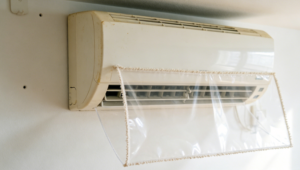
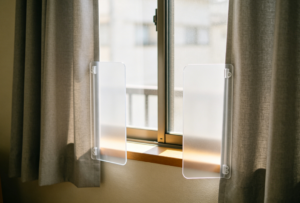
Unlike thick opaque thermal curtains that block natural daylight, this handmade baffle adopts a fully transparent hollow structure tailored for thin Japanese windowpanes. It follows three renter-oriented design principles: light-transparent insulation, water-guiding structure, and zero-frame damage. Cold air naturally sinks and accumulates along window edges; therefore, the baffle reserves a micro-air gap to weaken cold air convection. Instead of completely blocking low temperature, this gentle buffer slows down heat exchange, smoothing extreme temperature fluctuations. Its crystal-clear appearance preserves outdoor scenery and does not disrupt the plain minimalist tone of Japanese residential interiors.
Required Materials (Available at Japanese 100-Yen Shops)
- Transparent air-cushion plastic sheet (hollow bubble insulation board)
- Clear soft silicone edge sealing strips
- Traceless invisible suction cup fasteners
- Thin water-guiding diversion adhesive strips
- Round-head anti-scratch cutting scissors
Step-by-Step Fabrication Process
Step 1: Measure Window Frame and Trim Plastic Sheet
Observe the vertical height and horizontal width of the rental window. Most Japanese residential windows have narrow metal frames with reserved gaps for sliding movement. Cut the transparent air-cushion sheet into a panel slightly smaller than the glass area. The reserved marginal gap prevents friction during window sliding and reserves tiny ventilation space. Trim all four corners into rounded arcs to avoid tearing silicone strips or scratching metal frames. The bubble-structured plastic is selected for its natural heat insulation and low thermal conductivity.
Step 2: Seal Edges with Silicone Strips
Wrap the four raw edges of the plastic sheet with transparent silicone sealing strips. This soft edge treatment blocks cold air infiltration from tiny gaps and prevents sharp plastic edges from cutting indoor sealing rubber. The waterproof silicone also intercepts scattered condensed water, avoiding side leakage onto wooden window sills. After sealing, the entire panel forms an independent smooth transparent insulation layer with stable structural integrity.
Step 3: Attach Water-Guiding Strips at the Bottom
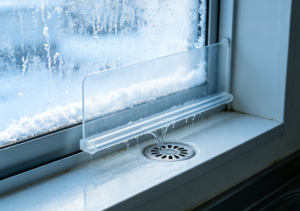
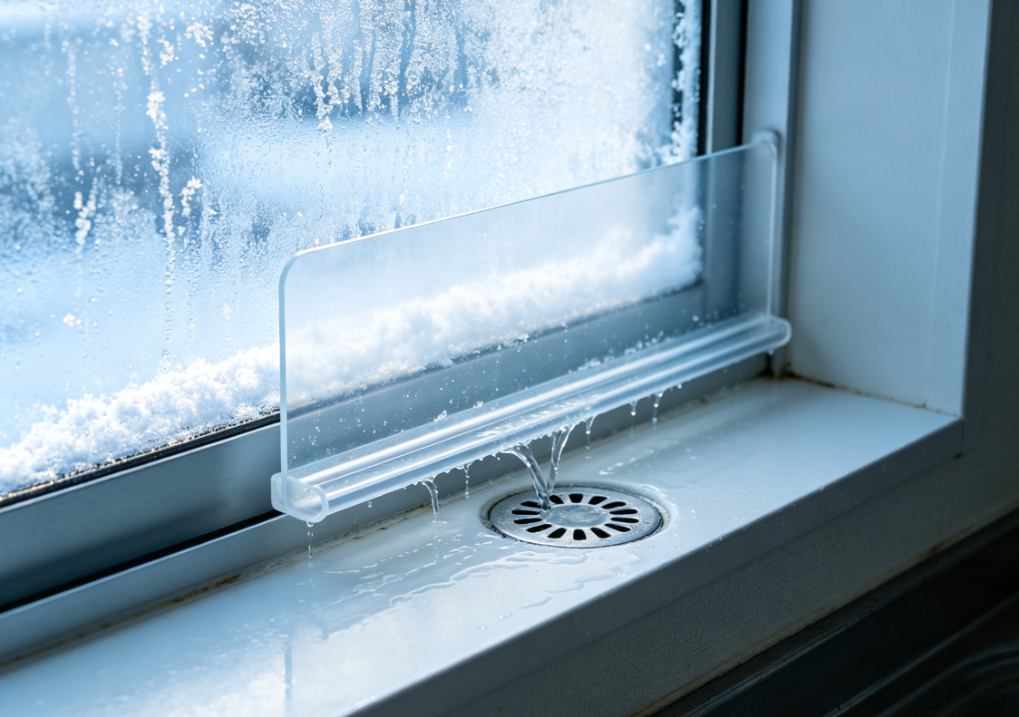
Paste thin invisible diversion strips horizontally along the bottom edge of the baffle. These grooved adhesive strips gather scattered water droplets and guide condensed flow toward the window’s reserved drainage holes. Instead of letting water spread randomly on the sill, this directional structure concentrates moisture movement, reducing mold growth in damp corner gaps. The transparent design ensures that the water-guiding function remains visually hidden.
Step 4: Fix Suction Cups for Traceless Suspension
Install mini transparent suction cups evenly on the four corners and central position of the plastic panel. Firmly adhere the baffle onto the inner glass surface by squeezing out internal air. The pure physical adsorption requires no glue, spray, or chemical coating. When detachment is needed, suction cups can be peeled off without leaving any trace on the smooth glass. The entire installation takes less than five minutes and fully complies with Japanese rental renovation restrictions.
Daily Usage and Functional Advantages
This handmade transparent baffle optimizes the indoor thermal environment during cold Japanese winters. The hollow air layer significantly slows down heat loss, reducing cold radiation emitted by frosted glass. It gathers dripping condensation and guides water flow rationally, protecting wooden sills from long-term moisture erosion. The daylight-permeable material maintains bright natural illumination without darkening the room. During spring thaw, users can easily remove, fold, and store the thin panel. All materials are reusable, durable, and resistant to seasonal temperature changes.
Broader Reflection: Building Gentle Thermal Buffers
Most low-cost Japanese rental apartments use single-layer glass to cut construction costs, ignoring winter thermal comfort. These rigid industrial windows cannot adapt to human body temperature perception, bringing persistent cold radiation and invisible moisture erosion. This handmade plastic baffle represents a soft correction to flawed building materials. Tenants never modify fixed window structures; instead, they add a temporary transparent buffer to balance indoor temperature.
Furthermore, the simple production process reshapes people’s perception of coldness. Humans intuitively feel wind and frost, yet easily overlook invisible cold radiation on glass surfaces. Trimming plastic, sealing edges, and installing suction cups encourage renters to observe subtle temperature differences and hidden water condensation. This trivial handmade behavior turns cold rigid windows into mild controllable living boundaries.
Conclusion
The DIY transparent anti-condensation baffle embodies humble winter living wisdom for Japanese renters. With lightweight air-cushion materials, simple edge-sealing procedures, and traceless glass adsorption, it solves window condensation, cold radiation, and sill mold problems. It preserves original window integrity, maintains indoor brightness, and lowers heating energy consumption. In structurally imperfect temporary apartments, this crystal-clear plastic panel proves that thermal comfort does not require expensive double-layer glass. Through subtle handmade intervention, renters construct invisible thermal buffers, reconcile cold building materials with warm domestic space, and build a drier, softer indoor atmosphere in cold Japanese winters.