Renter-Friendly DIY: Craft Anti-Slip Stackable Partition Boards for Minimalist Japanese Storage
Introduction
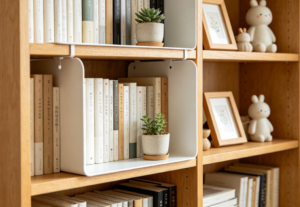
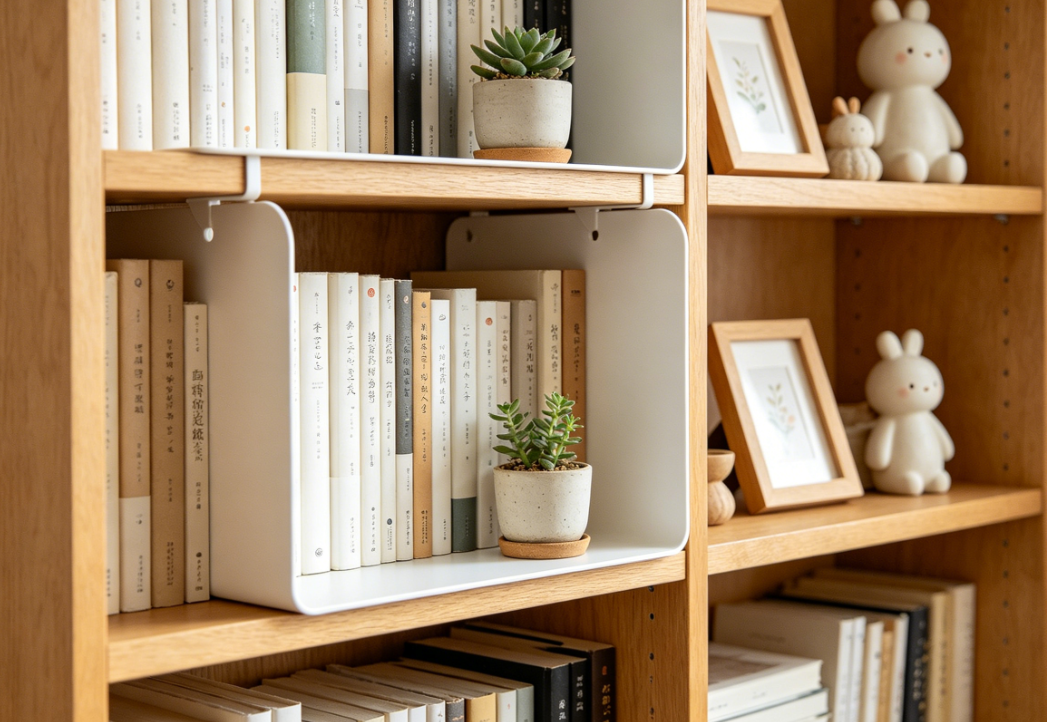
Most Japanese rental accommodations are equipped with shallow open bookshelves and plain floating desks. These standardized storage furniture features wide hollow layers with no auxiliary separation structures. Tall books, scattered stationery, and daily toiletries often tilt, slide, and collapse due to insufficient lateral support. Without compartment division, large empty layers lead to disordered stacking, dust accumulation, and inefficient space utilization. Rental contracts strictly prohibit drilling holes, installing fixed metal brackets, or nailing permanent dividers onto original boards. Although commercial partitions are available, their rigid size and hard slippery bases cannot adapt to uneven shelf spacing in old Japanese apartments. Under such spatial constraints, renters can build a handmade anti-slip stackable partition board. Composed of lightweight corrugated plastic and textured silicone mats, this detachable separator divides hollow layers into independent storage units and stabilizes leaning items. Beyond simple classification functions, this handmade tool reflects profound Japanese spatial logic: segmenting blank space to create orderly boundaries without permanent reconstruction.
Design Concept of the DIY Partition Board
Unlike thick fixed wooden partitions that occupy extra space, this handmade divider adopts a slim hollow sandwich structure tailored for shallow Japanese storage shelves. It follows three renter-oriented design principles: anti-slip bottom friction, stackable flexible assembly, and traceless placement. Many rental shelf boards are coated with smooth melamine surfaces, causing common plastic partitions to slide horizontally. This design adds matte silicone friction layers to lock positional stability. Instead of rigidly separating spaces with solid boards, this lightweight structure allows flexible combination and random rearrangement. Its plain milky-white tone integrates naturally into muted Japanese interior palettes, maintaining unadorned minimalist aesthetics.
Required Materials (Available at Japanese 100-Yen Shops)
- Lightweight hollow corrugated plastic board
- Matte anti-slip silicone textured pad
- Transparent flexible connecting buckle strips
- Thin shock-absorbing foam edge protectors
- Round-head safe cutting scissors
Step-by-Step Fabrication Process
Step 1: Measure Shelf Depth and Cut Plastic Board
Measure the internal depth and vertical clearance of the rental bookshelf or desk cabinet. Japanese compact storage furniture usually has a shallow depth between 15 and 25 centimeters. Cut the hollow corrugated board into vertical partition plates matching the shelf height. Reserve a 5-millimeter margin to avoid jamming during placement. Trim all sharp edges and right angles with foam edge protectors to prevent scratching wooden shelf paint and damaging stacked paper books. The hollow plastic material balances lightweight texture and compression resistance, preventing long-term bending deformation.
Step 2: Paste Silicone Anti-Slip Base
Attach the textured silicone pad evenly to the bottom of each plastic partition. The dense matte texture increases friction between the divider and smooth shelf surface, effectively resisting horizontal sliding caused by external collision. In dry indoor environments, the insulating silicone reduces static adsorption and minimizes fine dust accumulation at the bottom gap. The soft silicone also buffers subtle vibration generated by closing cabinet doors, stabilizing the overall placement of partitions.
Step 3: Install Transparent Connecting Buckles
Fix flexible transparent buckle strips on the side edges of individual partitions. These bendable connectors allow multiple boards to be combined into integrated groups. Users can freely adjust the spacing between dividers according to book thickness and storage demands. For wide empty shelves, multiple partitions can be linked to form evenly arranged grid spaces; for narrow corners, single independent boards serve as simple limiting baffles.
Step 4: Test Stability and Spatial Adaptation
Insert the finished partitions vertically into the shelf gaps. Gently push stacked books to test the anti-slip performance and lateral supporting strength. Adjust buckle angles to correct slight tilting. Ensure all components rely purely on physical placement without glue or drilling. The entire assembly process leaves zero traces on original rental furniture and fully complies with moving-out restoration regulations.
Daily Usage and Functional Advantages
This handmade partition board reorganizes chaotic storage spaces in narrow Japanese apartments. It divides hollow single layers into multiple independent compartments, categorizing books, cosmetics, and small electronic accessories clearly. The anti-slip base prevents sudden collapse of tilted books, reducing daily tidying frequency. The hollow plastic structure lowers overall weight and avoids pressure indentation on fragile wooden shelves. During humid rainy seasons, the reserved bottom gap enhances air circulation and inhibits mildew growth on stored paper products. All parts are detachable, stackable, and portable for cross-apartment relocation.
Broader Reflection: Reshaping Marginal Storage Order
Mass-produced rental shelves prioritize large-capacity hollow spaces while ignoring human sorting habits. Excess blank space often leads to random stacking and invisible waste rather than comfortable storage. This handmade partition represents a gentle artificial segmentation of indifferent industrial furniture. Tenants do not modify shelf structures; instead, they insert slim auxiliary boards to redefine spatial boundaries.
Furthermore, the cutting and assembling process cultivates rational spatial awareness. People tend to fill empty spaces blindly while ignoring the necessity of separation. Trimming plastic plates, pasting silicone bases, and connecting buckles encourage renters to rethink the logic of storage arrangement. This trivial handmade behavior transforms monotonous hollow shelves into systematic, hierarchical storage ecosystems.
Conclusion
The DIY anti-slip stackable partition board embodies minimalist storage wisdom for Japanese renters. With lightweight hollow materials, friction-based anti-slip structures, and freely combined assemblies, it solves shelf sliding, book collapsing, and space waste problems. It protects original rental furniture, simplifies daily classification management, and adapts to changeable storage needs. In standardized compact temporary apartments, this slim plastic divider proves that domestic tidying does not require customized furniture renovation. Through subtle handmade segmentation, renters reorganize chaotic storage spaces, draw clear boundaries for daily items, and build neat, hierarchical, and stable storage corners in borrowed Japanese residences.