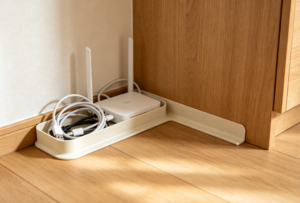
Renter-Friendly DIY: Build a Minimalist Desk Gap Organizer for Japanese Tiny Apartments
Introduction
Almost every standard Japanese one-room apartment leaves an awkward narrow gap between the desk and the wall. This unintentional space, usually two to five centimeters wide, is neither wide enough to place commercial storage boxes nor narrow enough to ignore. Cables, adapters, and small stationery constantly slip into this dark crack, accumulating dust and creating invisible clutter. Under Japan’s strict rental regulations that forbid drilling and permanent modification, a handmade adjustable desk gap organizer becomes an ideal solution. Constructed with simple 100-yen shop materials, this slim handmade tool fits cramped desk gaps, hides messy wiring, and simplifies daily cleaning. Beyond practicality, it embodies the quiet residential logic of utilizing overlooked negative space in urban compact housing.
Design Philosophy of the Desk Gap Organizer
Unlike bulky storage furniture that occupies limited floor area, this DIY organizer is designed to fit passive negative space. Its slim structure, flexible length, and traceless installation fully comply with Japanese rental constraints. The organizer adopts an open hollow structure to adapt to Japan’s humid climate, preventing dust accumulation and moisture retention. Moreover, every component is detachable and reusable, matching the frequent moving habits of young Japanese renters. Instead of forcibly changing room layouts, this handmade tool gently fills spatial vacancies, reflecting the minimalist design principle of minimal intervention.
Required Materials (All from Japanese 100-Yen Shops)
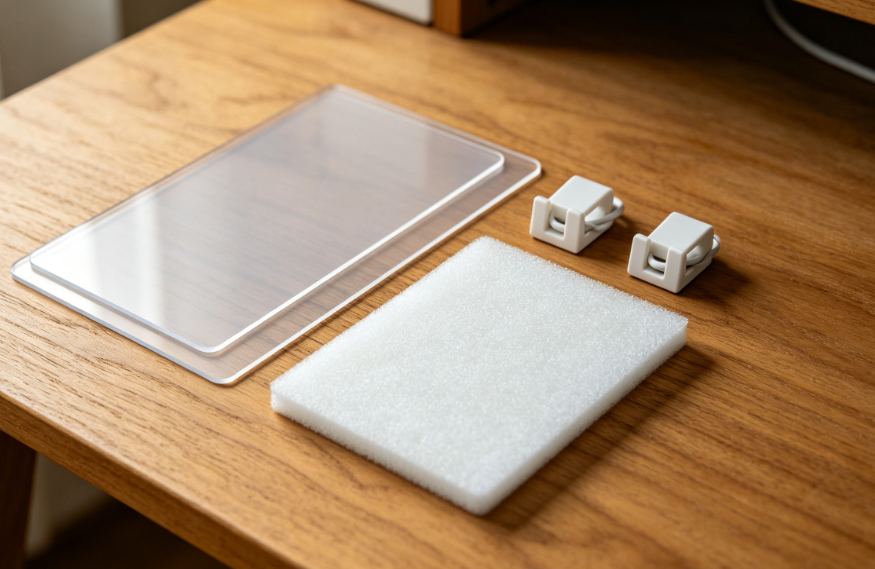
- Flexible transparent PVC plastic sheet (one piece)
- Self-adhesive soft foam spacers (six pieces)
- Plastic cable clips with removable glue (eight pieces)
- Thin double-sided adhesive nano tape
- Small silicone anti-slip bumps
Step-by-Step Fabrication Process
Step 1: Measure and Cut the PVC Sheet
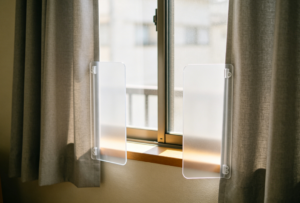
Use a soft measuring tape to detect the depth and width of the desk gap. Most Japanese rental desks have uneven wall joints, so manual measurement ensures precise customization. Cut the transparent PVC sheet into a long curved strip. The curved top edge prevents sharp corners and allows flexible fitting against uneven plaster walls. Transparent material is intentionally chosen to maintain visual spaciousness without blocking indoor light.
Step 2: Attach Foam Spacers for Tight Fitting
Stick soft foam spacers evenly on the backside of the PVC board. These elastic buffers create mild friction between the wall and the organizer, keeping the whole structure stable without any hard squeezing. The foam also acts as a soundproof layer, reducing subtle vibration noise between the desk and wall during daily use. This detail prevents paint abrasion and protects the original rental wall surface.
Step 3: Install Removable Cable Clips
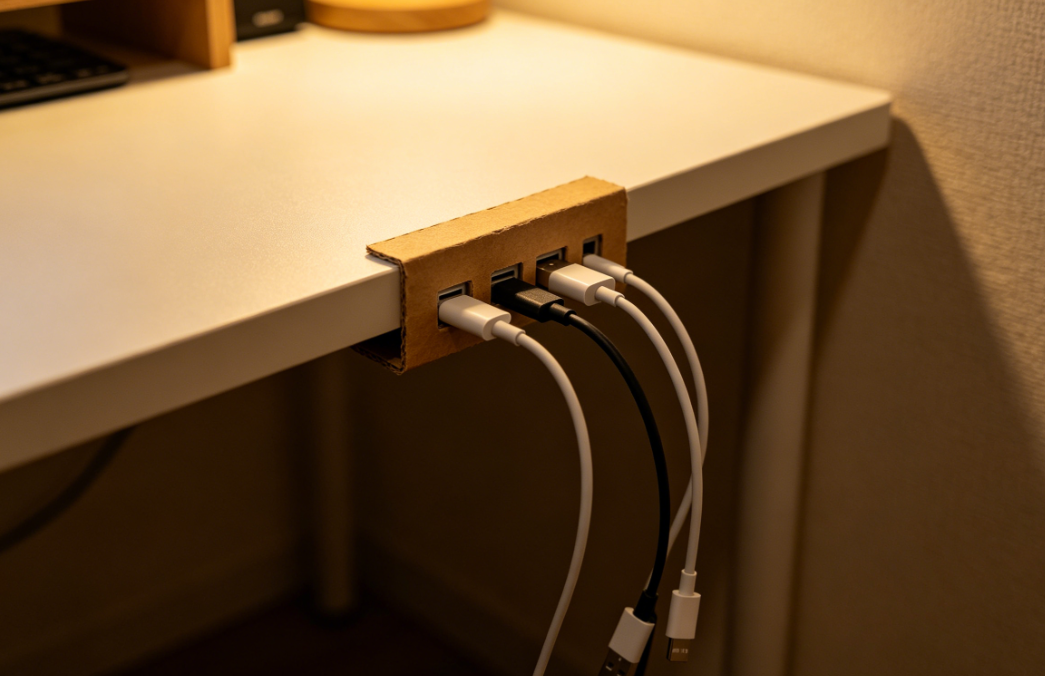
Arrange plastic cable clips in parallel on the front of the PVC board. Classify the clips into upper and lower layers: the upper section holds charging cables and earphone wires, while the lower section fixes power adapters and thick data lines. All clips use residue-free adhesive, ensuring no damage during removal. This layered arrangement turns messy tangled wires into neat vertical lines.
Step 4: Place Anti-Slip Silicone Bumps for Stabilization
Attach tiny silicone bumps to the bottom edge of the finished board. These soft contacts prevent the plastic sheet from sliding down smooth wooden floors. After insertion into the desk gap, slightly press the board to ensure close fitting. The entire installation requires no water, glue, or drilling, achieving completely reversible assembly.
Daily Usage and Functional Advantages
This slim gap organizer serves multiple invisible functions in daily rental life. It centrally collects charging cables, laptop adapters, USB flash drives, and small metal accessories that easily slip away. The transparent board prevents dark dust corners and makes daily wiping easier. During Japan’s humid rainy season, the hollow gap structure maintains air circulation and avoids mold growth behind the desk. When residents need deep cleaning, the whole organizer can be pulled out in one second and reinserted effortlessly.
Broader Reflection: Invisible Tools in Visible Small Spaces
In Japanese urban housing, negative space is often created by rigid building structures. Uneven walls, misaligned desks, and reserved pipelines form countless useless gaps. This DIY gap organizer represents a typical Japanese living mindset: rather than expanding space, people reshape the utilization logic of existing vacancies. Every invisible crack is transformed into controllable storage without visual burden.
Furthermore, making such tiny tools cultivates a subtle sense of order. In fast-paced Japanese cities, young renters often face unstable living conditions. A neat gap, organized wires, and clean corners bring a stable psychological rhythm. These minor handmade improvements turn indifferent rental furniture into a systematic living ecosystem.
Conclusion
The handmade desk gap organizer is a miniature example of Japanese rental ingenuity. With low-cost transparent materials and simple assembly steps, it solves hidden dead-space problems that commercial furniture cannot handle. It hides clutter, simplifies cleaning, and maintains the minimalist visual tone of compact apartments. In Japan’s constrained rental environment, valuable living space is never wasted. Instead, it is carefully sorted, filled, and optimized through gentle handmade modifications. Ultimately, such trivial tools remind people that comfortable living originates not from large houses, but from refined control over every overlooked corner.