Renter-Friendly DIY: How to Make a No-Drill Air Conditioner Baffle for Japanese Rentals
Introduction
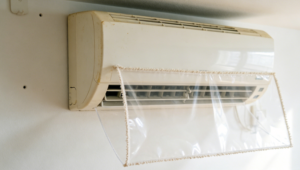
Most older Japanese rental apartments are equipped with fixed, non-adjustable wall-mounted air conditioners. These standard cooling and heating units often blow air directly toward beds, work desks, or living zones. Due to compact room layouts, renters frequently suffer from stiff shoulders, dry skin, and disrupted sleep caused by uncontrolled direct airflow. Worse still, property management strictly forbids drilling, bracket installation, or permanent modifications to air-conditioning hardware. Under such limitations, a handmade adjustable air conditioner baffle becomes one of the most practical handmade gadgets. Made from lightweight and harmless 100-yen shop materials, this simple tool redirects airflow, eliminates harsh wind impact, and maintains a gentle indoor temperature. Beyond its physical function, it reflects the quiet Japanese living philosophy of adapting passively to fixed housing equipment.
Design Concept Behind the DIY Air Baffle
Unlike heavy commercial plastic deflectors, this handmade baffle adopts a lightweight breathable structure tailored for fragile Japanese rental walls. Its core design follows three principles: traceless installation, angle adjustability, and heat resistance. Japan’s long humid summer and dry winter require consistent airflow circulation; therefore, the baffle avoids complete wind blockage and instead softens air distribution. Additionally, all materials are detachable and residue-free, fully complying with Japan’s rigorous move-out inspection standards. This tool does not alter the original machine; it gently corrects airflow behavior, embodying the minimalist idea of subtle intervention.
Required Materials (Available at Japanese 100-Yen Stores)
- Thin bamboo flexible sheet (one piece)
- Transparent heavy-duty adhesive hooks (four pieces)
- Soft silicone anti-collision strips
- Adjustable plastic cable ties
- Clear anti-heat nano adhesive tape
Step-by-Step Production Process
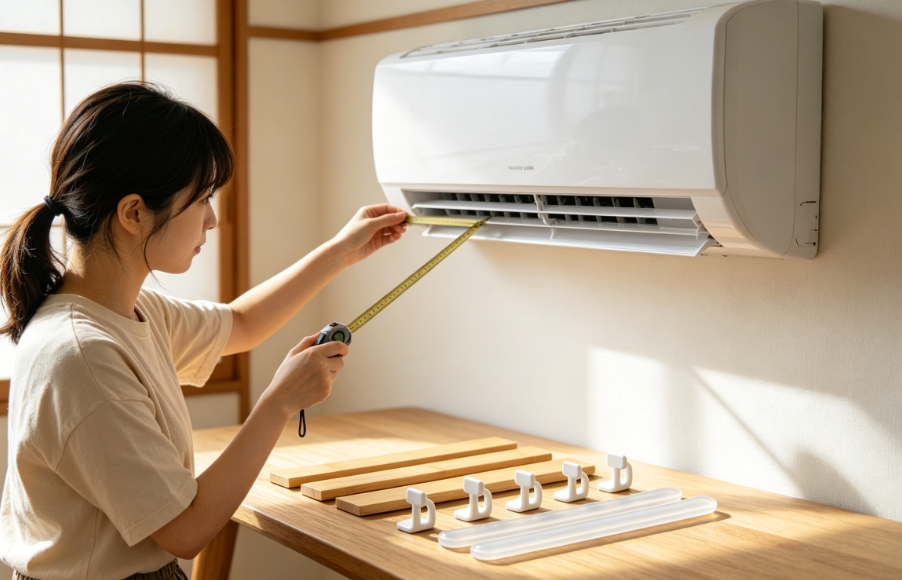
Step 1: Trim the Bamboo Sheet to Size
Measure the width and lower gap of the air conditioner. Most Japanese wall units leave a narrow empty space beneath the outlet. Cut the bamboo sheet into a slightly curved rectangular panel that perfectly covers the blowing area. Bamboo is intentionally selected over plastic because it is heat-resistant, non-deformable, and does not generate chemical odors under long-term warm airflow. Smooth all edges to prevent scratching hands or damaging the air conditioner shell.
Step 2: Paste Silicone Strips for Buffering Protection
Attach thin silicone strips to the upper contact edge of the bamboo board. These soft buffers prevent rigid friction between the baffle and the air conditioner surface. In Japanese rental regulations, any scratch on electrical appliances may lead to high compensation fees; therefore, this protective step is essential. The silicone also increases friction, helping the board stay stable during vibration caused by machine operation.
Step 3: Install Adhesive Hooks for Suspension
Paste four transparent hooks evenly on the outer shell of the air conditioner. All hooks use residue-free adhesive and require no drilling. Place two hooks on the upper edge and two on the side corners to form a balanced suspension structure. It is critical to avoid pasting hooks on weak wallpaper or painted grooves to prevent wall peeling during removal.
Step 4: Fix and Adjust the Tilting Angle
Thread plastic cable ties through the reserved small holes on the bamboo sheet and hang the board on the adhesive hooks. Tighten or loosen the ties to control the inclination angle. In summer, tilt the board upward to lift cold air for natural room circulation. In winter, lower the angle to press hot air downward and heat the cold floor. After adjustment, cut off excess cable ties for a neat appearance.
Daily Usage and Functional Advantages
This handmade air conditioner baffle brings long-term health and comfort benefits to small rental rooms. It prevents direct airflow from hitting human bodies, effectively reducing dry throat, stiff necks, and cold headaches common in Japanese indoor environments. The natural bamboo material absorbs slight moisture in humid seasons and balances indoor dryness in winter. Moreover, the gap between the baffle and the machine allows dust to accumulate less easily, simplifying daily wiping and maintenance. When the season changes, the entire structure can be disassembled within one minute without leaving any traces.
Broader Reflection: Gentle Modification in Restricted Living Spaces
In Japan’s rigid rental system, tenants rarely have the right to replace old electrical equipment. Aging air conditioners with fixed wind directions become unavoidable living obstacles. This DIY baffle represents a typical Japanese solution: instead of replacing hardware, residents create soft auxiliary tools to fix structural defects. This passive adaptation forms a unique rental culture—respecting the original building while pursuing personal comfort.
Furthermore, this simple handmade item cultivates a subtle sense of balance. In high-density urban apartments, human comfort often conflicts with fixed architecture. The adjustable angle of the bamboo board symbolizes people’s ability to subtly negotiate with the living environment. Every tiny adjustment shapes a healthier daily rhythm in a limited temporary space.
Conclusion
The handmade bamboo air conditioner baffle is an understated but essential rental tool in Japan. With cheap natural materials, easy assembly steps, and zero-damage installation, it optimizes airflow and protects physical health throughout extreme seasons. It proves that comfortable living does not depend on expensive electrical upgrades. Instead, minor handmade improvements can reconcile humans, machines, and compact architectural spaces. In plain standardized Japanese apartments, this quiet bamboo board embodies the enduring wisdom of living gently within strict limitations.