Fight Sedentary Fatigue: Office-Friendly Stretches and Posture Fixes for Long Sitting Hours
In modern work and life, prolonged sitting has become an unavoidable daily state. Office workers, remote workers, and students often spend six to ten hours sitting at desks, focusing on screens and finishing daily tasks. While sitting feels effortless and comfortable in the short term, long-term sedentary behavior gradually damages physical health, causes muscle stiffness, poor blood circulation, chronic fatigue, and persistent body soreness. Fortunately, most sedentary-related physical problems can be effectively improved through correct sitting posture, intermittent micro-activities, and zero-equipment stretching. These simple, practical methods are fully applicable in offices and home workspaces, helping people relieve physical pressure and maintain long-term physical vitality.
The Hidden Physical Impacts of Long-Term Sitting
Many people underestimate the harm of sedentary lifestyles, believing that sitting quietly is harmless to the body. In fact, continuous sitting keeps the human body in a fixed compressed state for hours, triggering a series of subtle and cumulative physical problems.
First, prolonged sitting stiffens the neck, shoulders, and upper back. Fixed forward-head posture and hunched shoulders tighten cervical muscles, compress the spine, and lead to frequent neck stiffness, shoulder soreness, upper back tension, and even chronic cervical discomfort over time. Second, long hours of sitting weaken the core and lower limb muscles. Reduced leg movement slows blood circulation, easily causing leg swelling, numbness, stiff hip flexors, and weak waist strength.
In addition, sedentary habits affect overall physical metabolism. Long-term static posture reduces daily calorie consumption, slows down body circulation, and makes people prone to physical fatigue, drowsiness, and poor mental focus. Unlike acute physical injuries, sedentary damage accumulates slowly, forming sub-health physical states that are difficult to detect in the early stages. Adhering to daily posture correction and intermittent stretching is the most effective way to prevent sedentary fatigue.
Scientific Posture Correction for Office and Home Desks
Most sedentary discomfort stems from incorrect sitting posture rather than sitting itself. Bad sitting habits such as hunching, leaning forward, crossing legs, and slouching on chairs greatly amplify physical pressure. Standardizing sitting posture can reduce more than half of sedentary body burden without extra time or effort.
Neck and head alignment: Keep your head upright and your chin slightly retracted, avoiding forward neck protrusion. The center of the screen should be level with your eye line to prevent long-term neck bending and torsion.
Shoulder and back posture: Relax your shoulders naturally, avoid shrugging or forward hunching, and keep your upper back slightly stretched and close to the chair back. Do not keep your shoulders tense for a long time when typing or operating electronic devices.
Waist and hip support: Keep your lower back slightly supported, maintain a natural spinal curve, and avoid completely slumping on the chair. Place your hips evenly on the chair surface to prevent unilateral pressure on the waist and hips.
Lower limb placement: Place your feet flat on the ground, keep your knees bent at a natural right angle, and avoid long-term leg crossing, leg lifting, or ankle overlapping. This posture ensures smooth lower limb blood circulation and reduces hip and leg stiffness.
Zero-Equipment Stretching Moves for Sedentary Crowds
These full-body stretching movements require no equipment, take only 3 to 5 minutes each time, and can be completed directly at the desk. They target neck, shoulder, waist, back, hip and leg stiffness, effectively relieving muscle tension caused by long sitting.
1. Neck Relaxation Stretch
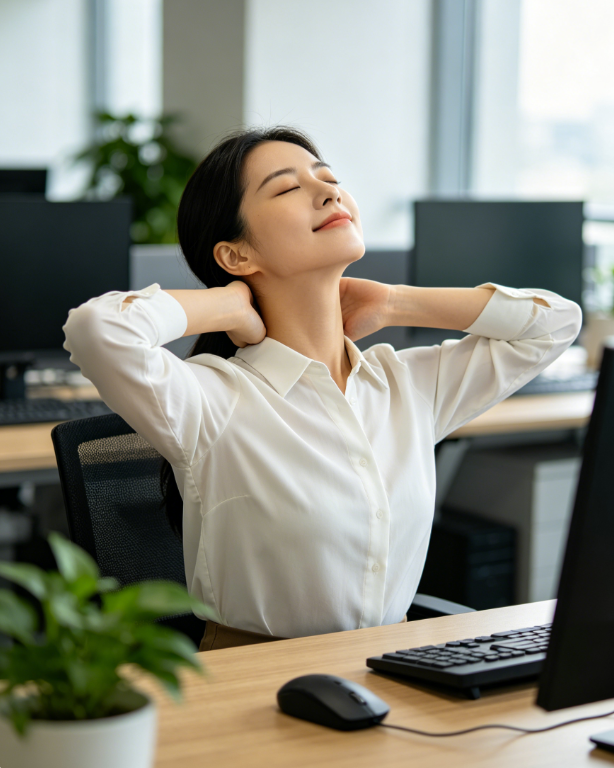
Slowly tilt your head left and right, keeping each side stretched for 15 to 20 seconds, feeling the lateral neck muscles stretch naturally. Then gently lower your head to stretch the back cervical muscles, avoiding excessive force or rapid rotation. This movement relieves cervical pressure, improves neck stiffness, and alleviates dizziness and drowsiness caused by cervical tension.
2. Shoulder and Upper Back Release
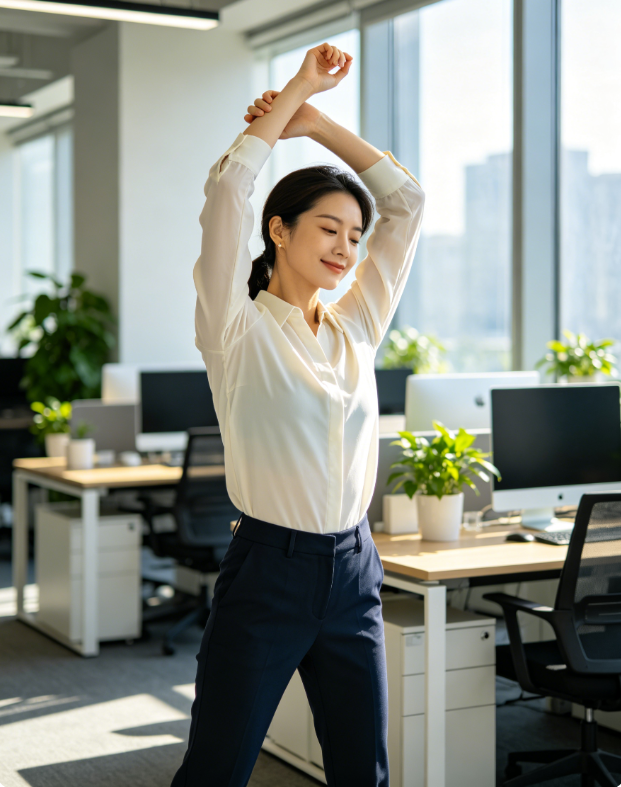
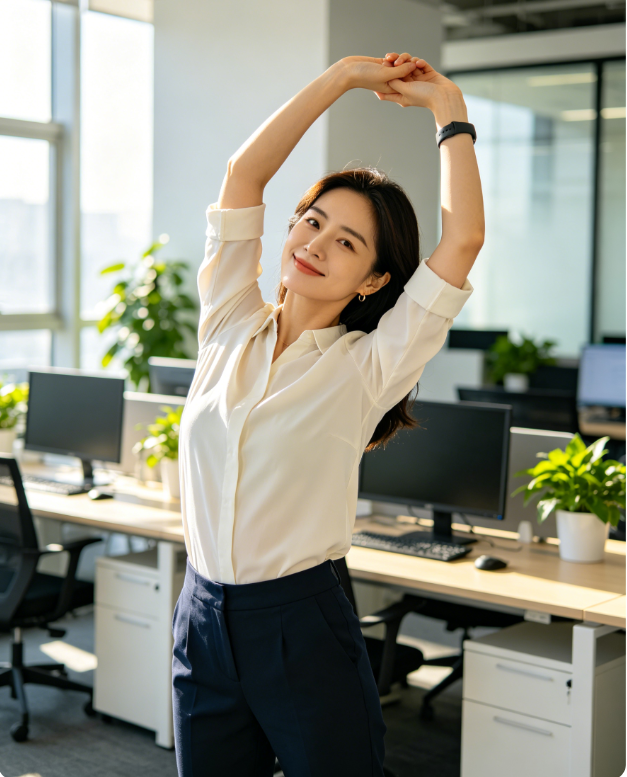
Straighten your back, cross your hands and stretch your arms forward, arch your upper back slightly, and hold the stretching state for 20 seconds. Then relax your shoulders and perform slow shoulder rolling movements backward and forward. This simple stretch improves hunchback posture, releases tight shoulder and back muscles, and relieves upper body heavy fatigue.
3. Waist and Spine Twist
Sit upright on the chair, place one hand on the opposite knee, and gently twist your waist backward, keeping your spine extended. Hold each side for 20 seconds. This twist relaxes stiff lumbar muscles, relieves waist soreness caused by long sitting, and improves spinal flexibility.
4. Hip Flexor Stretch
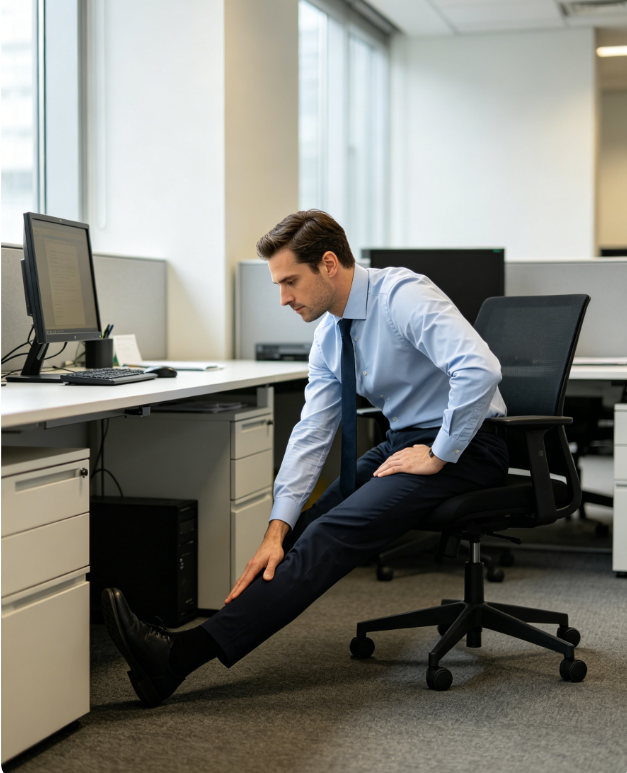
Sit at the edge of the chair, straighten one leg backward, keep the body upright, and gently press the hip forward to feel the stretch of the front hip muscles. Long sitting causes continuous contraction of hip flexors, and this movement can effectively improve hip stiffness and prevent hip tightness and lower back pressure.
5. Calf and Leg Relaxation
Sit upright, straighten your legs, hook your toes upward, and stretch your calves tightly for 15 seconds. Then shake your legs gently to relax the muscles. This movement promotes lower limb blood circulation, relieves leg swelling and numbness after long sitting, and prevents sedentary leg fatigue.
Practical Intermittent Activity Rules for Office Work
Stretching alone cannot completely offset sedentary damage. Reasonable intermittent activity is the core of maintaining physical health for long-sitting crowds. Forming fixed micro-activity habits during working hours can greatly reduce physical pressure and improve work efficiency.
20-minute micro-rest rule: Every 20 minutes of continuous sitting, take 30 seconds to adjust your posture, look far away, and relax your neck and eyes. This short pause prevents continuous muscle tension and visual fatigue.
One small activity per hour: Stand up once every hour, walk slowly around the desk, stretch your limbs, or straighten your waist. One minute of standing activity can effectively break the long-term static state of the body and restore blood circulation speed.
5-minute full-body stretch every two hours: Use break time to complete a set of full-body stretching movements to relax neck, shoulders, waist, hips and legs comprehensively, eliminating accumulated muscle tension.
Active replacement of static behaviors: Appropriately replace sitting work with standing communication, standing meetings or walking rest. Try to avoid continuous sitting for more than three hours without any movement.
Daily Habits to Improve Sedentary Sub-Health
In addition to on-the-job stretching and intermittent activities, daily small habits can further repair sedentary physical damage and improve overall physical condition.
Keep a regular daily walking amount after work. Slow walking, brisk walking or gentle stretching for 10 to 20 minutes can fully activate inactive muscles throughout the day and improve metabolic stagnation caused by long sitting. Maintain sufficient water intake during working hours to promote body circulation and relieve physical stiffness and fatigue.
Avoid staying up late for a long time. Sufficient sleep helps muscle repair and spinal relaxation, effectively alleviating chronic soreness caused by sedentary work. Keeping a neat workspace also helps maintain active sitting posture and reduce lazy slouching habits.
Conclusion
Long-term sedentary work is an unavoidable part of modern life, but sedentary physical discomfort is completely adjustable and preventable. Incorrect sitting posture and long-term static stillness are the main causes of physical stiffness, soreness and sub-health problems.
By standardizing daily sitting posture, insisting on zero-equipment desk stretching, forming scientific intermittent activity habits, and cooperating with daily mild exercise, office workers can effectively offset sedentary damage, relieve physical fatigue, maintain spinal health, muscle flexibility and smooth body circulation. Sustained small adjustments can not only improve physical comfort but also enhance mental focus and work vitality, achieving a healthy balance between work and physical condition.