Renter-Friendly DIY: Making a Detachable Bedside Hanging Basket for Japanese Single Rooms
Introduction
The typical one-room apartment in Japan usually contains only a single low bed with no attached bedside cabinet. The narrow indoor layout leaves no extra space for nightstands, causing everyday items such as smartphones, eyeglasses, medicine bottles, and earphones to scatter randomly on mattresses or cold floors. Many rental beds feature hollow bed frames with empty side gaps, and tenants are prohibited from drilling frames or installing permanent brackets. Under such spatial limitations, a handmade detachable bedside hanging basket becomes an optimal solution. Constructed from lightweight, bendable 100-yen shop materials, this simple tool hangs firmly on bed edges without damaging frames. Beyond basic storage functionality, this handmade basket embodies Japanese residential logic: maximizing overlooked marginal space to create quiet daily convenience within minimal living boundaries.
Design Philosophy of the Bedside Basket
Different from bulky commercial bedside organizers, this DIY hanging basket adopts an open hollow structure customized for thin Japanese rental bed frames. It strictly follows three renter-centered principles: zero damage, flexible detachment, and breathable structure. Considering Japan’s humid climate, the basket avoids dense fabric that easily traps moisture and dust. Moreover, its slim curved shape prevents visual congestion in cramped bedrooms. Rather than adding new furniture to occupy floor space, this tool clings gently to the bed frame, maintaining the room’s minimalist visual flow.
Required Materials (Easily Bought at Japanese 100-Yen Stores)
- Hardened flexible plastic mesh board (one piece)
- Thick coated iron binding wire
- Soft foam anti-scratch protective tubes
- Removable silicone wrapping bands
- Cushioned non-slip rubber pads
Step-by-Step Manufacturing Process
Step 1: Cut the Mesh Board into Basket Shape
Measure the thickness and hollow gap of the rental bed frame. Most Japanese single beds have a 2 to 4-centimeter hollow clamping gap. Cut the plastic mesh board into a curved trapezoid structure; the wider bottom ensures storage capacity, while the narrowed upper edge fits the bed frame tightly. Trim all sharp edges smoothly. Plastic mesh is chosen for its mildew resistance, lightweight property, and excellent air circulation, adapting to Japan’s humid indoor environment.
Step 2: Bend Iron Wire to Make Fixed Hanging Hooks
Cut the coated iron wire into two equal lengths and manually bend them into U-shaped hook brackets. The coated outer layer prevents rust and avoids scratching the painted bed frame. Adjust the bending angle according to the bed’s inclination. Unlike rigid metal hooks, this soft bendable wire allows tenants to modify the clamping strength freely, fitting both metal and wooden rental bed frames.
Step 3: Combine Hooks with the Mesh Basket
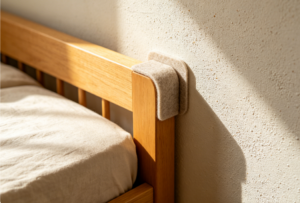
Pass the bent iron hooks through the reserved mesh gaps and fasten them with silicone wrapping bands. Do not over-tighten the connection; keep slight flexibility to disperse weight evenly. Place rubber pads at the contact points between hooks and the bed frame. These soft buffers eliminate friction marks, protecting rental furniture from compensation risks during move-out inspections.
Step 4: Install Anti-Slip Cushions for Stabilization
Attach small rubber anti-slip pads to the inner bottom of the basket. These tiny cushions prevent glass cups and slippery electronic devices from shaking and falling when people turn over in bed. After assembly, hang the completed basket on the bed edge and gently shake it to test stability. The whole installation requires no glue, drilling, or permanent fixation, achieving pure physical clamping and zero traces.
Daily Usage and Functional Advantages
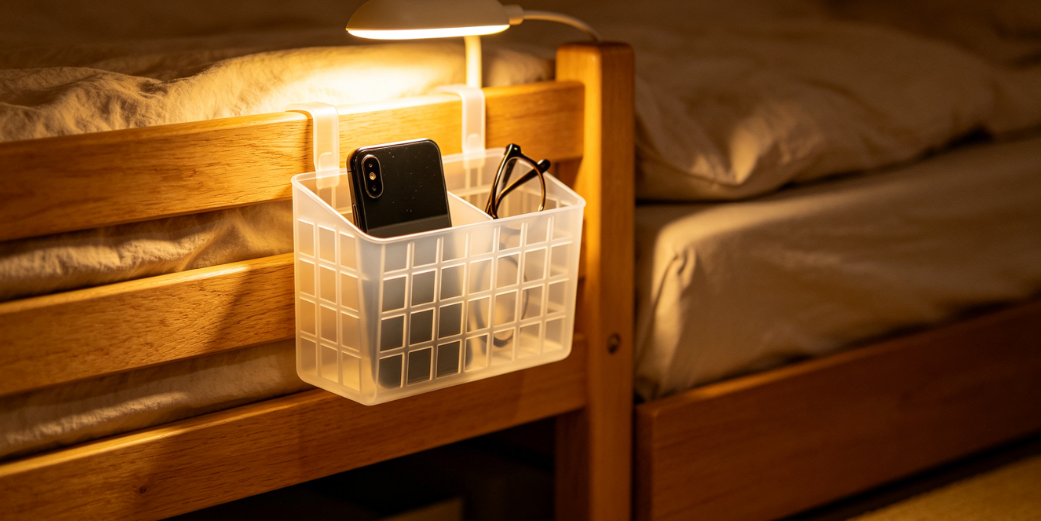
This handmade bedside basket efficiently organizes bedtime necessities. The hollow mesh layer holds mobile phones, charging cables, eye drops, and small tissue packs, keeping frequently used items within arm’s reach. Its open structure prevents heat accumulation from charging electronics. During Japan’s humid rainy season, the breathable mesh avoids mold growth and damp odor. When cleaning the room, the basket can be detached in seconds and reattached without complicated adjustment. Its translucent neutral tone also blends naturally with plain rental interiors without breaking the minimalist aesthetic.
Broader Reflection: Small Tools and Urban Solitary Living
In Japan’s high-cost urban rental environment, most young people live alone in compact bedrooms. Standardized rental furniture often ignores human bedtime habits, leaving unreasonable blank areas around beds. This handmade basket represents a subtle correction to rigid housing design. Tenants do not change the bed structure; instead, they fill functional vacancies with simple handmade gadgets.
Moreover, this tiny handmade item creates a sense of belonging in temporary accommodation. In cold, identical rental rooms, self-made tools carry personal traces and gentle daily warmth. Every bend of the wire and every trimmed mesh edge reflects the resident’s active care for daily life. Such minor creations ease the transient anxiety of frequent relocation.
Conclusion
The detachable DIY bedside hanging basket is a typical example of Japanese rental minimalism. With low-cost materials, simple bending and cutting procedures, and traceless physical installation, it solves the common trouble of scattered bedtime items. It eliminates hidden falling risks and optimizes the tiny functional area beside narrow beds. In constrained Japanese rental spaces, this lightweight basket quietly proves that comfortable living never depends on luxurious furniture. Instead, delicate handmade improvements turn indifferent temporary beds into warm personal resting corners, interpreting the enduring wisdom of living softly within limits.