Renter-Friendly DIY: Craft a Foldable No-Drill Window Sill Rack for Japanese Apartments
Introduction
The majority of Japanese rental apartments feature extremely narrow window sills, usually measuring less than ten centimeters in width. These slim concrete ledges are too narrow for commercial shelves yet spacious enough to become wasted transitional zones between indoor and outdoor air. Tenants are banned from drilling into concrete frames, nailing window edges, or applying permanent glue to painted surfaces. Under such strict constraints, a handmade foldable window sill rack emerges as an elegant and practical solution. Constructed from lightweight untreated wood and removable fasteners, this compact tool expands vertical storage without occupying valuable floor space. Beyond its simple storage function, this handmade item embodies Japan’s residential philosophy of cherishing marginal space and maintaining an uncluttered indoor boundary.
Unique Design Logic of the Window Sill Rack
Different from bulky fixed furniture, this foldable rack is specifically engineered for fragile Japanese window structures. It follows three core renter-oriented principles: zero structural damage, collapsible portability, and weather resistance. Considering Japan’s distinct four seasons, the selected natural wood can endure fluctuating humidity and temperature near windows. Moreover, the rack adopts an open hollow design to ensure unobstructed natural light and smooth air circulation. Instead of covering the window area with heavy decorations, this tool lightly attaches to the sill, preserving the minimalist spatial transparency typical of Japanese interior aesthetics.
Required Materials (Easily Purchased at Japanese 100-Yen Shops)
- Raw thin wooden battens (four light-weight planks)
- Removable heavy-duty rubber tension clips (four pieces)
- Soft transparent silicone anti-scratch pads
- Mini stainless steel folding hinges (two pairs)
- Odorless water-based protective wood wax
Step-by-Step Production Procedure
Step 1: Cut and Polish Wooden Planks
Measure the exact length and thickness of the window sill. Most Japanese rental windows have uneven concrete edges, so customized cutting ensures a perfect fit. Trim the wooden battens into one long main board and two short side supporting strips. Gently polish every edge and corner with fine sandpaper to eliminate rough texture. Smooth surfaces prevent accidental scratches on hands and also protect the original concrete window frame from abrasion.
Step 2: Apply Protective Wood Wax
Coat the raw wood with a thin layer of transparent water-based wax. Window areas are exposed to morning sunlight and seasonal moisture, making wood vulnerable to mildew and deformation. This simple waterproof treatment extends the rack’s service life and prevents damp erosion during Japan’s rainy tsuyu season. The odorless formula complies with indoor safety standards and leaves no chemical residue inside the rental room.
Step 3: Install Folding Hinges for Adjustable Structure
Fix the miniature metal hinges between the main board and two side support strips. Tighten the screws moderately to ensure flexible folding angles. When not in use, the side brackets can be folded flat against the main board to save storage space. This collapsible structure is designed for renters who frequently relocate, allowing effortless disassembly and convenient transportation.
Step 4: Attach Silicone Pads and Tension Clips
Stick soft silicone pads on the inner contact points of the rack. These elastic buffers avoid direct collision between wood and concrete, protecting the rental window from permanent indentations. Fasten four rubber tension clips on both ends to clamp the rack firmly onto the window sill. No drilling, glue, or external tools are required, ensuring complete reversibility and zero residue during move-out cleaning.
Daily Usage and Practical Advantages
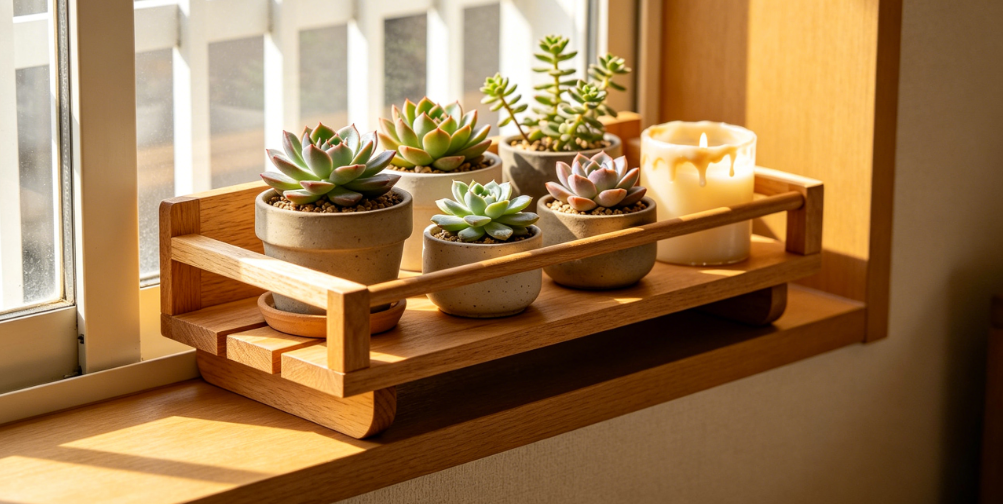
This handmade window sill rack serves diverse daily functions within compact apartments. Its sunlit surface is ideal for placing small succulents and potted herbs, bringing natural vitality into dull rental rooms. Residents can also arrange aromatherapy candles, humidifiers, and decorative tabletop ornaments on the rack. During summer ventilation, the hollow structure allows cross-airflow without blocking breeze. In winter, the elevated wooden board isolates cold concrete and prevents low-temperature moisture from transferring to placed items. When deep cleaning is needed, the entire rack can be detached in seconds.
Broader Reflection: Marginal Space in Urban Rental Culture
In densely populated Japanese cities, every marginal space carries hidden value. Window sills, wall edges, and narrow corners are often overlooked yet structurally irreplaceable. This handmade wooden rack symbolizes the Japanese habit of utilizing passive boundary space. Instead of expanding room area, residents reshape existing architectural details to create extra functional zones.
Moreover, the slow assembly process delivers subtle mental comfort. Young renters living in standardized apartments often feel disconnected from their monotonous living environment. Polishing wood, installing hinges, and adjusting brackets allow people to actively interact with their living space. This slight sense of creation transforms a temporary rental unit into a personalized habitat with unique warmth.
Conclusion
The foldable no-drill window sill rack represents minimalist rental ingenuity in Japan. With low-cost natural materials, simple mechanical assembly, and traceless installation, it converts useless narrow sills into beautiful functional display zones. It perfectly balances practicality, aesthetics, and rental regulations. In constrained urban living environments, this tiny handmade tool proves that space optimization does not rely on large renovations. Instead, careful observation, gentle modification, and restrained creation enable renters to live comfortably and gracefully within limited boundaries.