Beat Desk Job Fatigue: Science-Backed Ways to Reverse Long-Sitting Health Risks

Modern professional life revolves around desk work. Millions of people spend the majority of their workdays seated, completing computer tasks, attending virtual meetings, and processing daily workloads. While desk jobs are low in physical intensity, prolonged sitting creates hidden, cumulative health risks that gradually affect metabolism, musculoskeletal health, energy levels, and long-term physical wellness. Most people only notice symptoms once chronic pain, persistent fatigue, or poor physical condition appears. However, with early intervention, correct ergonomic habits, and ultra-simple daily movement routines, all sedentary-related sub-health issues can be effectively prevented and improved.
The Hidden Long-Term Health Risks of Prolonged Sitting
Sitting is often misunderstood as a neutral resting state. In fact, staying seated for hours places continuous pressure on the human body and slows down multiple physiological functions. Unlike acute physical injuries, sedentary damage progresses quietly, accumulating day by day and eventually forming chronic physical problems.
Musculoskeletal strain is the most common issue. Long-term fixed sitting compresses the cervical spine, thoracic spine, and lumbar spine, keeping neck, shoulder, and waist muscles in a persistent tense state. This leads to stiff cervical vertebrae, trapezius muscle strain, rounded shoulder posture, and recurring lower back tightness. Without regular relaxation, minor discomfort gradually develops into chronic muscular soreness and poor spinal alignment.
Extended sitting also drastically slows systemic blood circulation and basal metabolism. Lower limb muscles remain inactive for hours, causing poor venous return, leg heaviness, swelling, and joint stiffness. A slowed metabolism leads to daytime sleepiness, low energy, poor digestion, and easy physical fatigue, even after adequate rest. In the long run, sedentary lifestyles reduce physical flexibility and body immunity, making people more prone to sub-health states.
Subtle Daily Office Habits That Aggravate Sedentary Damage
Most office workers’ physical discomfort is not caused by work pressure, but by long-term repeated bad sitting habits. These tiny, unnoticed behaviors continuously amplify bodily pressure and accelerate physical aging and strain.
Working for several consecutive hours without standing breaks is the biggest cause of sedentary accumulation. Many professionals focus deeply on work and ignore physical signals of fatigue, keeping their bodies in a static compressed state for too long. Slouching, leaning forward to look at screens, and resting the neck and shoulders in incorrect positions further distort spinal posture and deepen muscle imbalance.
In addition, keeping legs crossed, sitting on one side of the hips, and hunching while typing cause asymmetric body pressure, leading to pelvic tilt, unbalanced shoulder and waist force, and chronic unilateral physical soreness. These subtle habits gradually destroy bodily balance and make sedentary damage harder to repair.
Professional Ergonomic Posture Guide for All-Day Desk Work
Correct ergonomic sitting posture is the foundation of office health protection. It evenly distributes body pressure, reduces spinal compression, and minimizes muscle tension throughout the workday.
Adjust your monitor height so that the top of the screen aligns with your eye level, allowing your eyes to look slightly downward naturally. This completely avoids forward neck stretching and effectively protects cervical health. Keep your shoulders relaxed and naturally dropped, avoid shrugging, and maintain a straight and extended upper back to prevent rounded shoulders and chest tightness.
Support your lower back to maintain the human body’s natural S-shaped spinal curve, preventing lumbar flattening and strain. Place your entire hip evenly on the chair surface, keep your knees bent at a 90-degree angle, and keep both feet flat on the floor. Maintain symmetrical body posture at all times to avoid unilateral pressure and spinal torsion.
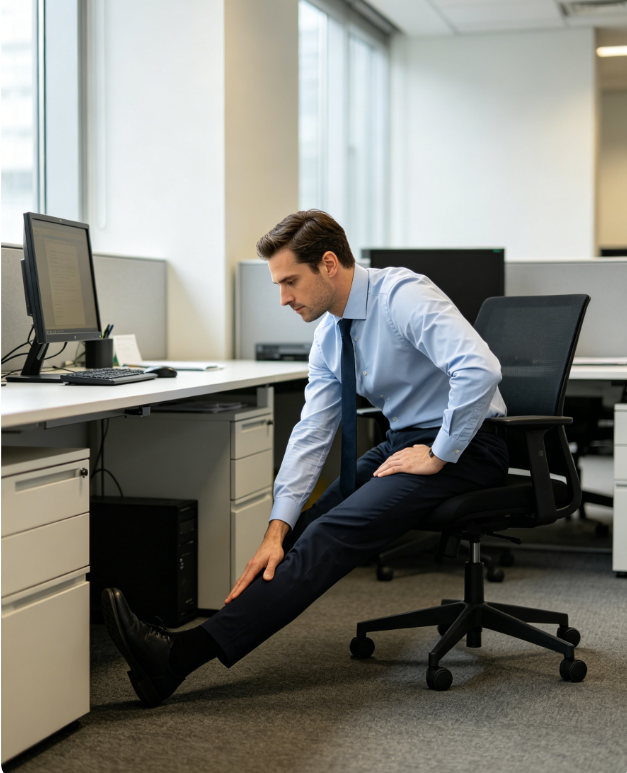
Discreet Office Movements to Relieve Muscle Strain (No Equipment Needed)
These low-key, zero-equipment movements are specially designed for office environments. They do not affect work efficiency, require no extra space, and can quickly release accumulated muscle tension within minutes.
Neck Decompression Stretch: Sit upright, retract your chin gently, and slowly stretch your neck backward. Hold for 20 seconds and repeat 3 times. This movement effectively relieves forward-head posture, reduces cervical spine pressure, and alleviates neck stiffness caused by long screen viewing.
Chest and Shoulder Opening Exercise: Clasp your hands behind your back, straighten your arms slightly, and lift gently while expanding your chest. Hold for 15 seconds each time. This stretches tight chest muscles, corrects hunched posture, and eliminates upper body heaviness.
Lumbar Spine Release Twist: Keep your hips fixed on the chair, twist your torso left and right slowly, and hold each side for 20 seconds. This relaxes stiff lumbar muscles, relieves waist soreness, and restores spinal flexibility.
Glute and Hip Relaxation: Sit upright, place one ankle on the opposite thigh, and lean slightly forward. Feel the deep stretch of the hip muscles on the stretched side. This improves hip stiffness caused by long sitting and prevents sedentary lower back pressure.
Micro Leg Activation: Lift your heels and toes alternately while sitting, and rotate your ankles regularly. This simple movement activates lower limb circulation, reduces leg swelling, and prevents venous stasis.
Scientific Work-Rest Rhythm to Avoid Sedentary Burnout
Maintaining a stable work-rest rhythm is the most effective way to resist sedentary damage. Human muscles and circulation cannot sustain long-term static states, and regular micro-activity is essential for physical balance.
Adopt a 40-minute work and 1-minute standing rhythm. Stand up, walk slightly, or adjust your posture every 40 minutes to break the static state of the body. Use phone calls, document reading, and brainstorming time to stand and work appropriately to reduce continuous sitting duration.
Take a 5-minute full-body relaxation break at noon. Combine stretching, deep breathing, and standing activity to completely release morning muscle tension, restore physical vitality, and avoid cumulative fatigue affecting afternoon work status.
Long-Term Lifestyle Habits to Repair Sedentary Damage
Daily after-work habits determine whether sedentary damage accumulates or is repaired. Drinking enough water throughout the day promotes blood circulation and accelerates metabolic waste excretion, effectively relieving muscle stiffness and body heaviness.
Avoid continuous sitting or lying down immediately after work. Take 10 to 20 minutes of slow walking, stretching, or gentle body movement to activate inactive muscles of the day, restore metabolic level, and eliminate physical fatigue. Maintain a regular sleep schedule to allow strained muscles and the spine to repair fully during nighttime rest.
Properly increase low-intensity aerobic exercise in spare time to improve overall physical endurance, enhance muscle strength, and form long-term resistance against sedentary physical damage.
Conclusion
Prolonged desk sitting is an inevitable part of modern work, but sedentary sub-health is completely preventable and reversible. Most office fatigue, muscle soreness, and metabolic decline stem from incorrect posture, long-term static inertia, and lack of daily micro-movements.
By adhering to scientific ergonomic sitting posture, practicing zero-equipment desk stretching, maintaining a reasonable work-rest rhythm, and cultivating healthy daily lifestyles, every desk worker can effectively offset sedentary harm, protect spinal and muscle health, maintain stable metabolism and abundant energy, and achieve a healthy balance between career efficiency and physical wellness.