Renter-Friendly DIY: Craft a Traceless Adjustable Air Conditioner Wind Baffle
Introduction
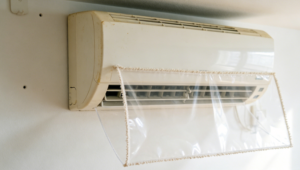
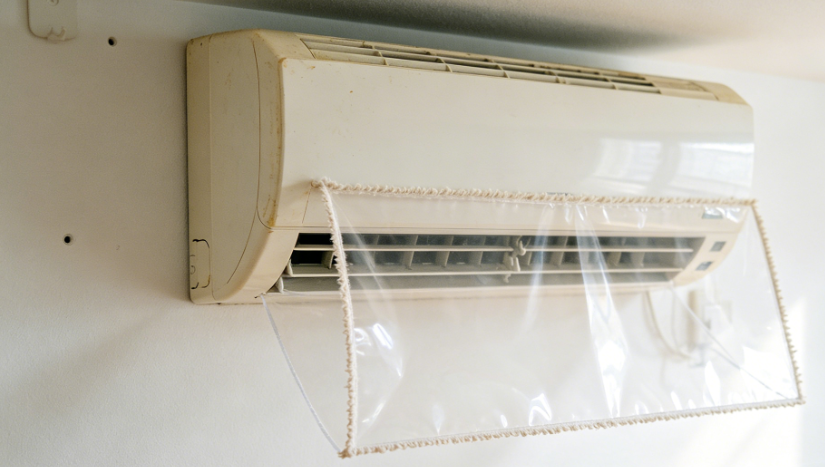
Nearly every Japanese one-room rental unit is equipped with a wall-mounted compact air conditioner. These standardized cooling and heating machines feature fixed downward wind outlets that produce concentrated, direct airflow. During summer cooling and winter heating seasons, unadjustable stiff airflow directly strikes human bodies, causing dry skin, stiff necks, and disrupted sleeping cycles. Furthermore, exposed air outlets rapidly accumulate dust, pollen, and fine indoor lint. Since tenants are forbidden to disassemble original air conditioner shells, drill outdoor unit brackets, or apply strong permanent glue on painted walls, deep cleaning and wind direction modification become difficult. To soften harsh airflow and block floating dust without damaging rental equipment, residents can fabricate a foldable traceless air conditioner baffle. Constructed from lightweight transparent plastic panels and soft silicone clips, this handmade attachment redirects wind flow, intercepts floating dust, and creates gentle circulating indoor airflow. Beyond improving physical comfort, this simple tool reflects restrained Japanese residential aesthetics: subtly adjusting artificial airflow to harmonize human bodies with mechanical indoor environments.
Design Concept of the DIY Air Conditioner Baffle
Unlike bulky opaque commercial wind deflectors that block heat exchange, this handmade baffle adopts a slim transparent plate structure customized for narrow Japanese wall-mounted air conditioners. It follows three renter-oriented design principles: physical traceless clamping, angle adjustability, and invisible dust interception. Most Japanese rental air conditioners have thin fragile wind louvers that cannot bear heavy accessories; thus, all materials remain ultra-light to prevent mechanical deformation. Instead of completely blocking wind output, this panel gently diverts airflow to form wide-range indoor circulation. Its crystal-clear appearance preserves the plain white wall tone and does not visually clutter compact minimalist rooms.
Required Materials (Available at Japanese 100-Yen Shops)
- Transparent lightweight PET plastic flat panel
- Soft non-slip silicone clamping clips
- Thin static adsorption dust-filtering film
- Mini adjustable plastic angle hinges
- Round-head smooth cutting scissors
Step-by-Step Fabrication Process
Step 1: Measure Air Outlet and Cut Plastic Panel
Observe the width and vertical height of the rental air conditioner’s lower air outlet. Most Japanese household air conditioners adopt a narrow rectangular outlet design. Cut the transparent PET panel into a slightly oversized rectangular baffle to fully cover the blowing area. Keep the plate thin and lightweight to avoid pressing down the original air conditioner louver. Polish all four edges into smooth rounded arcs to prevent sharp plastic edges from scratching the machine’s painted surface. The transparent PET material ensures unobstructed light transmission and maintains indoor visual simplicity.
Step 2: Install Adjustable Angle Hinges
Attach tiny plastic hinges to the upper edge of the transparent panel. These miniature connecting parts allow users to manually tilt the baffle upward or downward to change wind direction. In summer, the panel tilts slightly upward to lift cold air for natural sinking circulation; in winter, it tilts downward to guide warm air toward the floor. The flexible hinge structure enables angle fine-tuning without modifying the air conditioner internal structure.
Step 3: Paste Static Dust-Filtering Film
Apply thin static adsorption film on the inner side of the plastic baffle. This static material passively captures suspended dust, pollen, and fine lint blown out from the air conditioner. Unlike disposable woven filters, this transparent film does not hinder airflow velocity or reduce cooling efficiency. During Japan’s dry pollen season, the electrostatic layer effectively isolates cedar pollen particles, improving indoor air cleanliness with minimal visual interference.
Step 4: Fix Silicone Clips and Complete Installation
Secure soft silicone clips on the top hinge connection. Fasten the entire baffle lightly onto the original air conditioner louver through physical clamping. No glue, tape, or drilling is involved. The elastic silicone protects the machine’s original paint and prevents sliding during long-term vibration. When detachment is required, users simply unclip the assembly without leaving any marks, fully complying with Japanese rental inspection rules.
Daily Usage and Functional Advantages
This handmade air conditioner baffle greatly optimizes indoor airflow quality in compact rental rooms. It eliminates direct mechanical wind stimulation, reducing dry throat, migraine, and physical discomfort caused by long-term air conditioning use. The static film continuously captures invisible dust, slowing internal contamination of the air conditioner. The adjustable angle adapts to seasonal temperature changes, improving heating and cooling efficiency without extra electricity consumption. During humid tsuyu seasons, the smooth plastic surface resists mold adhesion and can be wiped clean in seconds. All components are detachable, foldable, and reusable for future residences.
Broader Reflection: Softening Mechanical Indoor Airflow
Modern rental air conditioners prioritize rapid temperature adjustment rather than human comfort. Their rigid mechanical wind output ignores the fragility of human respiratory systems and skin sensitivity. This lightweight transparent baffle represents a gentle mediation between cold machinery and living bodies. Tenants never dismantle or alter electrical appliances; instead, they add a temporary physical buffer to soften harsh industrial airflow.
Moreover, the assembly process cultivates subtle environmental sensitivity. People often focus on temperature changes while ignoring airflow direction, dust circulation, and invisible wind pressure. Cutting panels, installing hinges, and adjusting angles encourage renters to perceive invisible air movement inside small apartments. This trivial handmade action transforms stiff mechanical wind into mild, natural indoor circulation.
Conclusion
The DIY transparent air conditioner wind baffle embodies thoughtful airflow optimization wisdom for Japanese renters. With ultra-light transparent materials, adjustable hinge structures, and traceless physical clamping, it solves direct wind irritation, dust accumulation, and uneven indoor temperature distribution. It protects original electrical equipment, improves breathing comfort, and adapts to Japan’s distinct four seasons. In mechanically standardized temporary living spaces, this slim plastic panel proves that domestic comfort does not require expensive smart appliances. Through subtle handmade intervention, renters soften rigid mechanical airflow, purify floating indoor dust, and construct mild, stable, and human-friendly microclimate environments inside borrowed Japanese apartments.