Renter-Friendly DIY: Craft a Magnetic Hidden Cable Organizer for Japanese Minimalist Rooms
Introduction
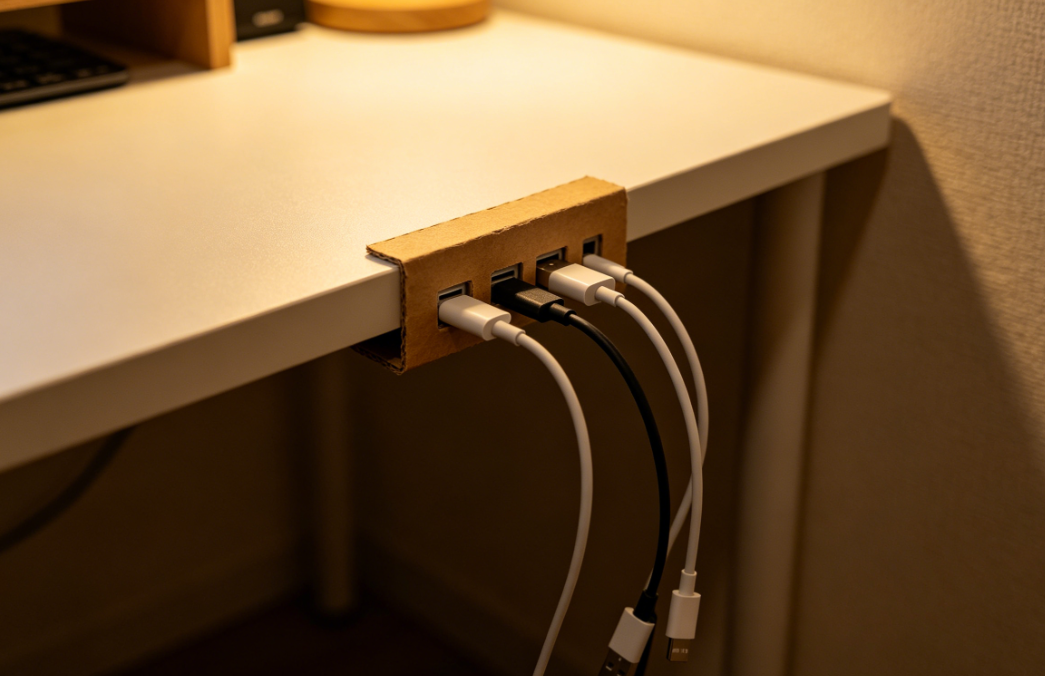
Virtually all standard Japanese one-room apartments place fixed power outlets at rigid, inconvenient heights. Tenants often tangle with scattered charging cables, loose adapters, and messy data wires across desktops and walls. Since drilling walls, embedding wiring grooves, or using permanent strong adhesive violates rental restoration clauses, most residents endure exposed cables that accumulate dust and ruin interior simplicity. Under such spatial constraints, a handmade magnetic hidden cable organizer becomes an intelligent solution. Constructed from lightweight magnetic sheets and removable accessories purchased at 100-yen stores, this slim tool firmly arranges wires without leaving wall marks. Beyond tidying cables, this subtle handmade gadget reflects modern Japanese minimalism: eliminating visual noise and maintaining spatial purity within restricted rental boundaries.
Design Philosophy of the Magnetic Organizer
Unlike bulky plastic cable boxes that occupy extra space, this DIY magnetic board adopts an ultra-thin planar structure tailored for plain Japanese rental walls. It adheres to three core renter-oriented principles: residue-free attachment, magnetic modularity, and invisible storage. Considering Japan’s humid climate, all selected materials are anti-moisture and dust-proof to prevent metal plug oxidation. Additionally, every magnetic component is detachable and rearrangeable, allowing flexible layout adjustments for different electronic devices. Instead of concealing wires through heavy containers, this tool gently adheres cables onto blank walls, preserving the room’s flat and clean visual texture.
Required Materials (Available at Japanese 100-Yen Shops)
- Flexible soft magnetic rubber sheet (one matte white sheet)
- Small metal cable buckles (six reusable pieces)
- Transparent removable nano adhesive pads
- Soft foam edge-protection strips
- Mini silicone cable holders
Step-by-Step Fabrication Process
Step 1: Cut the Magnetic Sheet into Custom Size
Observe the distribution of wall sockets near desks and beds. Mark a slim rectangular area beside the power outlet to determine the board size. Cut the soft magnetic sheet into a neat rectangular plate that fits the blank wall space around sockets. Trim four corners into smooth arcs to avoid accidental scratching and prevent edge warping after long-term wall attachment. The matte white surface is deliberately chosen to blend seamlessly with the milky white walls of Japanese standard apartments.
Step 2: Reinforce Edges with Foam Strips
Attach thin foam protection strips along the four edges of the magnetic board. These soft buffers prevent the rigid magnetic sheet from directly squeezing the wallpaper, eliminating indentation risks during long-term pasting. The foam also fills tiny gaps between uneven old apartment walls and the magnetic plate, ensuring tighter adhesion and reducing dust infiltration behind the board.
Step 3: Install Metal Buckles and Silicone Holders
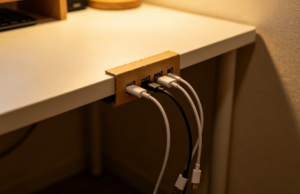
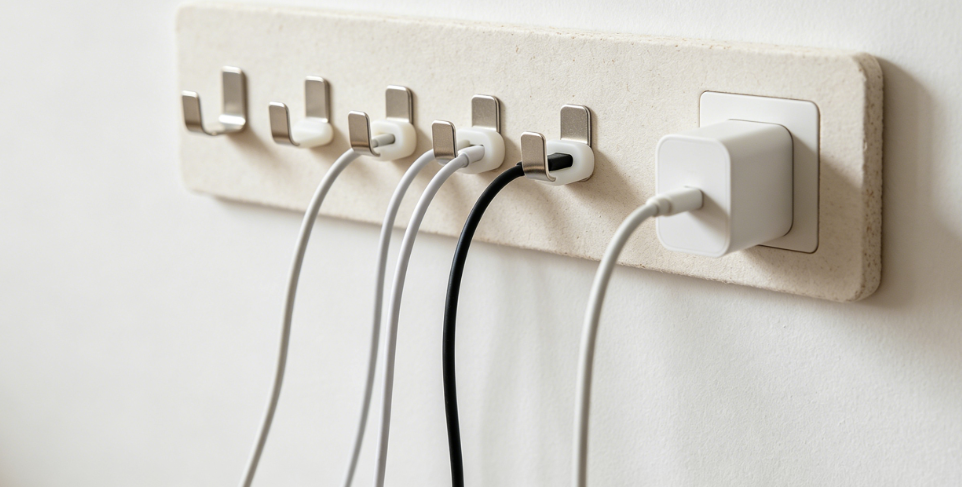
Arrange metal cable buckles and silicone holders on the surface of the magnetic sheet in a staggered layout. Thick power adapters are fixed with durable metal buckles, while thin earphone cables and charging lines are clamped by soft silicone holders. The magnetic attraction allows random position adjustment without tearing or replacing adhesive layers, achieving flexible cable classification for daily electronic equipment.
Step 4: Attach Nano Adhesive for Traceless Mounting
Paste four transparent nano adhesive pads on the back corners of the magnetic board. This water-based reusable adhesive generates stable sticking force without chemical corrosion. Align the board gently beside the wall socket and press evenly to expel air bubbles. When removal is needed, peel off the adhesive pads at an oblique angle; no sticky residue or wall damage will remain, fully complying with Japanese move-out inspection standards.
Daily Usage and Functional Advantages
This handmade magnetic organizer optimizes indoor cable management in multiple practical ways. It centrally collects mobile phone chargers, laptop adapters, and audio cables, preventing wires from slipping behind desks or tangling on the floor. The smooth matte surface can be wiped effortlessly with dry cloths, reducing dust accumulation in humid seasons. During thunderstorms in Japan’s rainy season, the centralized arrangement avoids wire winding and lowers hidden short-circuit risks. Moreover, users can freely add or remove magnetic buckles to adapt to new electronic devices, realizing long-term recyclable usage.
Broader Reflection: Visual Order in Urban Tiny Living
In standardized Japanese rental buildings, wall sockets are fixed during construction and cannot be modified according to personal habits. Messy cables become unavoidable visual clutter for urban renters. This magnetic organizer represents a gentle correction to rigid architectural design. Tenants do not alter circuit structures; instead, they reorganize chaotic lines through soft auxiliary tools.
Furthermore, tidying cables through manual assembly cultivates an orderly living mindset. In fast-paced Japanese cities, people are easily overwhelmed by trivial messy details. Arranging buckles, adjusting cable angles, and flattening magnetic boards bring a sense of controllability to chaotic daily fragments. This tiny handmade behavior transforms indifferent wall space into an organized electronic management area.
Conclusion
The DIY magnetic hidden cable organizer embodies refined rental wisdom in compact Japanese apartments. With ultra-low-cost daily materials, simple cutting and assembly procedures, and traceless wall installation, it solves the universal trouble of scattered wires and messy adapters. It maintains wall integrity, simplifies daily cleaning, and creates a minimalist electronic environment. In limited temporary living spaces, this slim magnetic board proves that high-quality living does not rely on large-scale renovation. Through subtle handmade optimization, renters can pursue visual cleanliness, spatial order, and quiet comfort within immutable rental constraints.