Smart Investing: Build Long-Term Wealth With Prudent Strategies
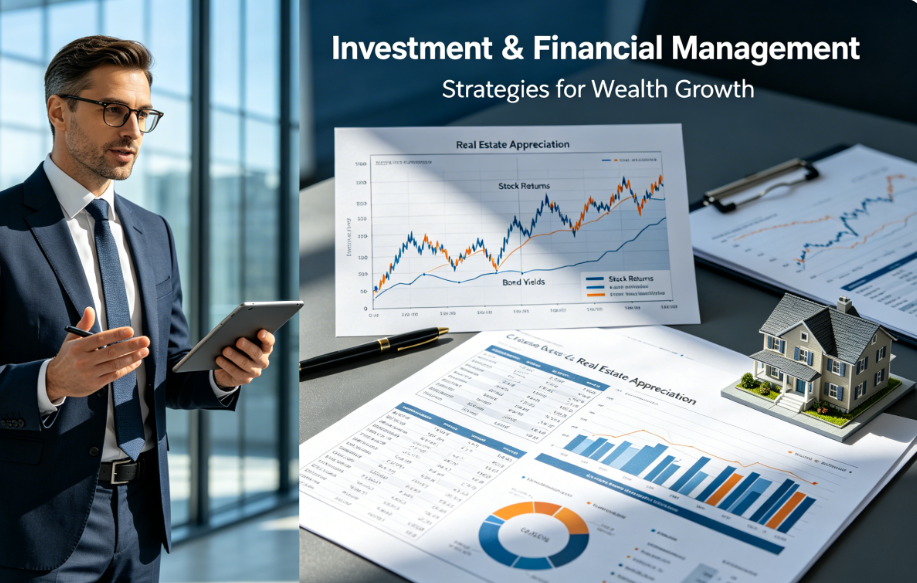
In an era where financial stability and long-term security are top priorities, investing has evolved from a luxury for the wealthy to a necessity for anyone looking to grow their wealth, beat inflation, and achieve financial freedom. Contrary to common misconceptions, investing is not reserved for financial experts or those with large sums of money—anyone with a clear goal, patience, and basic knowledge can start investing and reap the benefits of compound growth over time.
At its core, investing is the act of allocating money to assets with the expectation of generating a return. These assets can range from stocks and bonds to real estate, mutual funds, and exchange-traded funds (ETFs), each with its own level of risk and potential reward. The key to successful investing lies in understanding your financial goals, assessing your risk tolerance, and adopting a disciplined, long-term approach—rather than chasing short-term gains or succumbing to market hype.
One of the most accessible and beginner-friendly investment options is ETFs and index funds. These funds pool money from thousands of investors to purchase a diversified portfolio of assets, such as stocks from different industries or bonds with varying maturities. This diversification reduces the risk of relying on a single company or sector, making them ideal for those new to investing. Unlike individual stocks, which require research and monitoring of specific companies, ETFs and index funds are professionally managed, have low fees, and offer broad market exposure—simplifying the investing process while still providing opportunities for growth.
Stocks and bonds are the foundation of many investment portfolios, and understanding their differences is crucial for building a balanced strategy. Stocks represent ownership in a company; when you buy a stock, you become a shareholder, and your returns come from the company’s growth (as the stock price increases) and dividends (regular payments to shareholders). While stocks carry higher risk due to market volatility, they also offer higher long-term returns, making them suitable for investors with a longer time horizon (10 years or more).
Bonds, on the other hand, are debt instruments: when you invest in a bond, you are lending money to a government, corporation, or other entity, which promises to repay the principal amount plus interest over a set period. Bonds are generally lower risk than stocks, providing a steady stream of income and stability to a portfolio. They are particularly well-suited for investors who prioritize capital preservation or have shorter-term financial goals.
Risk management is another critical aspect of smart investing. No investment is entirely risk-free, but you can mitigate risk by diversifying your portfolio—spreading your money across different asset classes, industries, and geographic regions. This way, if one investment underperforms, others may offset the losses. Additionally, avoiding emotional decisions is key: market downturns are normal, and selling in panic often leads to locking in losses. Instead, staying focused on your long-term goals and maintaining a consistent investment schedule (such as monthly contributions) can help you weather market fluctuations.
Consistency and patience are the cornerstones of successful investing. The power of compound interest—earning interest on both your initial investment and the interest it generates—can turn small, regular contributions into significant wealth over time. For example, investing $100 per month with an average annual return of 7% can grow to over $100,000 in 30 years. This highlights the importance of starting early: the earlier you begin investing, the more time your money has to grow.
It’s also important to align your investments with your financial goals. If your goal is to save for retirement in 30 years, you can afford to take on more risk with stocks and ETFs. If you’re saving for a down payment on a house in 5 years, a more conservative approach—focusing on bonds and high-yield savings accounts—may be better. Regularly reviewing and adjusting your portfolio as your goals change or as you get closer to your target date ensures your investments continue to serve your needs.
In conclusion, investing is a powerful tool for building long-term wealth, but it requires knowledge, discipline, and a long-term mindset. By starting small, diversifying your portfolio, avoiding emotional decisions, and staying consistent, you can turn even modest savings into a substantial nest egg. Remember, investing is not about getting rich quick—it’s about making your money work for you, so you can achieve financial security and live the life you want.