Home Appliance Deep Cleaning Guide: Eliminate Hidden Grime, Odors, and Bacteria Safely

Most homeowners regularly clean home floors, walls, and countertops but overlook household appliances. Refrigerators, washing machines, dishwashers, and small kitchen appliances accumulate invisible dirt, organic residue, mold, and limescale during long-term operation. Surface wiping cannot clean internal components, causing persistent indoor odors, reduced appliance efficiency, and even hidden hygiene risks. Over time, neglected appliance grime shortens service life and affects daily living health.
Why Appliance Deep Cleaning Is Indispensable for Household Hygiene
Household appliances are closed or semi-closed operating spaces. They continuously contact food residue, water stains, lint, and organic debris during daily use. Residual dirt is sealed inside equipment, forming a warm and humid breeding environment for bacteria and mold.
Dirty appliances directly affect living quality and hygiene. A contaminated refrigerator breeds bacteria on food contact surfaces. A moldy washing machine transfers hidden spores to clean clothes. A clogged dishwasher leaves invisible food residue on tableware. Unlike visible household dirt, appliance internal grime accumulates slowly and is difficult to detect, leading to long-term hidden hygiene hazards.
In addition, dust and grease accumulation on internal components increases equipment operating load, reduces energy efficiency, causes abnormal noise, and even leads to frequent failures. Regular deep cleaning is not only for hygiene but also for extending appliance service life.
Room-by-Room Household Appliance Cleaning Methods
Refrigerator: Remove Sticky Residue, Odors and Hidden Mold
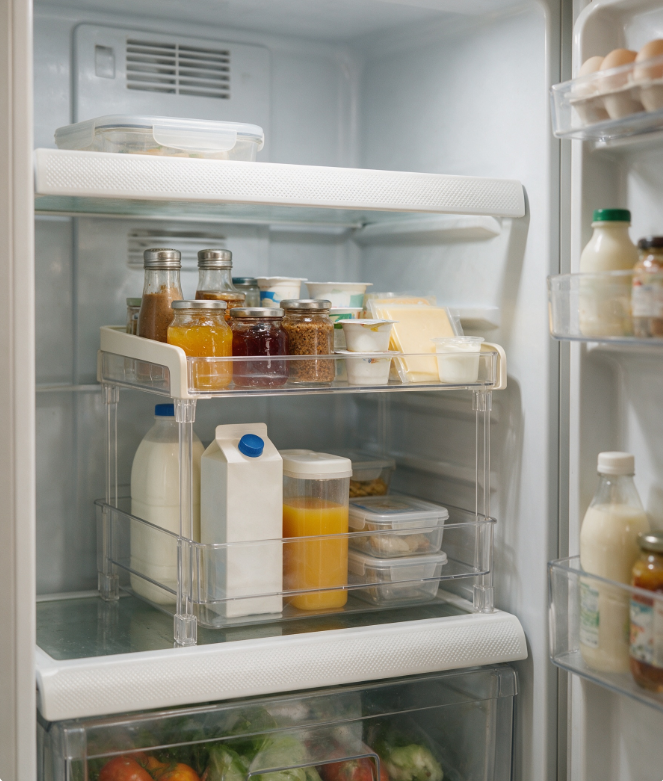
The refrigerator is a high-risk hygiene zone that stores food for a long time. Spilled sauce, vegetable water, expired food residues, and condensed water accumulate in shelf gaps and drawer bottoms. Low temperature only slows bacterial reproduction instead of stopping it completely, resulting in sticky inner walls and peculiar odors.
For routine maintenance, wipe inner walls, shelf surfaces, and drawer interiors monthly with a mild neutral cleaner. Focus on cleaning door seal gaps, which easily trap food crumbs and mold. Use a small detail brush to clean hidden dirt in rubber crevices to avoid black mold spots.
Conduct quarterly deep cleaning. Empty all food items, discard expired ingredients, and thoroughly wipe every corner. Dry the interior completely after cleaning to prevent residual condensed water from breeding bacteria. Avoid strong corrosive cleaners and hard scrubbing tools to prevent damage to plastic liners and rubber seals.
Washing Machine: Clean Internal Drum Limescale and Laundry Dirt
Both top-load and front-load washing machines accumulate serious internal dirt. Mixed residue of laundry detergent, fabric softener, body oil, clothing fiber, and water mineral scale adheres to the inner drum wall and gap layers. Closed and humid washing machine interiors easily breed mold, causing clothes to smell musty after washing.
Weekly simple maintenance involves leaving the washing machine door open after use to ventilate and dry residual moisture, which fundamentally reduces mold growth. Monthly deep cleaning requires running an empty high-temperature cleaning cycle with professional appliance-safe cleaner to dissolve internal limescale and organic sludge.
Pay special attention to the detergent box and filter net. These parts trap concentrated detergent residue and lint. Regular disassembly and cleaning prevent residue from mixing with clean water and contaminating laundry during operation.
Dishwasher: Eliminate Hidden Food Debris and Grease Buildup
Many users mistakenly believe dishwashers are self-cleaning. In fact, food debris, oil residue, and starch deposits intercepted by filters accumulate inside the dishwasher. Long-term uncleaned residue rots and deteriorates, producing odors and breeding bacteria, which indirectly pollute tableware during washing cycles.
Clean the dishwasher filter after each use to remove residual food particles. Wipe the inner wall and door seal weekly to clear accumulated grease and stubborn residue. Run an empty high-temperature drying cycle monthly to decompose residual oil film and keep the inner cavity dry and hygienic.
Microwave and Oven: Remove Oxidized Grease and Burnt Stains
Microwaves and ovens easily accumulate splashed food grease and burnt residue during heating and baking. High-temperature operation continuously oxidizes internal oil stains, turning them into hard yellow-brown bonded grime that is difficult to remove. Volatilized grease also adheres to inner walls and top gaps, forming invisible dirt layers.
For daily cleaning, wipe the inner wall with a damp cloth after the appliance cools down to remove fresh splashes. For aged oxidized grease, use mild oven-safe degreaser with proper dwell time to soften stubborn grime before gentle wiping. Avoid sharp scraping tools to prevent scratching the inner coating.
Air Conditioner and Fan: Purify Dust and Bacterial Sources
Air conditioners and ceiling fans are key equipment affecting indoor air quality. Dust, pollen, and floating debris accumulate on filter screens and fan blades. After long-term shutdown or seasonal use, residual dust and hidden mold will circulate throughout the room with airflow, triggering allergies and respiratory discomfort.
Clean air conditioner filters every two weeks during frequent use seasons. Remove, rinse, and air-dry filters to ensure unobstructed airflow. Wipe fan blades and lamp plate surfaces monthly to eliminate accumulated dust. Quarterly deep cleaning of internal heat sinks and air ducts reduces hidden bacterial growth.
Universal Appliance Cleaning Safety Rules
Always cut off the power supply before cleaning electrical appliances to avoid electric leakage and short-circuit risks.
Avoid excessive water flushing on electrical components, motor parts, and circuit gaps to prevent equipment damage.
Do not use strong acidic, alkaline, or abrasive cleaners on appliance surfaces and inner coatings to prevent corrosion, fading, and coating peeling.
Do not disassemble precision electrical components without professional knowledge to avoid affecting equipment performance.
Long-Term Maintenance Habits to Keep Appliances Clean
Adopt post-use timely cleaning habits. Fresh residue can be removed with simple wiping, avoiding high-temperature oxidation and long-term hardening.
Keep appliance interiors dry and ventilated after cleaning. Reducing residual moisture is the most effective way to prevent mold and odor.
Follow seasonal cleaning cycles. Intensify cleaning frequency in humid seasons to adapt to fast bacterial reproduction speed.
Conclusion
Household appliance deep cleaning is an indispensable part of systematic home hygiene management. Hidden internal residue, mold, and limescale cannot be removed by daily surface cleaning. Targeted regular maintenance for refrigerators, washing machines, dishwashers, and electrical ventilation equipment can eliminate hidden hygiene risks, solve recurring household odors, improve appliance operating efficiency, and extend equipment service life. Scientific and standardized appliance cleaning creates a truly clean, healthy, and safe living environment for families.