Gemstones: Nature’s Sparkling Treasures
Gemstones are some of the most beautiful and fascinating creations of nature, captivating humans for centuries with their vivid colors, dazzling sparkle, and unique charm. These rare minerals are more than just decorative pieces—they carry cultural significance, symbolize emotions, and hold lasting value, making them a timeless part of human history and culture.
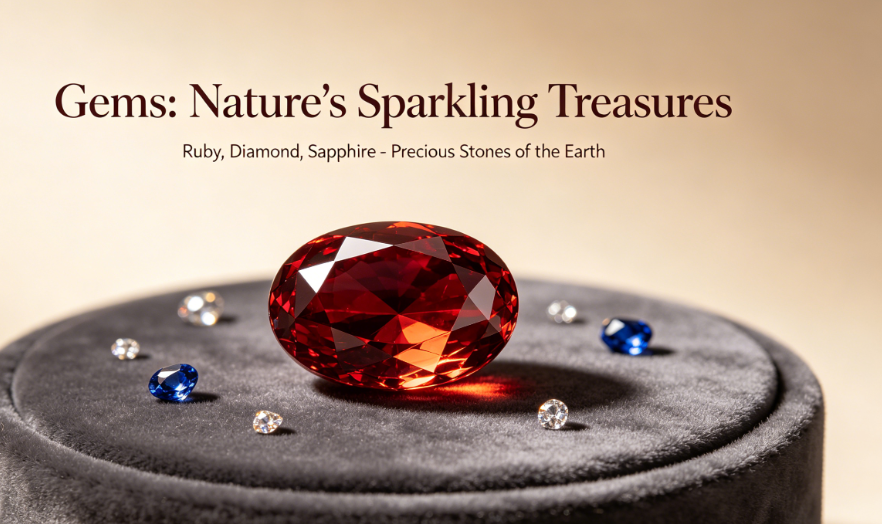
Formed deep within the Earth over millions of years, gemstones are created through intense geological processes. Extreme pressure, high temperatures, and the perfect combination of minerals come together to produce these stunning stones. Each gemstone is one-of-a-kind, with its own unique color, pattern, and characteristics that set it apart from others. From the deep red of a ruby to the clear brilliance of a diamond, from the vibrant green of an emerald to the soft blue of a sapphire, every gemstone tells a story of nature’s artistry.
Gemstones are typically divided into two main categories: precious and semi-precious. Precious gemstones are the rarest and most valuable, including diamonds, rubies, sapphires, and emeralds—often called the “Big Four” of gemstones. These stones are highly sought after for their beauty, durability, and scarcity. Semi-precious gemstones, while more common, are no less stunning. Examples include amethyst (purple), topaz (yellow, blue, or clear), garnet (red), turquoise (blue-green), and peridot (olive green), each offering its own unique appeal.
The value of a gemstone is determined by several key factors, known as the “4 Cs” for simplicity: color, clarity, cut, and carat weight. Color is the most noticeable feature—vibrant, uniform colors are highly prized. Clarity refers to the absence of flaws or inclusions inside the stone; the clearer the gem, the more valuable it is. Cut affects how the gem reflects light, with a well-cut stone showcasing maximum sparkle and brilliance. Carat weight measures the size of the gem, with larger stones being rarer and more expensive.
Throughout history, gemstones have held deep cultural and symbolic meanings. In ancient civilizations, they were often associated with power, protection, and luck. The ancient Egyptians used lapis lazuli in royal jewelry and tomb decorations, believing it symbolized divine connection. The Greeks linked sapphires to wisdom and rubies to passion. In Eastern cultures, jade is a symbol of purity, prosperity, and longevity, often passed down as a family heirloom. Today, gemstones continue to carry emotional weight—diamonds are a symbol of eternal love in engagement rings, while emeralds represent growth and new beginnings.
Beyond their symbolic value, gemstones are also popular for their practical uses. They are widely used in jewelry, adding elegance and color to necklaces, earrings, bracelets, and rings. Many people also collect gemstones, as rare and high-quality pieces can appreciate in value over time. Taking care of gemstones is simple: harder stones like diamonds can be cleaned with mild soap and water, while softer stones like opals require gentle handling to avoid scratches.
Gemstones are more than just minerals—they are a bridge between nature and human emotion. They capture the beauty of the Earth’s processes, carry the weight of cultural traditions, and bring joy to those who wear or collect them. Whether admired for their sparkle, cherished for their meaning, or valued for their rarity, gemstones remain a timeless treasure that continues to fascinate and inspire people around the world.