Gemstones: Nature’s Colorful and Precious Treasures
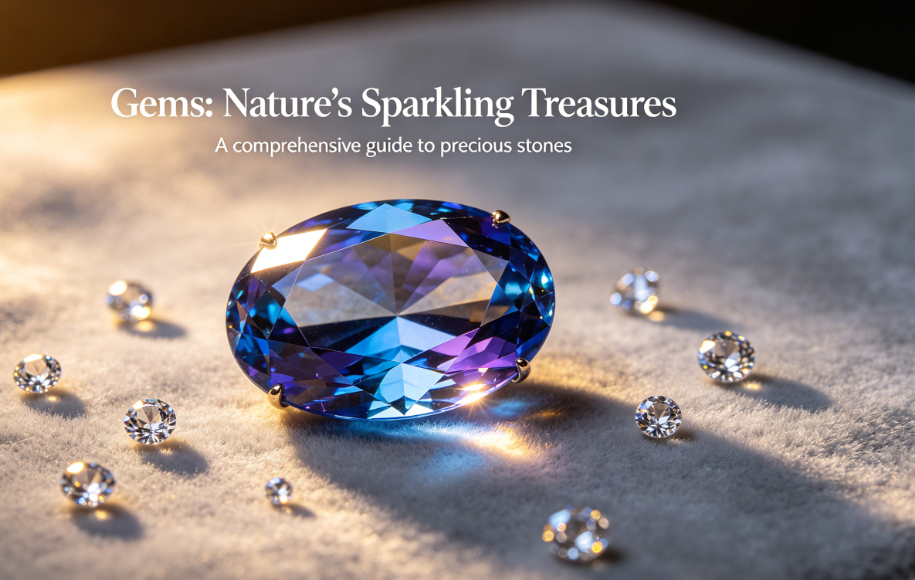
Gemstones are some of the most beautiful and valuable things that nature creates. For thousands of years, people have loved these bright, rare stones not just for their looks, but also for their special meanings and importance in different cultures. From the shiny diamonds to the deep blue sapphires and the bright red rubies, each gemstone is unique and tells a story of how it was made over millions of years.
A gemstone is a mineral or organic material that is beautiful, strong, and hard to find. What makes gemstones different from ordinary rocks is their ability to shine, their vivid colors, and their durability. Most gemstones form deep inside the Earth, where high heat and pressure change simple minerals into stunning treasures. For example, diamonds are made from carbon atoms that are pressed together under extreme heat and pressure, far below the Earth’s surface, taking billions of years to form.
Each kind of gemstone has its own special meaning. Diamonds are known for their hardness and sparkle, and they stand for love, commitment, and forever. That’s why they are often used in engagement rings. Rubies are bright red and symbolize passion, courage, and good luck. Ancient kings and queens used to wear rubies to protect themselves and bring prosperity.
Sapphires are most famous for their deep blue color, but they can also be pink, yellow, or even colorless. They represent loyalty, wisdom, and peace. Many royal families have worn sapphires as a sign of their power and nobility. Emeralds are a rich green color and are called the “stone of life.” They stand for growth, new beginnings, and fertility, and they were loved by ancient civilizations like the Egyptians and Indians.
Opals are another unique gemstone. They have a magical play of colors that changes when you look at them from different angles. This is because light bounces off tiny silica spheres inside the opal. Other popular gemstones include amethysts, which are purple, and pearls, which are made by oysters and other mollusks.
The value of a gemstone depends on four things: color, clarity, cut, and carat weight. A gemstone with a bright, even color, no flaws, a good cut that makes it shine, and a larger size is more valuable. Rare gemstones, like the bright red “pigeon blood” rubies from Myanmar or perfect blue sapphires from Kashmir, can be very expensive and are sought after by collectors.
Gemstones are also important in many cultures around the world. In ancient Egypt, lapis lazuli was used to decorate tombs and amulets, as people believed it connected them to the gods. In Chinese culture, jade is a sacred stone that stands for virtue, long life, and prosperity. It is often passed down from one generation to the next as a family treasure.
Taking care of gemstones is important to keep them beautiful. Harder gemstones like diamonds and sapphires can be worn every day, but softer ones like opals and pearls need gentle handling. You should avoid getting them wet with harsh chemicals, keeping them away from extreme heat or cold, and cleaning them with a soft cloth.
Gemstones are more than just pretty stones. They are a link between nature’s power and human feelings. They carry history, culture, and love, and they will continue to be cherished for many more years to come.