Gemstones: Earth’s Dazzling Treasures of Color and Meaning
Gemstones are nature’s most exquisite works of art, forged over millions of years deep within the Earth’s crust through extreme heat, pressure, and geological magic. These rare and vibrant stones have captivated human hearts across civilizations, not only for their breathtaking beauty but also for their rich symbolism, cultural significance, and enduring value. From the deep, velvety blue of sapphires to the fiery red of rubies, and the ethereal glow of opals, each gemstone carries a unique story—one of formation, tradition, and human connection.
By definition, a gemstone is a mineral or organic material that possesses exceptional beauty, durability, and rarity, making it suitable for jewelry, art, and collection. What distinguishes gemstones from ordinary rocks is their ability to reflect light brilliantly, showcase vivid colors, and withstand the test of time. Their formation is a slow and intricate process: most gemstones take millions, even billions, of years to form, as minerals are transformed under extreme conditions deep underground. For instance, diamonds— the hardest natural material on Earth—crystallize from carbon atoms under intense heat and pressure, over 100 miles below the Earth’s surface, taking billions of years to reach their final form.
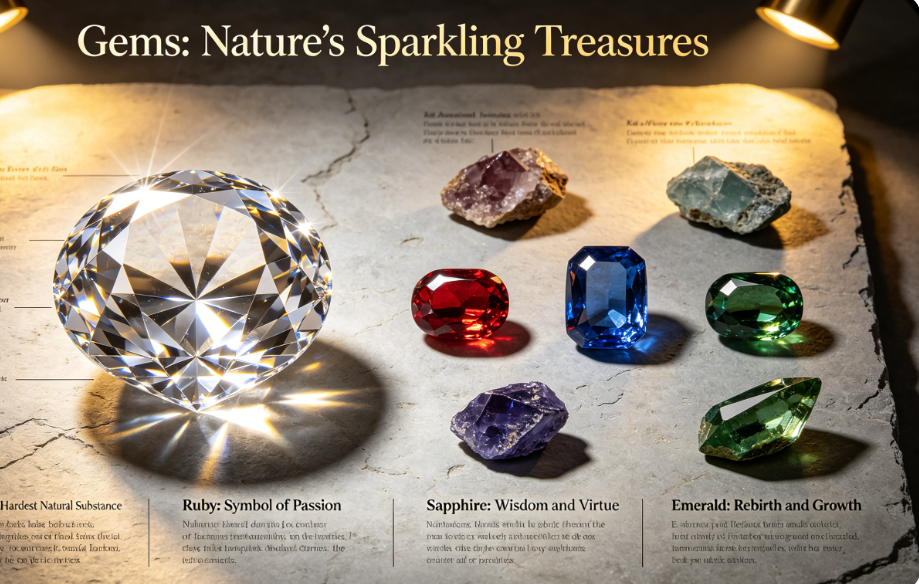
Each gemstone boasts unique physical characteristics and symbolic meanings that have shaped its role in human history. Diamonds, with their unmatched hardness and brilliant sparkle, are universally associated with love, commitment, and eternity, making them the iconic choice for engagement rings. Rubies, a variety of the mineral corundum, get their fiery red hue from trace amounts of chromium and symbolize passion, courage, and prosperity—they were once worn by ancient kings and queens as talismans of protection and power. Sapphires, also a type of corundum, come in a spectrum of colors (though most famously deep blue) and represent loyalty, wisdom, and tranquility, often linked to nobility and virtue.
Emeralds, a variety of beryl, are celebrated for their lush, vibrant green color, which comes from chromium and vanadium. Revered as the “stone of life,” they symbolize growth, fertility, and new beginnings, and have been cherished by ancient civilizations from Egypt to India. Opals, unlike other gemstones, showcase a mesmerizing play of colors—known as “opalescence”—caused by light refracting through tiny silica spheres within the stone, making each opal truly one-of-a-kind. Other beloved gemstones, such as amethysts (purple quartz), topaz (in shades of yellow, blue, and pink), and pearls (organic gemstones formed by mollusks), each carry their own unique symbolism and allure.
Beyond their symbolic value, gemstones are also highly prized for their economic worth and investment potential. The value of a gemstone is determined by the “4 Cs”: color, clarity, cut, and carat weight. A gemstone with a rich, uniform color, minimal flaws (called inclusions), a precise cut that maximizes its luster, and a larger carat weight will command a higher price. Rare gemstones—such as vivid “pigeon blood” rubies from Myanmar, flawless Kashmir sapphires, or large, high-quality emeralds—are highly sought after by collectors and investors, often fetching millions of dollars at auctions.
Gemstones also play a central role in cultures and traditions around the world. In ancient Egypt, lapis lazuli was used to decorate tombs, amulets, and even the eyes of statues, symbolizing a connection to the divine and protection in the afterlife. In Chinese culture, jade— a gemstone revered for its温润 glow—represents virtue, longevity, and prosperity, often carved into intricate shapes and passed down as family heirlooms. In Hinduism, gemstones are believed to influence one’s destiny, with specific stones associated with different planets and zodiac signs to bring good fortune, health, and success.
Caring for gemstones is essential to preserve their beauty and value for generations. Different gemstones require different levels of care due to variations in hardness: harder stones like diamonds and sapphires can withstand daily wear, while softer stones like opals, pearls, and turquoise are more delicate and require gentle handling. Avoiding exposure to harsh chemicals, extreme temperatures, and direct sunlight, as well as regular cleaning with a soft cloth and mild soap, will help keep gemstones sparkling and in perfect condition.
In a world filled with mass-produced accessories, gemstones remain timeless and meaningful treasures. They are more than just pieces of jewelry—they are symbols of love, courage, renewal, and legacy. They bridge the gap between nature’s artistry and human emotion, carrying the weight of history, culture, and personal stories. Whether worn as a gift, collected as an investment, or admired for their natural beauty, gemstones continue to enchant and inspire, reminding us of the Earth’s incredible ability to create something truly extraordinary—something that will be cherished for centuries to come.