Healthy Skincare Habits: Build a Routine for Long-Lasting Radiance

Skincare is not a one-time task or a fleeting trend—it’s a collection of daily habits that nurture your skin, protect its health, and enhance its natural glow over time. The most effective skincare routines aren’t about elaborate steps or expensive products; they’re about consistency, intentionality, and understanding what your skin needs. Whether you’re new to skincare or looking to refine your routine, adopting simple, science-backed habits can transform your skin’s appearance and support its long-term health. This article explores the key skincare habits to incorporate into your daily life, tailored to all skin types and easy to sustain.
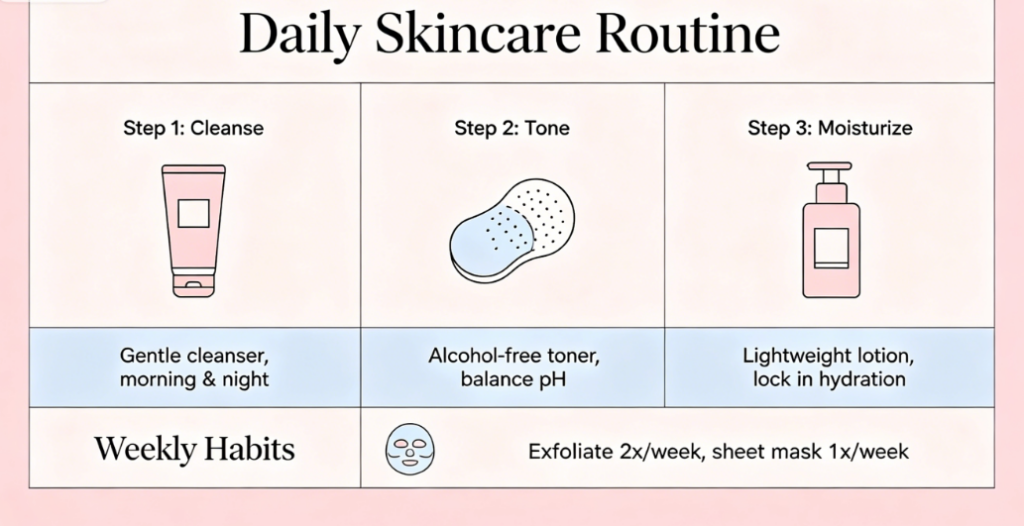
Consistent cleansing is the foundation of any healthy skincare habit—your skin is exposed to dirt, oil, environmental pollutants, and makeup (if you wear it) every day, and leaving these impurities on the skin can clog pores, cause breakouts, and dull your complexion. The golden rule is to cleanse your face twice a day: once in the morning to wash away overnight sweat and excess oil, and once in the evening to remove the day’s buildup. Opt for a gentle, pH-balanced cleanser that matches your skin type—creamy cleansers for dry or sensitive skin, gel-based cleansers for oily or combination skin—and avoid harsh soaps that strip the skin of its natural oils. After cleansing, pat your skin dry with a soft towel (never rub) to protect the delicate skin barrier and retain moisture.
Moisturizing daily is another non-negotiable habit, regardless of your skin type. Many people with oily skin make the mistake of skipping moisturizer, but this often backfires—without proper hydration, the skin overproduces oil to compensate, leading to more shine and breakouts. Choose a moisturizer formulated for your skin’s needs: lightweight, oil-free options for oily or combination skin, and rich, nourishing creams for dry or sensitive skin. For best results, apply moisturizer immediately after cleansing, when your skin is still slightly damp—this locks in hydration, keeps your skin soft and supple, and strengthens the skin barrier to prevent dryness and irritation.
The most critical skincare habit you can adopt is daily sun protection. UV rays are the primary cause of premature aging, including wrinkles, fine lines, and dark spots, and they can also damage the skin’s DNA over time. Make it a habit to apply a broad-spectrum sunscreen with an SPF of 30 or higher every morning, even on cloudy days or when you’re staying indoors (UV rays can penetrate windows). If you’re spending time outdoors, reapply sunscreen every 2 hours, and complement it with physical protection like a wide-brimmed hat, sunglasses, or long-sleeved clothing. This single habit can prevent 80% of premature skin aging and keep your skin looking youthful for longer.
Gentle exfoliation is a habit that boosts your skin’s radiance, but it’s important to do it correctly. Exfoliation removes dead skin cells that accumulate on the skin’s surface, which can make your complexion look dull and clog pores. However, over-exfoliation can damage the skin barrier, leading to redness, irritation, and sensitivity. Aim to exfoliate 1-2 times a week with a mild chemical exfoliant (like AHAs or BHAs) or a soft physical exfoliant—avoid harsh scrubs that can cause micro-tears in the skin. This habit will reveal fresher, brighter skin and help your skincare products absorb more effectively.
Beyond topical care, lifestyle habits play a crucial role in skin health. Staying hydrated is a simple yet powerful habit—drinking 8-10 glasses of water daily keeps your skin plump, reduces dryness and dullness, and supports overall skin function. Avoid touching your face frequently, as your hands carry bacteria, dirt, and oils that can transfer to your skin, clog pores, and cause breakouts. Getting 7-8 hours of quality sleep each night is also essential; while you sleep, your skin repairs itself, produces collagen, and regenerates cells, so poor sleep can lead to dark circles, dullness, and increased signs of aging.
Another important habit is listening to your skin. Everyone’s skin is unique, so what works for one person may not work for another. Pay attention to how your skin reacts to products or habits—if a product causes redness, itching, or irritation, discontinue use immediately. Avoid overloading your skin with too many products; a simple routine with a few effective products is far more sustainable and effective than a complicated one with dozens of steps.
Finally, be patient. Skincare habits take time to show results—your skin’s natural turnover cycle is about 28 days, so it may take 4-8 weeks to notice a difference in your complexion. Consistency is key; even 5-10 minutes a day of intentional skincare is better than an elaborate routine done occasionally. Remember, skincare is a form of self-care—it’s not about achieving perfection, but about nurturing your skin and prioritizing your well-being.
In conclusion, healthy skincare habits are simple, consistent, and tailored to your skin’s needs. By incorporating daily cleansing, moisturizing, sun protection, gentle exfoliation, and healthy lifestyle choices, you can build a routine that supports long-lasting skin health and radiance. These habits don’t require expensive products or hours of effort—they just require commitment and a little intentionality. Over time, you’ll not only notice a brighter, healthier complexion but also develop a deeper connection with your body and a more sustainable self-care practice.