Renter-Friendly Soundproofing Hacks (No-Drill, Non-Damaging Noise Reduction for Apartments)
Living in a rental apartment often means dealing with unavoidable noise issues: loud neighbor chatter, footstep noise from upstairs, hallway traffic, street traffic sounds, and humming building mechanical noise. Most apartment buildings feature thin drywall, hollow doors, lightweight windows, and unsealed gaps that offer almost no natural sound insulation. Unlike homeowners who can install professional soundproof wall panels, replace solid doors, upgrade double-glazed windows, and add permanent ceiling insulation, renters are strictly prohibited from structural changes, drilling, and permanent renovations. Many traditional soundproofing methods leave wall damage, glue residue, and fixture alterations that result in heavy security deposit deductions. Fortunately, fully reversible, no-damage renter-friendly soundproofing hacks significantly reduce airborne noise, impact noise, and echo, creating a quiet, peaceful living environment while remaining fully lease compliant.
Why rental apartments are extremely noisy and common tenant mistakes. Apartment noise mainly falls into two categories: airborne noise and impact noise. Airborne noise includes talking, music, television sound, and street wind noise that penetrates walls, windows, and door gaps. Impact noise includes upstairs footsteps, furniture dragging, and floor vibration, which transmits easily through thin building structures. Many renters attempt risky soundproofing solutions such as drilling wall sound insulation panels, using permanent strong glue, nailing thick foam boards, and replacing door hardware. These irreversible modifications damage original building surfaces and fail move-out inspections. Additionally, simply adding thick carpets alone cannot solve wall and window noise penetration, resulting in ineffective noise reduction. The core principle of renter-safe soundproofing is gap sealing, soft textile absorption, portable sound insulation layering, vibration buffering, and zero structural damage.
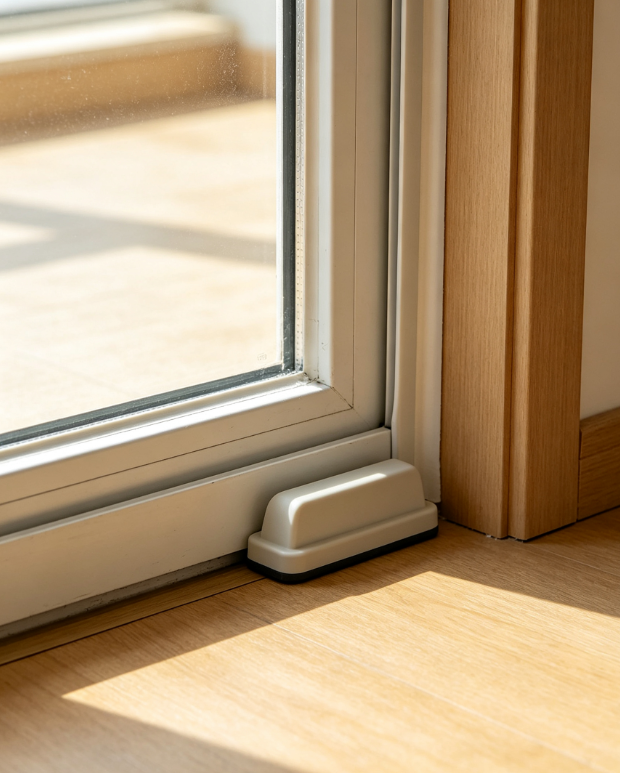
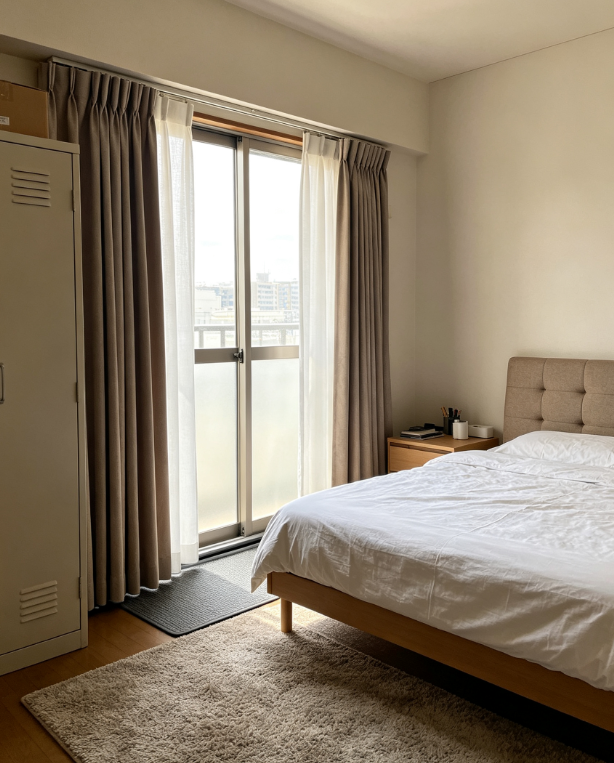
No-drill window soundproofing to block outdoor street noise. Windows are the largest noise leakage channel in rental units. Thin single-pane glass and loose window frames allow massive outdoor traffic noise, pedestrian sounds, and wind noise to penetrate indoors. Renters cannot replace glass or refit window frames, but temporary layered solutions greatly improve window sound insulation. Multi-layer thick thermal blackout curtains with dense fabric texture absorb high-frequency noise and block sound wave transmission. Removable window gap sealing strips seal tiny frame cracks that leak noise and wind. Portable window weatherstripping fills loose sash gaps without glue residue or surface damage. Combined window layering effectively reduces outdoor noise while being fully removable for move-out restoration.
Door gap sealing & hollow door noise improvement. Most rental interior doors and entry doors are hollow and poorly sealed, allowing hallway noise and indoor echo to spread freely. Permanent door replacement and drilled door bottom sealers violate lease rules, but renter-safe portable accessories fix noise leakage perfectly. Weighted door draft and noise stoppers block bottom door gaps, which are the main sound transmission openings. Removable self-adhesive door side sealing strips eliminate edge gaps to reduce sound leakage. Thick fabric door curtains cover hollow door surfaces, increasing sound absorption area and weakening noise resonance. All door noise reduction accessories peel off cleanly without damaging door paint or wood surfaces.
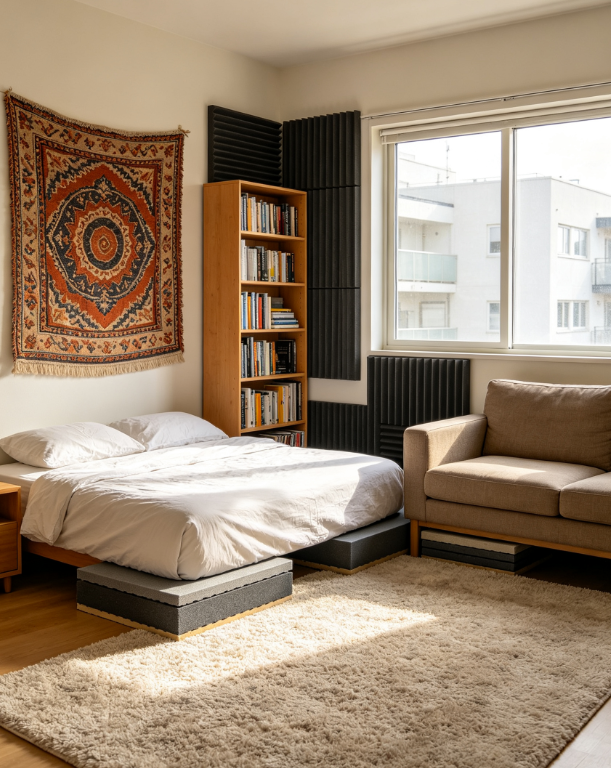
Wall sound absorption to reduce neighbor noise & echo. Thin bare drywall reflects and amplifies indoor noise, making neighbor conversations and indoor sounds more obvious. Renters cannot install permanent soundproof boards or drill wall insulation, but soft furnishing layering increases wall sound absorption effectively. Large fabric tapestries, thick wall hangings, and upholstered headboards attached to shared walls buffer sound transmission. Tall bookshelves and full-size storage cabinets placed against noisy walls form a physical sound insulation barrier. Soft textile wall decoration reduces indoor echo, making the entire room quieter even without professional renovation.
Floor vibration buffering for upstairs and indoor impact noise. Impact noise from upstairs residents is the most disturbing and hardest-to-block apartment noise. Bare hard floors also create echo and amplify indoor movement sound. Permanent floor soundproofing laying is not allowed for renters, but portable floor solutions weaken vibration transmission. Thick high-pile area rugs and non-slip rug pads cushion footsteps, furniture movement, and falling object noise. Furniture vibration isolation pads under table legs, sofa legs, and cabinet legs reduce friction noise and floor resonance. These simple, movable buffers greatly lower indoor impact noise and avoid disturbing neighbors below.
Small-space quiet layout & daily noise control habits. Reasonable furniture layout further optimizes apartment quietness. Avoid placing beds and work desks directly against shared noisy walls. Arrange tall furniture and soft fabric decorations on noise-facing sides to form natural sound barriers. Keep indoor space properly furnished instead of empty and bare, as empty rooms produce stronger acoustic echo. Reduce hard, smooth reflective surfaces and increase soft texture furnishings to absorb redundant noise. These free layout adjustments significantly improve overall indoor quietness without any cost or damage.
Move-out soundproofing full reset routine for inspection. Gently remove all window and door sealing strips to avoid paint peeling. Take down soundproof curtains, wall tapestries, and soft furnishings. Remove furniture vibration pads and rug pads. Wipe door and window frames to clear minor adhesive residue. Restore all walls, doors, windows, and floors to their original blank and intact state, ensuring no modification traces for landlord inspection.
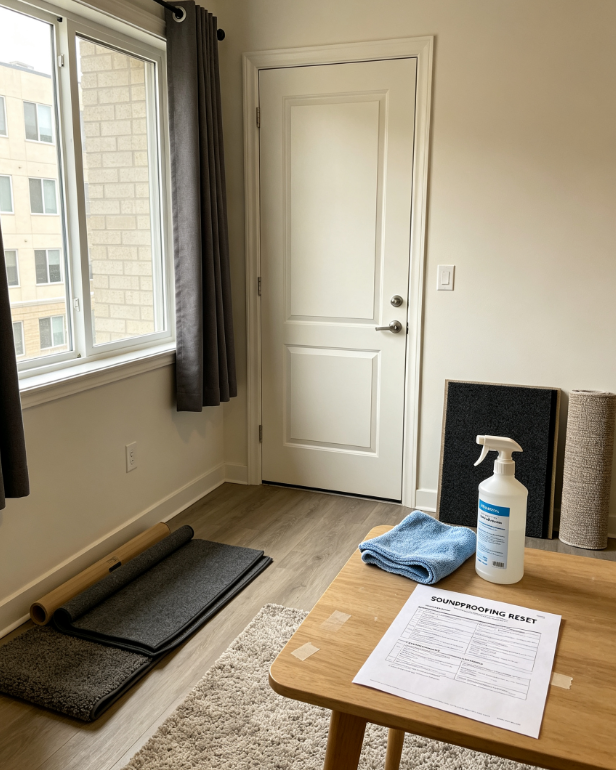
All soundproofing upgrades are 100% lease compliant. Every noise reduction strip, soft textile layer, vibration buffer, portable curtain, and layout adjustment requires no drilling, no permanent adhesion, no structural modification, no window or door replacement, and no wall repair. All soundproofing treatments are temporary, fully reversible, residue-free, and security-deposit safe.
Overall, renters do not need professional soundproofing renovation to create a quiet home environment. With window and door gap sealing, soft wall sound absorption, floor vibration buffering, and scientific room layout optimization, noisy apartment problems such as street noise, neighbor interference, indoor echo, and impact vibration can be greatly improved. These budget-friendly, non-damaging soundproofing hacks protect sleep quality and working concentration, create a calm living atmosphere, and fully comply with all rental lease agreements for a full security deposit refund.