Renter-Friendly DIY: Craft Adjustable Traceless Stoppers for Light-Leaking Rental Curtains
Introduction
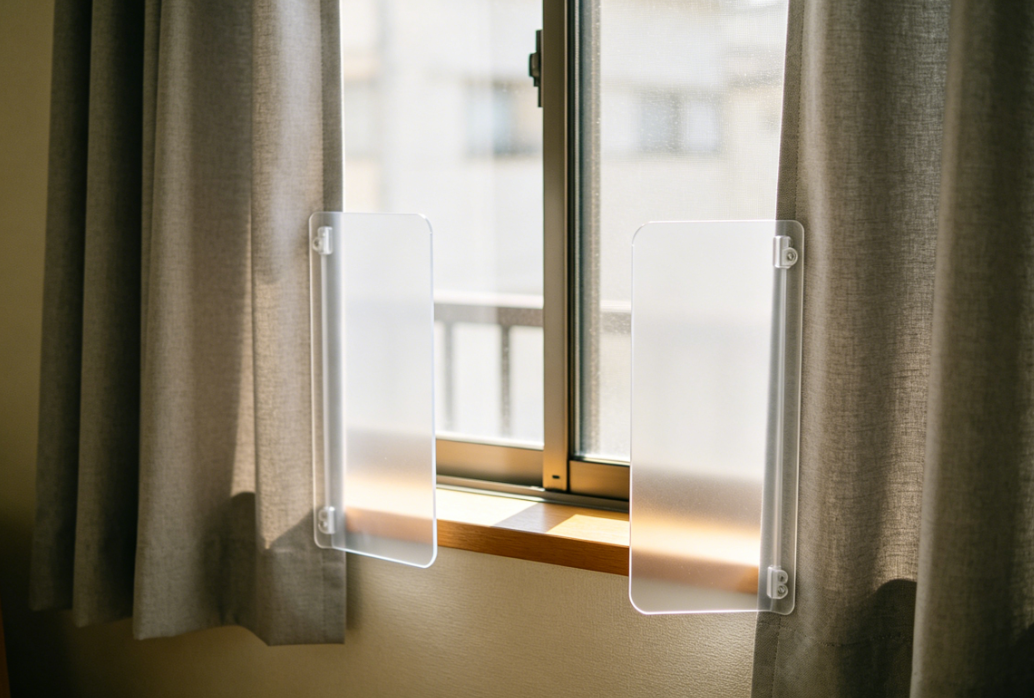
Most standard Japanese rental apartments are equipped with generic thin polyester curtains and narrow curtain rails. Due to low-cost hardware assembly, factory-installed curtains often leave noticeable vertical gaps beside window frames. Early morning sunlight, outdoor streetlights, and corridor brightness easily penetrate these slits, disrupting sleep cycles and compromising indoor privacy. Tenants are prohibited from drilling curtain walls, nailing fixed hooks, or applying permanent adhesive stickers that leave stubborn residue. Commercially sold curtain clips are usually rigid, oversized, and incompatible with slim Japanese curtain rails. Under such spatial and contractual limitations, a handmade adjustable traceless curtain side stopper becomes an optimal reversible solution. Made of soft transparent plastic sheets and mini silicone clamping parts, this tiny handmade tool seals light leakage gaps without damaging walls or fabrics. Beyond simple shading functions, this subtle accessory reflects the refined Japanese residential mindset: eliminating trivial light interference to stabilize indoor psychological comfort.
Design Concept of the DIY Curtain Stopper
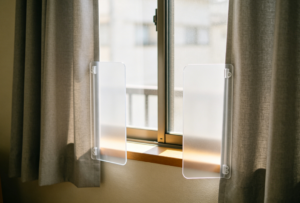
Unlike bulky decorative curtain fasteners that affect curtain folding, this handmade stopper adopts an ultra-thin embedded structure designed for narrow Japanese window frames. It follows three renter-oriented design principles: adjustable clamping strength, traceless contact, and invisible integration. Many Japanese rental windows have uneven frame edges and shallow rail grooves; the flexible plastic body fits irregular gaps without squeezing curtain fabrics. Instead of forcibly tightening curtains into rigid fixation, this soft accessory gently holds fabric against window edges to block scattered light. Its transparent appearance avoids visual clutter and maintains the plain minimalist interior tone of typical Japanese rental rooms.
Required Materials (Available at Japanese 100-Yen Shops)
- Semi-rigid transparent PET plastic sheet (thin bendable plate)
- Soft non-marking silicone anti-slip pads
- Mini transparent elastic tension rings
- Smooth rounded edge trimming sticker
- Precision round-tip cutting scissors
Step-by-Step Fabrication Process
Step 1: Measure Window Gap and Cut Plastic Blank
Observe the light-leaking gap between curtains and window frames. Most Japanese single windows produce a 5 to 12 millimeter vertical slit on both sides. Cut the transparent PET sheet into long strip-shaped blanks according to the gap height. The strip width is deliberately kept narrow to avoid protruding outside the window frame. Polish all sharp cutting edges with rounding stickers to prevent scratching delicate curtain fabrics and soft wall paint. The transparent PET material is chosen for its weather resistance and invisible visual effect.
Step 2: Fold into Elastic Clamping Structure
Manually fold the flat plastic strip into a slim C-shaped clamping groove. The folding angle is controlled moderately to generate mild natural clamping elasticity. Excessively tight folding may deform curtains, while overly loose bending fails to fix fabrics steadily. Reserve a tiny upper opening for easy insertion into curtain rails. The integrated bending structure requires no extra screws, realizing one-piece lightweight fixation.
Step 3: Attach Silicone Anti-Slip Pads
Paste mini silicone anti-slip pads on the inner contact surface of the C-shaped groove. These soft buffer points increase friction between plastic and curtain fabric, preventing slow sliding caused by wind vibration. The matte silicone also avoids leaving indentation marks on thin polyester curtains. During dry winter seasons, the insulating silicone reduces static friction and prevents fabric from sticking to plastic surfaces.
Step 4: Install Tension Rings and Complete Assembly
Fix transparent elastic tension rings on the outer side of the plastic clip. These adjustable rings fine-tune clamping pressure according to fabric thickness. Hang the finished stopper directly on the curtain rail and insert the curtain edge into the C-shaped groove. Gently pull the fabric to test fixation stability; the entire installation requires no glue, drilling, or wall modification. All components can be detached and stored flat during moving out.
Daily Usage and Functional Advantages
This handmade curtain stopper effectively eliminates edge light leakage in compact rental bedrooms. It seals scattered light slits to realize complete blackout effects, improving sleep quality during bright Japanese summer mornings. The soft non-slip structure protects thin curtain fabrics from tearing and deformation. At night, it blocks outdoor streetlamp glare and enhances indoor privacy for ground-floor apartments. In humid seasons, the hollow clamping gap maintains air circulation to prevent mildew growth on damp curtain edges. All transparent accessories blend naturally with interior decoration without destroying room simplicity.
Broader Reflection: Refining Boundaries Between Light and Space
Mass-produced rental curtains prioritize low cost over precise fitting, inevitably leaving uncomfortable light gaps. These trivial luminous slits subtly break indoor darkness and disrupt the sealed sense of private space. This tiny handmade clip represents a delicate correction to standardized industrial products. Tenants do not replace curtains or refit window frames; instead, they create miniature elastic fixtures to repair flawed spatial boundaries.
Moreover, the folding and polishing process cultivates subtle sensitivity to light. Modern urban dwellers are constantly disturbed by uncontrolled artificial light and sunrise glare. Cutting transparent plates and adjusting clamping tension encourage renters to recognize invisible light pollution in daily housing. This miniature handmade intervention reshapes dim, stable and controllable private darkness.
Conclusion
The DIY transparent curtain side stopper embodies meticulous shading wisdom for Japanese renters. With invisible transparent materials, simple folded structures, and traceless hanging installation, it solves light leakage, fabric slipping, and privacy exposure problems. It protects rental curtains and wall surfaces without leaving post-move damage. In uniformly manufactured temporary apartments, this tiny plastic clip proves that living comfort does not depend on expensive customized curtains. Through subtle handmade refinement, renters repair flawed window boundaries, stabilize indoor light environment, and build quieter, darker and safer private resting corners in borrowed Japanese residences.