Renter-Friendly DIY: Craft a Layered Silent Anti-Vibration Mat for Household Appliances
Introduction
The majority of compact Japanese rental apartments feature thin wooden flooring and lightweight drywall structures. Household appliances such as mini-refrigerators and compact washing machines continuously generate low-frequency vibration during operation. These subtle mechanical tremors transmit across hollow floorboards, creating resonant humming noise that disturbs sleep and annoys neighboring residents. Moreover, sustained pressure and friction leave permanent dents and scratch marks on delicate wooden floors, resulting in expensive compensation fees during move-out inspections. Since tenants are prohibited from bolting heavy equipment or installing fixed shock-absorbing bases, vibration noise and floor damage remain persistent troubles. Under such spatial and contractual constraints, renters can create a multi-layered silent anti-vibration mat. Composed of dense foam, rubber buffer sheets and textured non-slip fabric, this handmade base weakens mechanical resonance and disperses heavy pressure. Beyond noise reduction, this simple tool reflects restrained Japanese living philosophy: minimizing vibration interference to maintain subtle domestic tranquility within dense urban buildings.
Design Concept of the DIY Vibration Mat
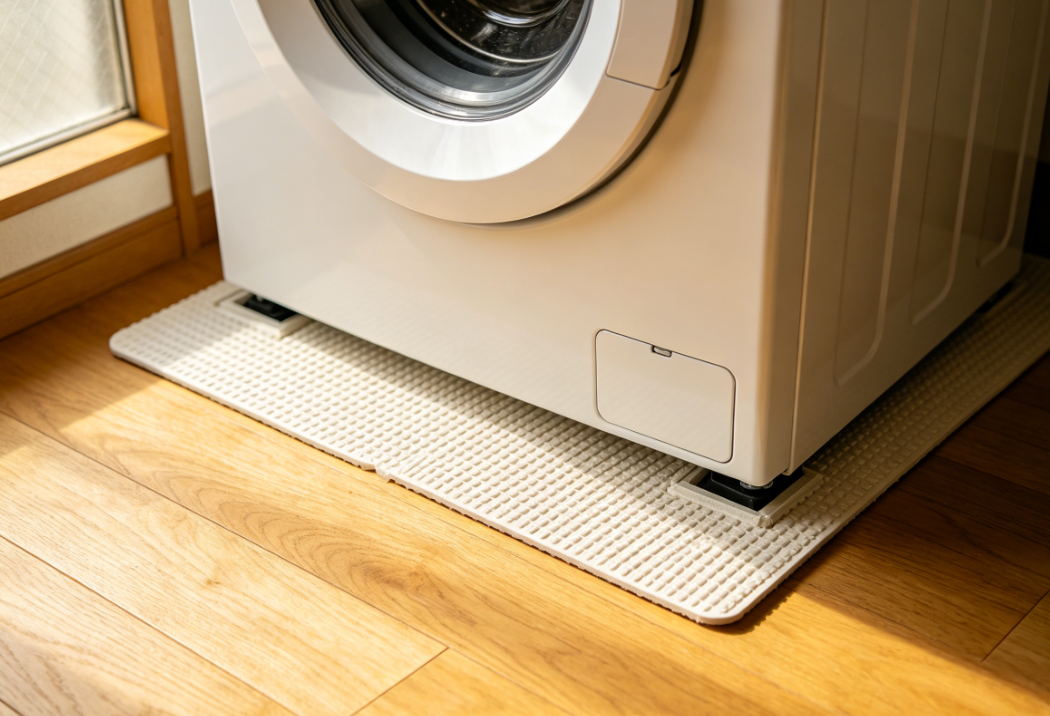
Unlike thin single-layer commercial mats with limited shock absorption, this handmade appliance mat adopts a composite sandwich structure customized for lightweight Japanese rental architecture. It follows three renter-oriented design principles: resonance damping, pressure dispersion, and traceless placement. Thin wooden floors are extremely sensitive to low-frequency vibration; thus, layered soft materials are applied to intercept tremors step by step. Instead of rigidly fixing vibrating machines, this flexible buffer absorbs kinetic energy and converts mechanical shaking into harmless subtle deformation. Its neutral muted tone blends naturally with gray and beige home interiors commonly seen in Japanese standard apartments.
Required Materials (Available at Japanese 100-Yen Shops)
- High-density shock-absorbing EVA foam sheet
- Thick black natural rubber non-slip pad
- Matte textured cotton isolation fabric
- Removable invisible adhesive dots
- Round-head safe cutting scissors
Step-by-Step Fabrication Process
Step 1: Measure Appliance Feet and Cut Rubber Base
Measure the spacing and size of the supporting feet on refrigerators or washing machines. Most Japanese mini-home appliances have four compact plastic feet that concentrate pressure on tiny floor areas. Cut the thick rubber sheet into a slightly oversized rectangular base. The expanded surface enlarges the bearing area and reduces local indentation on soft wooden floors. Trim all edges into smooth rounded corners to prevent accidental tearing during daily movement. The tough rubber layer serves as the stable bottom foundation of the entire shock-absorbing structure.
Step 2: Cut Foam Buffer Interlayer
Slice the high-density EVA foam into the same contour as the rubber base. The porous foam structure contains countless tiny air cavities that effectively weaken low-frequency vibration. Different from hard plastic plates, elastic foam undergoes gentle compression to buffer intermittent mechanical shaking. Align the foam sheet perfectly on top of the rubber layer to ensure uniform force distribution without uneven tilting. This dual-layer combination achieves both toughness and elasticity.
Step 3: Cover Surface with Isolation Fabric
Wrap the composite mat with matte cotton isolation fabric. The textured cotton surface increases friction between the mat and appliance feet, preventing slow sliding caused by long-term vibration. The breathable fabric also blocks fine foam debris and prevents dust accumulation inside layered gaps. In humid Japanese seasons, the cotton layer absorbs minor moisture and prevents direct condensation contact between cold appliances and the mat.
Step 4: Fix Layers and Test Stability
Bond each layer with removable adhesive dots instead of permanent liquid glue. These subtle connection points maintain layered integrity while allowing future disassembly and cleaning. Place the finished composite mat under household appliances and adjust the horizontal balance. Run the machine for three minutes to observe vibration amplitude and noise transmission. The entire production process requires no drilling, nails or permanent modification, fully complying with Japanese rental restoration clauses.
Daily Usage and Functional Advantages
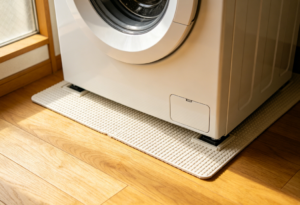
This handmade anti-vibration mat brings invisible comfort to narrow rental living spaces. The sandwich structure intercepts most low-frequency resonance, lowering humming noise transmitted through floorboards. It prevents heavy appliances from sliding slowly during dehydration or compression cycles. The pressure-dispersing layers eliminate floor indentations and scuff marks, effectively avoiding move-out deductions. In summer humid environments, the raised mat gap enhances bottom air circulation, preventing mold growth under sealed appliances. When relocating, the lightweight mat can be disassembled, cleaned, and folded flat for storage.
Broader Reflection: Gentle Isolation in Dense Residences
Japanese urban apartments are densely stacked together, turning every subtle household vibration into shared public noise. Modern standardized home appliances generate unavoidable mechanical tremors, while thin building structures lack natural sound insulation. This handmade layered mat represents a humble solution to urban acoustic conflict. Tenants do not change building materials or disassemble machines; instead, they build a soft physical isolation layer between equipment and floors.
Furthermore, the simple stacking process cultivates delicate spatial awareness. People are often conscious of loud noise yet ignore faint low-frequency vibration that fatigues the human body. Cutting rubber, stacking foam, and wrapping fabric encourage renters to focus on invisible mechanical interference in daily life. This trivial handmade behavior transforms noisy vibrating corners into stable quiet zones.
Conclusion
The DIY silent anti-vibration mat embodies considerate acoustic living wisdom for Japanese renters. With layered shock-absorbing materials, simple assembly procedures, and traceless placement, it solves appliance vibration, resonant noise, and permanent floor damage. It protects rental facilities, reduces neighbor disturbance, and improves indoor sleeping quality. In densely constructed temporary apartments, this compact composite mat proves that domestic comfort does not rely on expensive soundproof renovation. Through subtle handmade buffering, renters isolate mechanical tremors, ease urban acoustic conflicts, and maintain quiet, stable and gentle living environments in crowded Japanese residential buildings.