Renter-Friendly DIY: Craft a Breathable Moisture Isolation Tray for Japanese Rental Wardrobes
Introduction
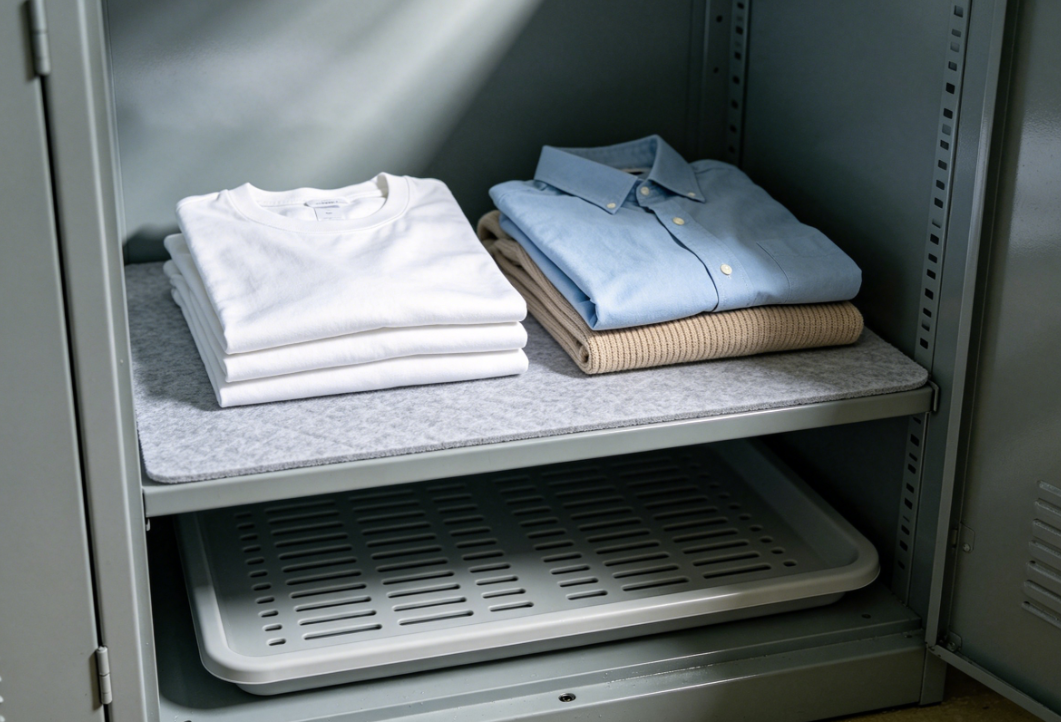
Most Japanese rental apartments are equipped with thin metal wardrobes or compact wooden closets with poor internal ventilation. During the prolonged rainy tsuyu season and damp winter nights, trapped moisture accumulates at the wardrobe bottom, causing musty odors, dark mold spots, and yellow stains on folded garments. Commercial dehumidifier boxes are bulky, rigid, and prone to water leakage, which may leave permanent corrosion marks on metal wardrobe plates. Since tenants are forbidden to drill holes, install fixed ventilation equipment, or modify internal structures, damp closets become an unavoidable seasonal trouble. Under such constraints, renters can manually build a layered breathable moisture isolation tray. Made of hollow plastic sheets and absorbent cotton mats from Japanese 100-yen stores, this low flat tray collects condensed water, circulates stagnant air, and isolates damp floor moisture. Beyond dehumidification, this handmade tray reflects Japan’s subtle residential awareness: defending invisible corners before mold and deterioration occur.
Design Concept of the DIY Moisture Tray
Unlike sealed commercial dehumidifying containers, this handmade moisture tray adopts a hollow layered structure customized for shallow Japanese wardrobe bottoms. It follows three renter-oriented design principles: passive air circulation, water-absorbing isolation, and non-damaging placement. Many old rental wardrobes directly contact cold ground, generating temperature differences that produce invisible condensation. The double-layer hollow design creates a tiny airflow gap to separate clothing from cold surfaces. Instead of relying on chemical desiccants alone, this physical isolation tool slows down moisture accumulation, forming a mild long-term defense system inside the enclosed closet.
Required Materials (Available at Japanese 100-Yen Shops)
- Hard hollow corrugated plastic sheet (waterproof hollow board)
- Thick water-absorbing cotton mat (reusable drying pad)
- Mini transparent silicone supporting feet
- Breathable non-woven isolation fabric
- Round-head safe cutting scissors
Step-by-Step Fabrication Process
Step 1: Measure Wardrobe Base and Cut Plastic Board
Measure the horizontal bottom area of the rental wardrobe. Most Japanese single-person wardrobes have narrow rectangular bases with limited clearance. Cut the corrugated plastic sheet into a flat tray shape slightly smaller than the wardrobe floor. The hollow corrugated structure contains natural air channels to enhance passive ventilation. Trim all sharp edges into smooth arcs to prevent scratching metal wardrobe paint and fabric textiles. The waterproof plastic base never absorbs water, ensuring long-term structural stability in humid environments.
Step 2: Paste Silicone Support Feet for Hollow Gap
Attach four to six transparent silicone feet evenly on the bottom of the plastic board. These tiny elastic supports lift the tray 3 to 5 millimeters above the wardrobe floor. The reserved gap allows dark air to circulate freely, reducing cold conduction between the ground and stacked clothes. Compared with fully flat placement, this suspended structure effectively avoids concealed moisture accumulation in stagnant bottom corners.
Step 3: Lay Water-Absorbing Cotton Mat
Cut the thick cotton drying mat to fit the upper surface of the plastic tray. The high-density cotton material instantly absorbs floating moisture and faint condensed water inside the closed wardrobe. Wrap the cotton mat with breathable non-woven fabric to prevent cotton fibers from shedding and sticking to clean garments. The soft mat also buffers hard friction between folded clothes and the rigid plastic board, protecting fabric textures from indentation and abrasion.
Step 4: Test Air Permeability and Internal Stability
Place the finished flat tray gently at the wardrobe bottom. Press the surface lightly to check the adhesion of silicone feet and the flatness of the cotton mat. Leave a small gap between the tray and wardrobe walls to maintain side air convection. The entire production process requires no glue, electricity, or permanent fixation. The traceless placed tray can be taken out, cleaned, and dried repeatedly, fully complying with Japanese rental moving-out regulations.
Daily Usage and Functional Advantages
This handmade moisture tray greatly improves the internal environment of damp rental wardrobes. The suspended hollow structure accelerates hidden air circulation and suppresses mold spore reproduction during humid seasons. The water-absorbing cotton mat continuously captures invisible water vapor, eliminating unpleasant musty odors in enclosed storage spaces. In dry winter months, the tray can be filled with dried lavender or silica gel to maintain a faint fresh scent. When cleaning is needed, users simply lift the lightweight tray and shake off dust; no complicated disassembly is required. All materials are reusable, perfectly matching the temporary living rhythm of young Japanese renters.
Broader Reflection: Defending the Invisible Domestic Microclimate
Japanese compact living spaces concentrate temperature difference, humidity, and poor ventilation into tiny enclosed furniture. Standard mass-produced wardrobes only focus on storage capacity while ignoring invisible moisture circulation. This handmade layered tray represents a quiet correction to indifferent industrial furniture. Tenants do not change wardrobe structures; instead, they build a miniature breathable buffer at the bottom.
Furthermore, this simple production process cultivates subtle environmental awareness. People often focus on visible dust and stains while ignoring invisible moisture eroding clothing. Cutting boards, pasting supports, and wrapping cotton mats remind renters to observe hidden microclimates inside furniture. This trivial handmade action turns dark enclosed wardrobes into stable, dry storage spaces.
Conclusion
The DIY breathable moisture isolation tray interprets minimalist moisture-proof wisdom for Japanese renters. With waterproof hollow materials, layered breathable structures, and traceless physical placement, it solves wardrobe condensation, clothing mildew, and musty odor troubles. It protects rental furniture from corrosion and preserves the quality of daily garments without causing any rental damage. In damp, confined temporary living spaces, this flat lightweight tray proves that domestic protection does not rely on heavy electrical dehumidifiers. Through gentle handmade optimization, renters stabilize invisible humidity, build dry microclimates inside closed furniture, and maintain long-term cleanliness in their borrowed Japanese apartments.