Small Balcony Storage: Honest Renter Solutions After Testing Popular Failed Organizers
Why Tiny Rental Balconies Always Feel Crowded and Disorganized
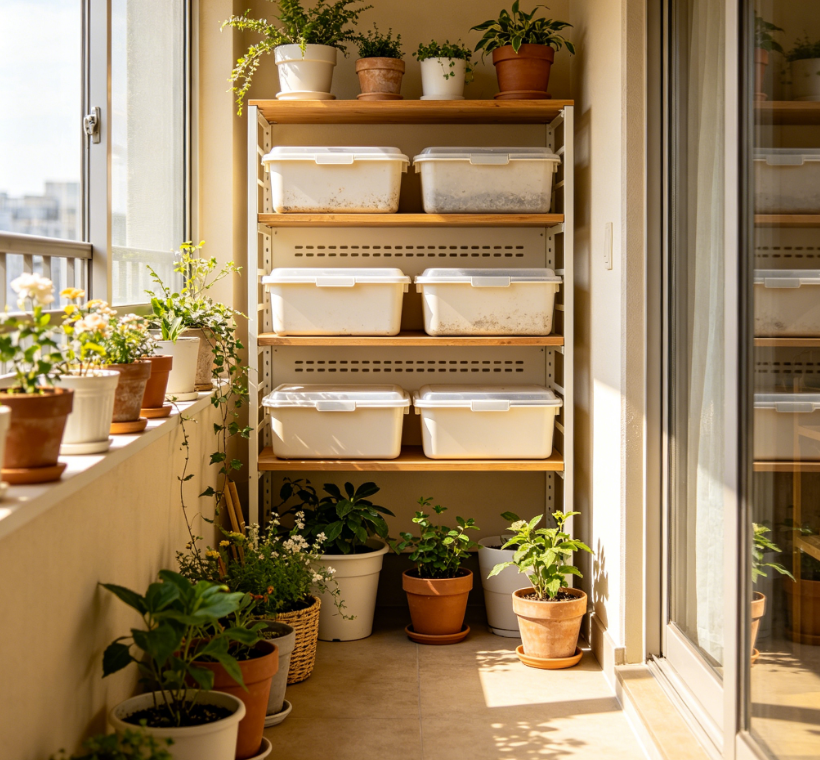
Anyone who rents city apartments knows how unforgiving small balconies can be. These narrow outdoor spaces usually serve as a catch-all zone for random household items: cleaning tools, spare household supplies, seasonal accessories, and random bulky odds and ends. My current balcony is a standard compact rental layout, with a dedicated storage nook beside the balcony railing that I measured carefully for my organizing trials. The enclosed corner storage area features internal dimensions of 110cm wide, 35cm deep, and 180cm tall, a shallow and narrow space typical of high-rise apartment balconies.
For a long time, I struggled to keep this area functional. Items piled up vertically, bulky tools blocked walking space, and small accessories slipped behind larger containers, turning the whole nook into a disorganized mess. I used to spend weekends sorting everything out, only for clutter to build back within weeks. It was not until I tested and abandoned two trending balcony storage products that I realized most mainstream organizers are designed for spacious, covered balconies. They do not account for shallow depth, outdoor wind exposure, and dust buildup that comes with standard urban rental balcony environments.
Two Popular Balcony Storage Products That Failed Real-World Use
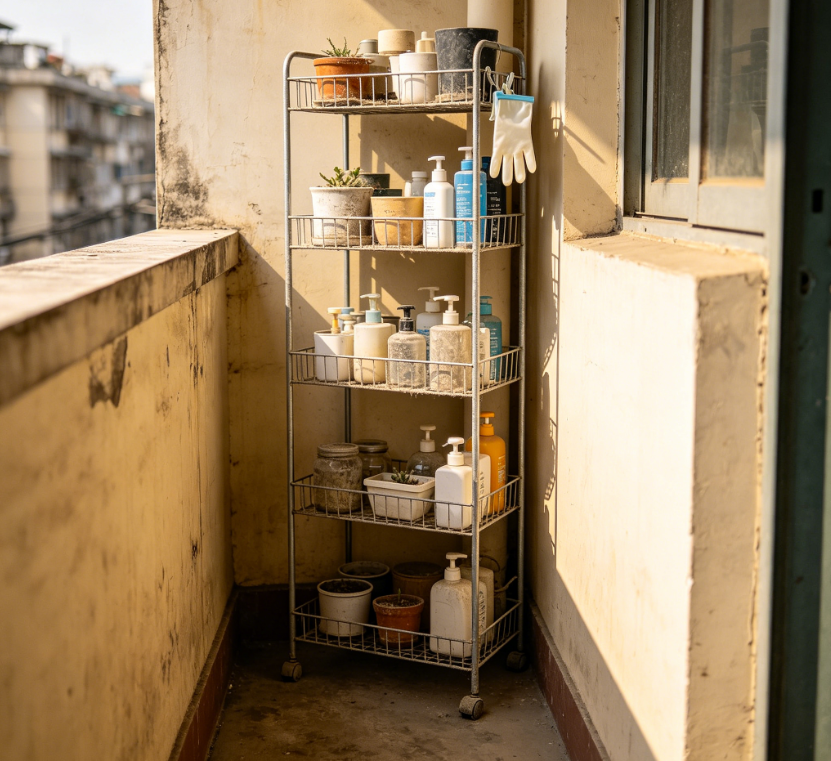
The first product I invested in was a tall open wire shelving unit, widely shared for small balcony organization. It featured five open layers and seemed ideal for sorting balcony cleaning supplies, spare towels, and gardening tools. The unit’s advertised depth is 40cm, which looked close to my 35cm deep storage nook. I thought the slight difference would fit with minor adjustment, but daily use brought constant, annoying conflicts.
The 40cm depth made the unit protrude 5cm outward from my shallow nook. It blocked part of the narrow balcony walkway and sat too close to the railing. On windy days, light stored items like plastic gloves and small cloths would blow off the shelves easily. The open wire structure also offered zero protection against outdoor dust and light seasonal mist. Every item on the shelves collected surface dust quickly, requiring frequent wiping. After two months, I disassembled the unit, as it sacrificed walking space and created more cleaning work than organizational value.
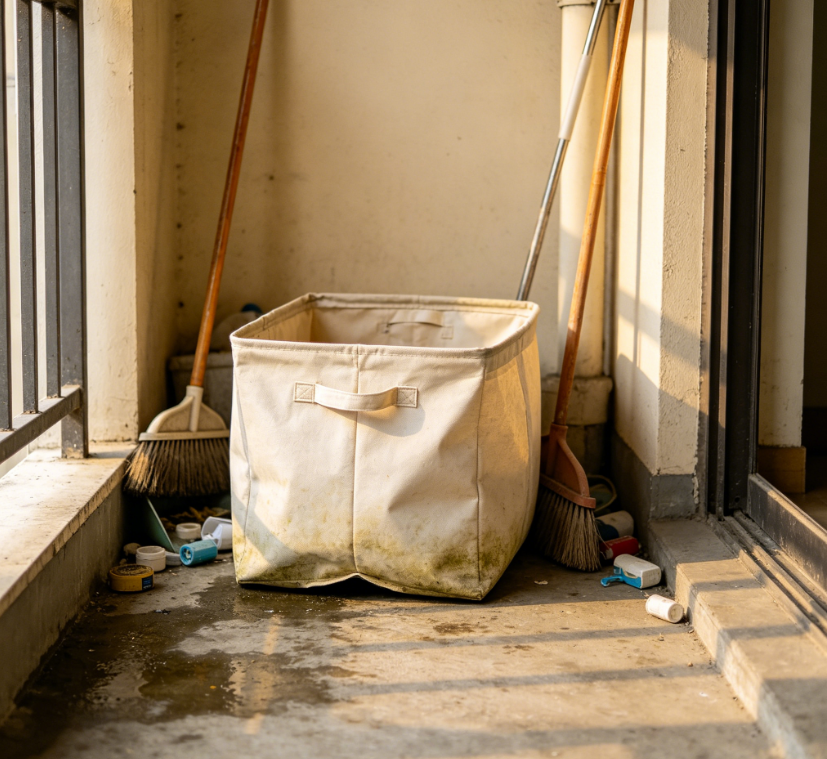
I also tried a large fabric waterproof storage cube with a foldable design, another common renter-friendly balcony solution. It was soft, lightweight, and easy to move around, which felt suitable for flexible balcony storage at first. I used it to store seasonal slippers, spare cleaning sponges, and backup laundry supplies. Its main flaw showed up with temperature changes and long-term outdoor ventilation.
The thick waterproof fabric traps residual moisture inside the sealed cube. Even on dry days, balcony air circulation is limited, and items stored inside would hold subtle dampness. After a couple of months, faint musty smells developed inside the cube, and the bottom fabric panel started deforming under the consistent weight of stacked items. The soft structure also lacked rigidity, so stacking multiple cubes caused tilting and unstable placement. It could not hold long-handled tools either, leaving my brooms and dustpans leaning randomly against the wall.
My Stable, Space-Adaptive Balcony Storage Layout
After removing those two impractical storage setups, I rebuilt my balcony nook system based on its actual shallow depth and semi-outdoor environment. I prioritized wind resistance, dust prevention, and space compatibility instead of maximum storage layers, creating a low-maintenance layout that fits rental balcony limitations.
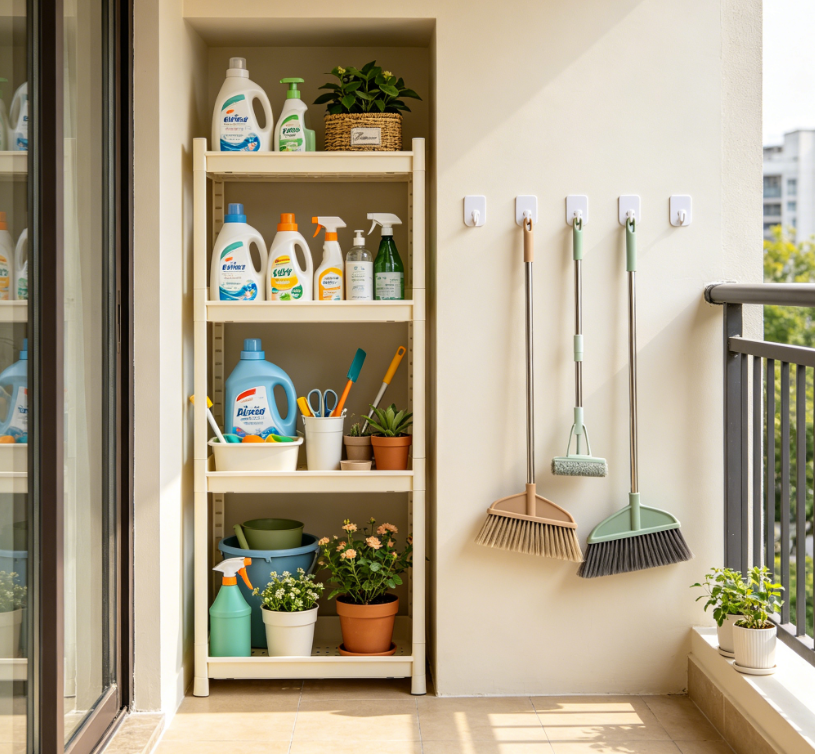
I replaced the deep wire shelf with a custom 34cm shallow four-layer plastic shelving unit. The compact depth fits fully inside the 35cm nook, leaving a tiny buffer gap for air circulation without blocking balcony passage. I assigned fixed categories to each layer to avoid random stacking. The top two layers hold lightweight spare supplies: laundry pods, cleaning tablets, and disposable dust cloths. The middle layer stores folded seasonal household textiles, while the bottom sturdy layer holds heavier items like spray cleaners and compact gardening tools. The hard plastic surface resists dust adhesion better than wire frames and wipes clean in seconds.
For long-handled tools like brooms, mops, and window scrapers, I installed four heavy-duty adhesive wall hooks on the blank side wall of the nook. Hanging tall tools vertically eliminates the messy leaning issue and frees up shelf space entirely. I also swapped the mold-prone fabric cubes for small hard plastic lidded bins. Each bin sits neatly on the shelf layers, sealing out dust and mild balcony humidity. I use one bin for seasonal accessories and another for small repair tools and hardware parts.
Objective Pros and Cons of This Balcony Storage System
This tailored layout works well for shallow, semi-outdoor rental balcony nooks. The shallow shelving design preserves walking space without protruding into balcony activity areas. Lidded bins and hard shelf surfaces reduce dust accumulation and slow moisture buildup, cutting down frequent deep cleaning work. Adhesive hooks require no drilling or wall damage, complying with standard rental renovation rules. The categorized layered structure also makes item retrieval faster, reducing the chance of messy rummaging.
This setup still has noticeable limitations. Shallow shelves cannot accommodate extra-large bulky items like full-size storage buckets or oversized gardening pots, requiring temporary placement elsewhere for bulky goods. Hard plastic bins add more individual pieces to organize during seasonal cleaning. Adhesive hooks will gradually lose grip after long-term exposure to outdoor wind and temperature shifts, needing occasional inspection and reattachment. This system also does not fully prevent moisture during rainy seasons, so extra waterproof covers are necessary on extremely humid days.
Small Renter Habit That Reduces Long-Term Balcony Clutter
Most balcony clutter accumulates from unregulated item accumulation, not poor storage design. Renters often treat balconies as temporary dumping zones for unused household items, which slowly overfills organized storage spaces.
I stick to a simple sorting routine every month. I check all stored balcony items and remove anything unused for more than three months. Discarding or relocating idle items prevents slow overstocking that overwhelms shelf capacity. I also wipe down shelf surfaces and bin exteriors during monthly checks to clear accumulated dust. This brief routine keeps the storage zone stable and organized without heavy weekly maintenance.
After years of testing viral balcony storage hacks, I’ve learned small rental balcony organization works best when it respects spatial and environmental limits. Semi-outdoor, shallow balcony spaces need wind-resistant, dust-proof, low-profile setups. Simple, adaptive storage strategies always maintain better long-term functionality than trendy but ill-fitting universal organizers.