Lifelike Home Storage Tips That Work for Ordinary House Owners
Most home storage advice online caters to perfectly tidy, staged homes that do not reflect real family life. For regular homeowners, clutter always bounces back, storage spaces feel inefficient, and many popular organizing tricks feel too rigid to keep up with daily living. Busy work schedules, kids, pets, and accumulated daily items make it hard to maintain magazine-perfect organization. This article collects the ten most common storage questions from ordinary homeowners, offering down-to-earth, actionable solutions. Every tip comes with honest limitations and real drawbacks, so readers can build sustainable storage habits instead of chasing unrealistic perfection.
1. Why does my house get messy again just days after thorough organization?
The main cause is unreasonable item placement rather than poor cleaning habits. Most people organize their homes for visual neatness, hiding daily-use items in high shelves or deep cabinet corners. When everyday items are hard to reach, family members will casually place them on tables, countertops or floors for temporary use, creating recurring clutter. The simplest fix is sorting items by usage frequency. Keep daily necessities at hand height, store weekly used items in regular cabinets, and put seasonal items in high or hidden storage areas. A quick five-minute tidying before bed can effectively prevent small messes from accumulating.
Limitations: This method relies on full family cooperation. If some family members do not follow fixed placement rules, clutter will quickly return. Besides, it cannot solve the problem of excessive household items or insufficient overall storage space.
2. Will buying more storage containers solve household clutter fundamentally?
More storage boxes and bins will never eliminate clutter at the root. Many homeowners fall into the trap of purchasing various storage tools first, then filling empty containers with useless idle items, turning visible mess into hidden clutter. The correct order is decluttering first and storing later. Regularly sort out broken, expired and unused items, donate or discard them in time, and use basic classified containers to organize the remaining daily items.
Limitations: Ordinary universal storage containers cannot fit irregular cabinet gaps and special-shaped spaces. Stacked bins will bury bottom items, making them easy to forget. Low-cost plastic containers are also prone to deformation and aging after long-term storage of heavy items.
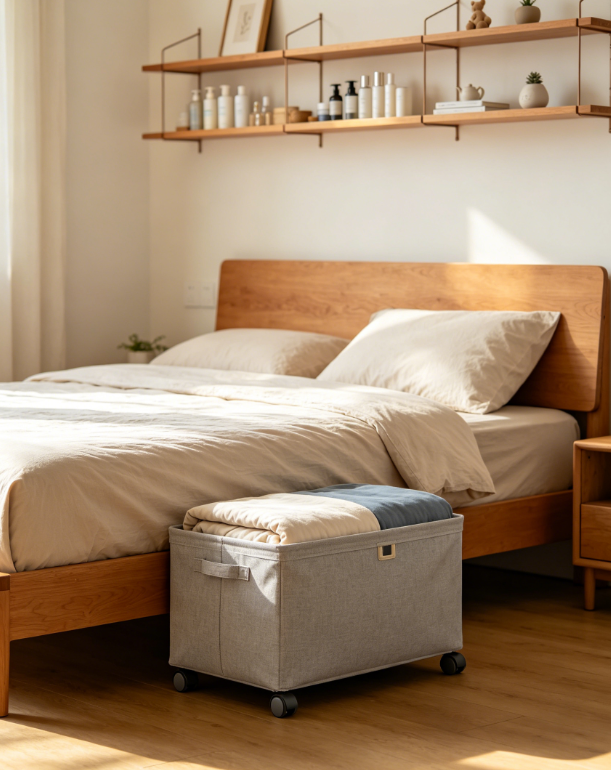
3. How to organize a small bedroom with no built-in closet?
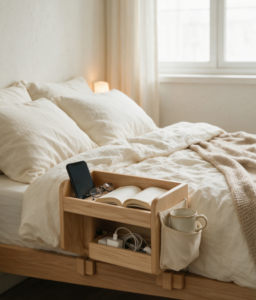
For closet-free small bedrooms, the core of storage is to tap hidden and vertical dead space. Install slim wall floating shelves to place skin care products, ornaments and small sundries. Use under-bed rolling drawers to store off-season clothes, quilts and pillows. Equip over-the-door hanging organizers for daily shoes, socks and hats. Try to only display clothes worn within a week to avoid overcrowding limited room space.
Limitations: Door organizers affect door opening angles and cannot bear heavy clothes. Most rental houses prohibit wall drilling, limiting the use of wall shelves. Under-bed storage drawers easily gather dust and require frequent cleaning.
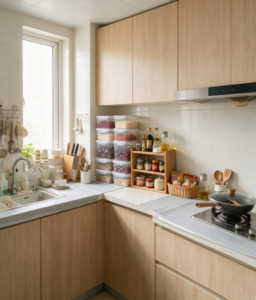
4. How to tidy up and optimize crowded kitchen cabinets?
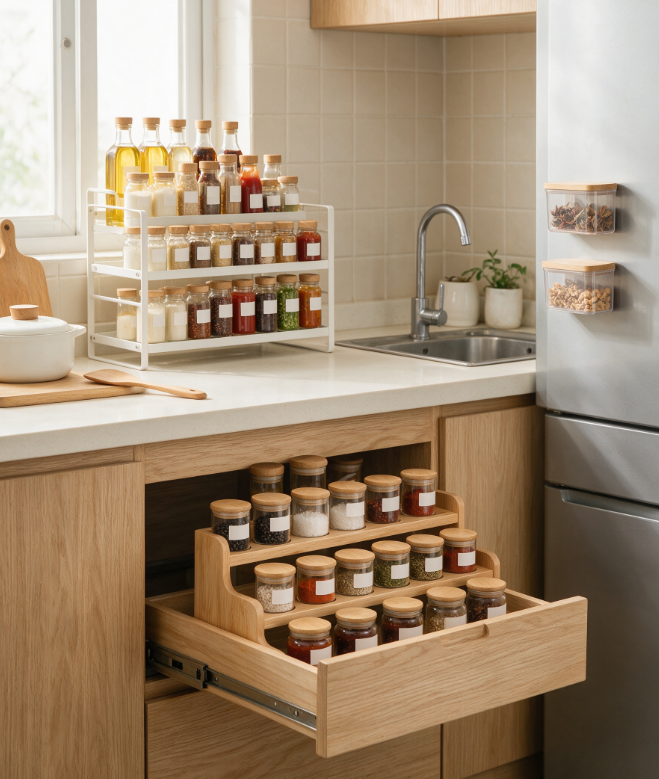
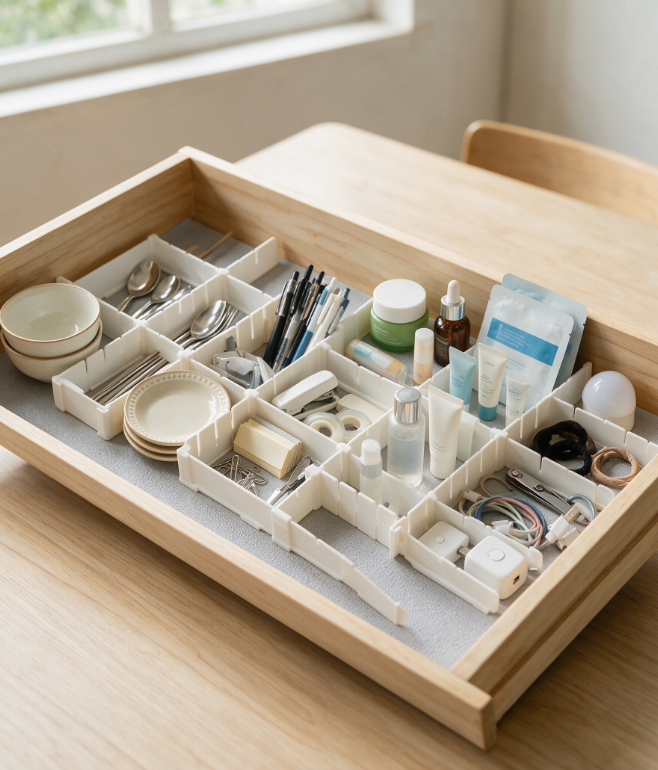
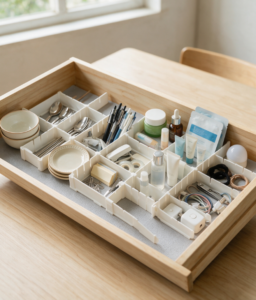
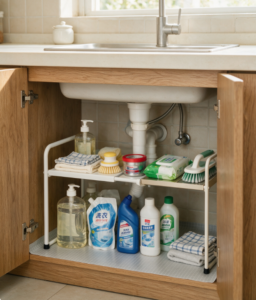
Many people classify kitchen items by category, which leads to frequent cross-room taking and messy placement. The most practical way is zone-based storage. Place cooking tools and seasonings near the stove, tableware near the dining area, and cleaning supplies under the sink. Use simple shelf risers to expand vertical cabinet space, and use small dividers to sort scattered utensils. Clean up expired condiments and duplicate kitchen gadgets every three months.
Limitations: Shelf risers occupy vertical height and are not suitable for tall bottles and large containers. Items stored in deep cabinet corners are difficult to access and are often left unused for a long time.
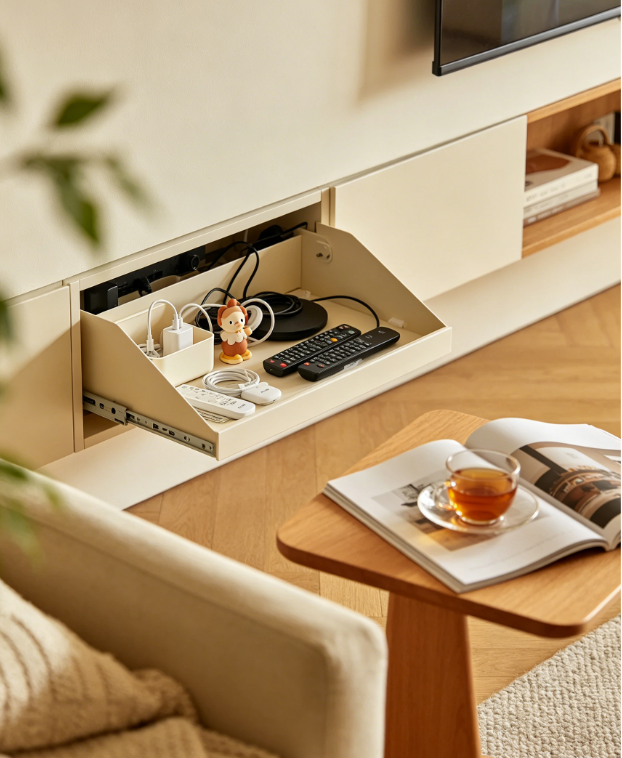
5. Is customized built-in storage worthy for ordinary families?
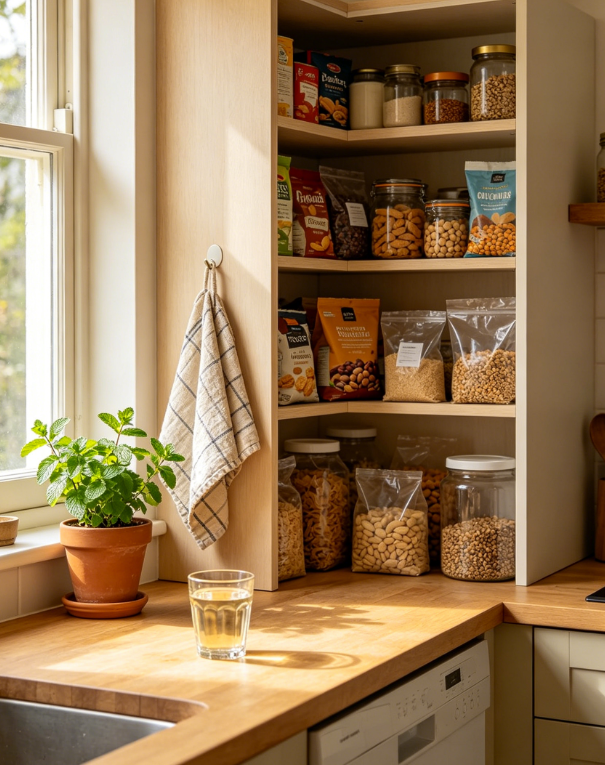
Custom storage can make full use of awkward wall corners and narrow gaps that finished furniture cannot adapt to. I installed a set of customized shallow storage cabinets on my idle living room wall last year. It perfectly solved the problem of scattered placement of remote controls, charging devices and daily sundries, making the whole space much neater without occupying extra floor area.
Limitations: Custom storage costs far more than ordinary finished shelves. It is fixed and cannot be moved or adjusted. Once you move or redecorate, it cannot be reused, resulting in certain waste.
6. How to improve persistent entryway shoe clutter?
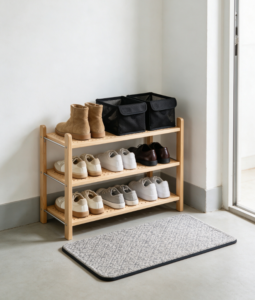
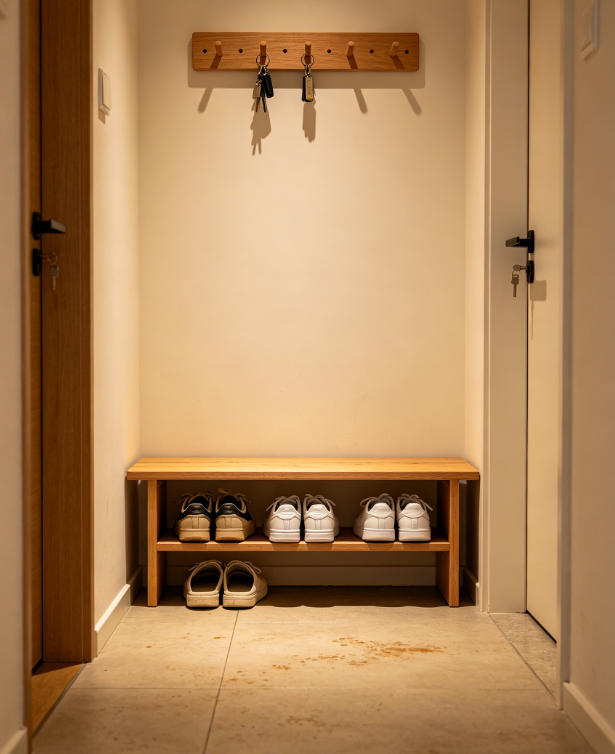
The key is to strictly control the number of exposed shoes. Only reserve one or two pairs of daily wear shoes for each family member at the entryway, and store all seasonal boots, sports shoes and occasional shoes in closed cabinets. I used to pile dozens of shoes at the door, making the entryway crowded and dusty. After sticking to this simple rule, my entryway has maintained a clean and tidy state with little daily effort.
Limitations: Slim shoe racks cannot store bulky winter boots. Exposed shoe storage is easy to accumulate dust and cannot save space for ultra-small entryways.
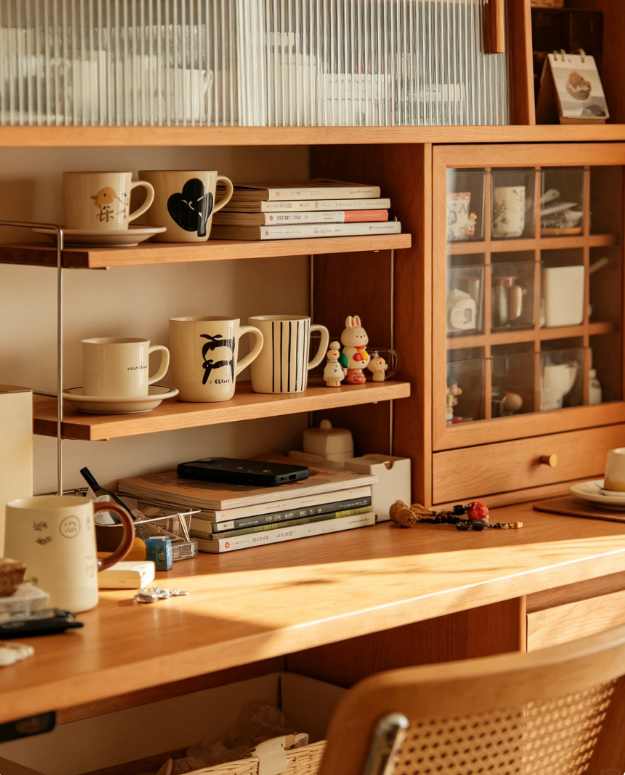
7. Are open shelves or closed cabinets more suitable for home use?
Both storage forms have their own applicable scenarios. Open shelves are suitable for frequently used items such as water cups, books and ornaments, with convenient access. Closed cabinets are more suitable for storing messy sundries, cleaning supplies and dust-prone items. A reasonable combination of the two is the most practical choice for ordinary family homes.
Limitations: Open shelves need regular dusting and are easy to look messy if placed randomly. Closed cabinets waste deep internal space and have higher installation and maintenance costs.
8. How to keep home tidy for a long time with low maintenance?
Long-term neatness depends on simple daily routines rather than one-time deep cleaning. Fix a dedicated storage position for every item at home, and form the habit of putting things back in place after use. Stick to a 5-minute nightly reset, and conduct a comprehensive seasonal sorting every three months to clear accumulated idle items. Avoid blind impulsive consumption to reduce unnecessary household clutter.
Limitations: The effect depends on long-term family habit persistence. Busy work and sudden schedules will still cause slight clutter accumulation, requiring regular centralized sorting.
To sum up, good home storage is never about stuffing more items into limited space. It is about building simple, adaptable and sustainable storage systems that fit real family life. Recognizing the shortcomings of various storage methods helps homeowners arrange their space rationally and maintain a comfortable and livable home environment all year round.