The Ultimate Bathroom Deep Cleaning Guide: Eliminate Mold, Odors, and Limescale
The bathroom is the wettest, most humid, and highest-risk hygiene area in any home. Constant water exposure, poor ventilation, soap residue, and organic waste make bathrooms prone to stubborn limescale, black mold, mildew growth, and persistent unpleasant odors. Many families only perform surface cleaning such as flushing toilets and mopping floors, leaving numerous hidden sanitary dead corners. Over time, accumulated dirt and mold not only affect the appearance of the bathroom but also breed large amounts of bacteria, endangering family skin and respiratory health. A scientific bathroom deep cleaning routine can thoroughly solve common problems such as scale buildup, mold spots, and damp odors, keeping the bathroom sanitary, dry, and fresh all year round.
Why Bathrooms Are the Hardest Area to Keep Clean
Bathrooms feature a unique high-humidity and water-rich environment that no other room in the house has. Daily showering, hand washing, and toilet use keep walls, floors, and fixtures in a long-term damp state. Humid conditions provide the perfect breeding ground for mold spores, bacteria, and mites, allowing them to multiply rapidly in tile gaps, shower corners, and drain openings.
In addition, tap water contains mineral components that easily form hard water stains and thick limescale after long-term evaporation. Soap foam, body oil, and shampoo residues adhere to glass, faucets, and tile surfaces, forming stubborn dirt that cannot be removed by simple flushing. Unlike dry indoor environments, bathroom dirt accumulates faster and is more likely to cause secondary pollution such as mold and odor, making regular deep cleaning indispensable.
The Most Neglected Dirty Spots in the Bathroom
Most people’s bathroom cleaning is limited to visible surfaces, while many key hidden areas are ignored for a long time, becoming major sources of bathroom dirt and odors.
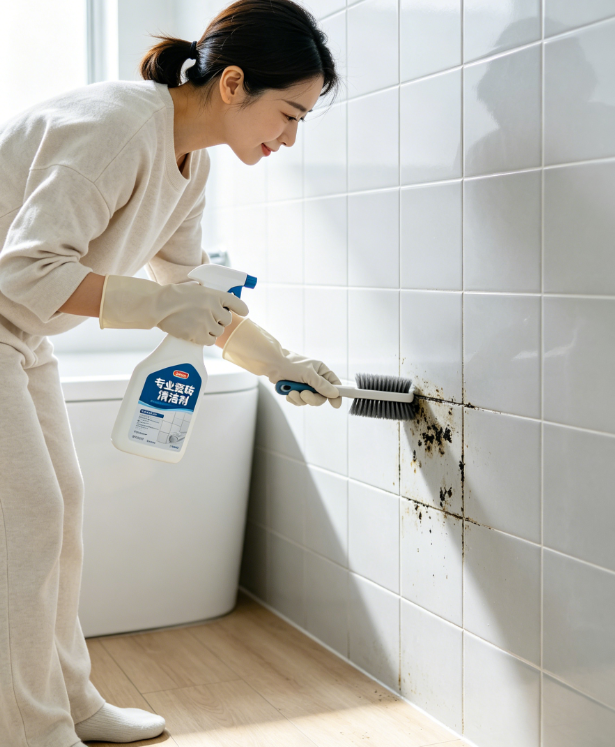
Tile Grout Lines: Grout lines are porous and easy to absorb water, dirt, and soap residue. They gradually turn black and moldy after long-term accumulation, which is the main cause of bathroom mold and unsightly dark marks.
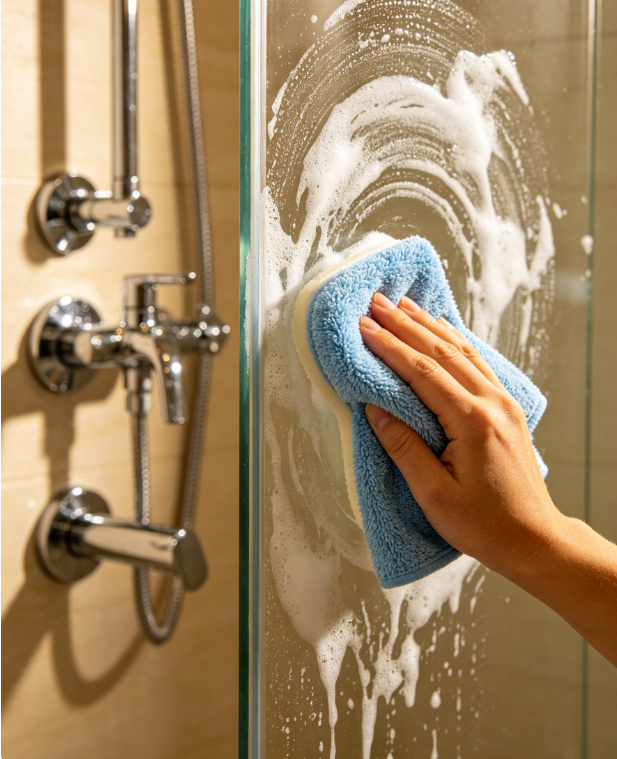
Shower Glass and Faucet Limescale: Transparent water stains will form thick white limescale after repeated water evaporation, making glass foggy and metal faucets dull and tarnished.
Floor Drains and Pipe Gaps: Hair, skin debris, and tiny dirt easily block floor drains. Organic dirt decomposes in humid pipelines, producing persistent sewer odors and breeding bacteria.
Toilet Base and Hidden Crevices: The joint between the toilet and the floor is difficult to clean. Long-term dirt accumulation causes yellowing, mold growth, and hidden bacterial reproduction.
Bathroom Curtains and Shower Screens: Shower curtains easily absorb water and soap residue, growing invisible mold spores and producing musty odors after long-term dampness.
Step-by-Step Bathroom Deep Cleaning Process
Step 1: Pre-Cleaning and Dry Dust Removal
Before wet cleaning, complete dry garbage cleaning first. Remove scattered hair, fallen debris, and surface floating dust on floors and facilities. Focus on cleaning hair wound around floor drain covers and corner gaps to avoid mixing hair and water into stubborn dirt during wet mopping. Dry cleaning can remove most surface garbage and lay a foundation for subsequent deep decontamination.
Step 2: Remove Limescale and Stains on Hardware and Glass
A large number of bathroom aesthetic problems come from water scale and oxidation traces on metal and glass. For foggy shower glass and dull faucets, use professional scale removers or mild acidic natural cleaning solutions. Spray the solution evenly on the surface, let it stand for several minutes to fully decompose mineral scale, and then wipe it with a soft sponge. Finally, rinse with clean water and dry the surface to restore the transparency of glass and the metallic luster of hardware.
Step 3: Deep Mold Removal for Tile Gaps and Corners
For black mold spots in tile grout and wall corners, targeted mold removal treatment is required. Apply special mold removal gel or paste to the moldy area, cover it properly to enhance the reaction effect, and wait for the mold to decompose and fade. After the mold disappears, scrub gently and rinse thoroughly. This step can completely remove stubborn mold that daily cleaning cannot eliminate and prevent mold from spreading again.
Step 4: Deodorize and Dredge Floor Drains
Floor drain odor is a common trouble in family bathrooms. After cleaning surface dirt, pour drain cleaner or natural decontamination formula into the floor drain to decompose pipeline grease, hair, and residual dirt. Eliminate odor sources from the pipeline and dredge slightly blocked drains. Keep the sewer unobstructed to avoid backflow odors and bacterial growth in stagnant water.
Step 5: Toilet Deep Sanitization
In addition to conventional toilet bowl cleaning, focus on easily overlooked dead corners. Scrub the toilet rim gap, the bottom of the toilet, and the gap between the toilet and the ground. Use disinfectant for overall soaking and wiping to remove yellow stains and hidden bacteria. Regular deep sanitization prevents odor and dirt accumulation in dead corners and ensures toilet hygiene.
Step 6: Overall Drying and Ventilation
After all cleaning work is completed, wipe the floor, walls, and facilities dry with a dry mop and cloth to reduce residual water vapor. Open windows and turn on exhaust fans for ventilation for 20 to 30 minutes to keep the whole bathroom dry. Dry environment is the best way to inhibit mold and bacterial reproduction and maintain long-term cleaning effect.
Daily Maintenance Habits to Keep Bathroom Fresh Long-Term
Deep cleaning can solve existing dirt problems, while daily maintenance avoids repeated dirt accumulation. Develop good bathroom usage habits to reduce cleaning pressure fundamentally. After each shower, use a squeegee to scrape off residual water on the glass and wall surface to reduce water stain precipitation. Wipe the sink and countertop dry after washing hands to avoid long-term water accumulation.
Keep the bathroom ventilated daily. Open windows regularly or turn on the exhaust fan to discharge humid air and reduce indoor humidity. Regularly clean the floor drain garbage basket to prevent hair and debris from accumulating and blocking the pipeline. Replace and clean shower curtains regularly to avoid mold and odor breeding on fabric surfaces.
Avoid leaving wet towels and dirty clothes in the bathroom for a long time. Damp fabrics will increase indoor humidity and produce musty odors, affecting the overall fresh state of the bathroom.
Common Bathroom Cleaning Mistakes to Avoid
Many household cleaning methods will inadvertently damage bathroom facilities and aggravate dirt problems. First, do not use hard tools such as steel wool to scrub tiles and glass, which will leave fine scratches. These scratches will hide more dirt and make scale and mold easier to adhere.
Second, do not mix different chemical cleaners. The mixing of acidic and alkaline cleaners will produce harmful gases, causing respiratory irritation and potential safety hazards. Third, do not only clean the surface but ignore pipeline and gap maintenance. Hidden dirt in pipelines is the core source of persistent bathroom odors.
In addition, do not rely solely on flushing for bathroom cleaning. Simple water flushing cannot decompose grease, scale, and organic dirt, resulting in long-term residual dirt and gradual deterioration of sanitary conditions.
Benefits of a Clean and Dry Bathroom
A thoroughly cleaned and well-maintained bathroom brings multiple health and quality-of-life benefits. It effectively eliminates mold, bacteria, and odor sources, reduces the risk of skin infections, allergic reactions, and respiratory discomfort caused by bathroom hygiene problems. Dry and fresh bathroom space improves the comfort of daily bathing and washing.
Standardized cleaning and maintenance can also protect bathroom facilities, prevent tile aging, hardware oxidation, and pipeline blockage, and extend the service life of bathroom equipment. At the same time, a clean, bright, and odor-free bathroom can greatly improve the overall home grade and living comfort, creating a healthy and comfortable washing environment for the whole family.
Conclusion
Bathroom cleaning is not simple surface wiping, but systematic deep decontamination, mold removal, descaling, and deodorization. Due to the special humid environment of the bathroom, only combining regular deep cleaning and daily maintenance can completely solve common problems such as mold spots, limescale fogging, and sewer odors. Mastering scientific cleaning steps and avoiding wrong cleaning habits can easily maintain a dry, sanitary, and fresh bathroom environment. A clean bathroom is an important part of family health protection and a key detail to improve high-quality home life.